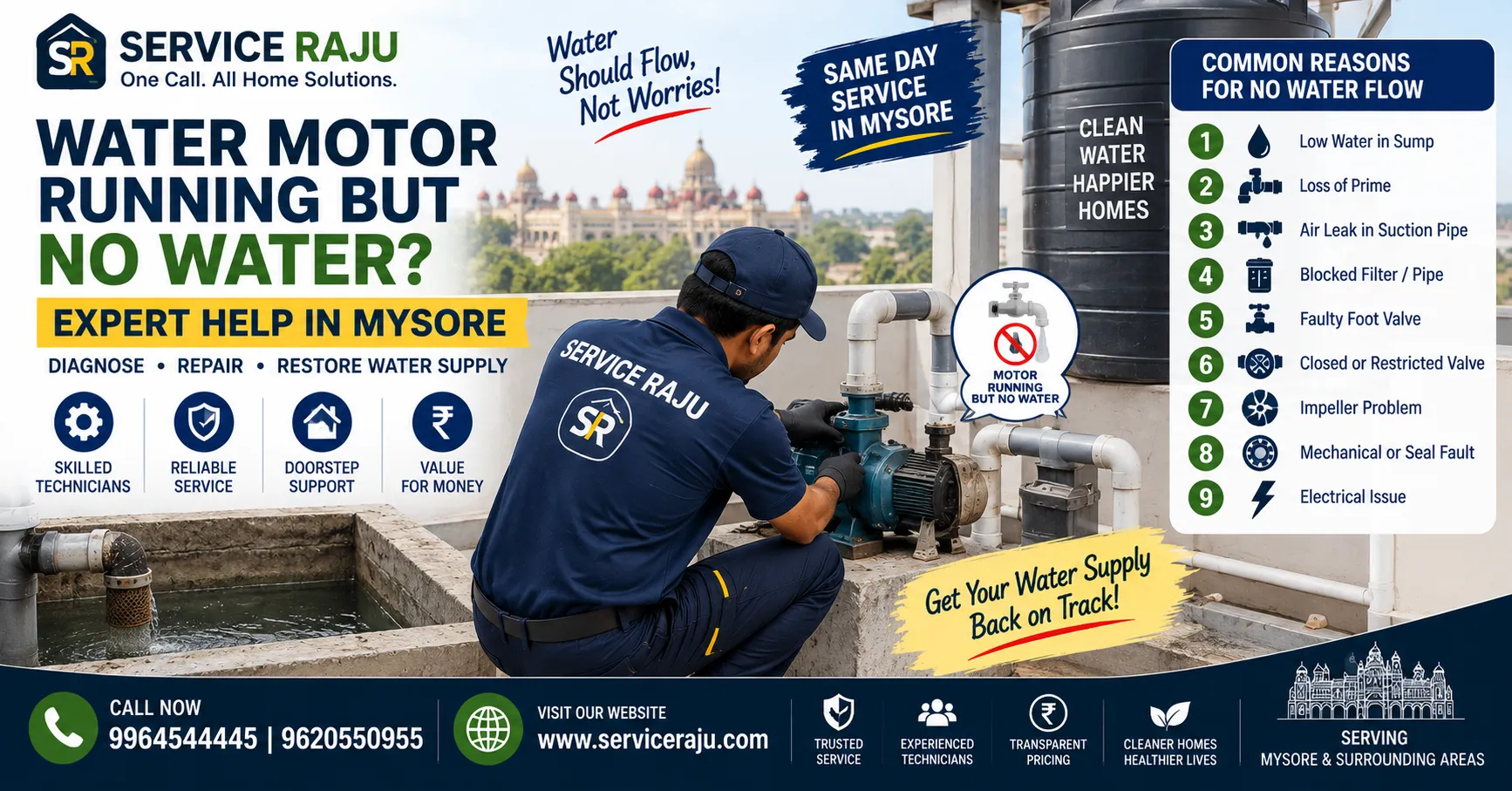
Water Motor Running but No Water in Mysore: 9 Causes & Fixes
If your water motor running but no water Mysore problem has suddenly left your overhead tank empty, don't assume that the motor itself is completely dead. A pump can run electrically while still failing to move water because of lost prime, air entering the suction line, a blocked intake, closed or faulty valves, inadequate water at the source, or another mechanical problem.
This is an important distinction.
A completely dead motor and a motor that runs without delivering water require different diagnosis and repairs.
Current pump guidance from Crompton identifies clogged suction filters, air leaks in suction lines and improper priming among the causes of low or absent water delivery, while its priming guidance explains why air trapped in the pump or suction system can prevent normal water movement. (Crompton) Crompton pump priming guide
Kirloskar's pump operating guidance also warns that pumps should not be run dry and says the pump should be shut down when it is not delivering liquid, vibrating excessively, overheating or making abnormal noise. (Kirloskar Brothers) Kirloskar pump operating manual
So the right question is not simply:
“Why is my motor running?”
It is:
“Where is the water flow being lost?”
2. Quick Answer
When a water motor runs but no water comes out, the most common areas to investigate are:
- Water level in the sump/source
- Loss of pump prime
- Air entering the suction pipe
- Blocked suction strainer or pipe
- Foot valve or non-return valve problem
- Closed or restricted delivery valve
- Suction-line leakage
- Pump/impeller/mechanical fault
- Electrical or control problems affecting pump operation
Do not keep the motor running for long while there is no water delivery. Dry running can damage seals and other pump components. (Kirloskar Brothers) Kirloskar pump operating manual
3. TABLE OF CONTENTS
- Why Your Water Motor Can Run Without Delivering Water
- 9 Causes of a Water Motor Running but No Water in Mysore
- The Sump or Water Source Is Too Low
- The Pump Has Lost Prime
- Air Is Entering the Suction Line
- The Suction Filter or Pipe Is Blocked
- The Foot Valve or Non-Return Valve Has a Problem
- A Valve Is Closed or the Delivery Line Is Restricted
- The Pump Impeller Has a Problem
- The Pump Has a Mechanical or Seal Fault
- An Electrical or Control Problem Is Affecting the Pump
- How to Tell Where the Problem Is
- What You Can Safely Check at Home
- Why You Should Not Keep Running a Dry Pump
- When to Book Water Motor Repair in Mysore
- Water Motor Repair Cost in Mysore
- How Service Raju Diagnoses Water Motor Problems
- How to Prevent the Problem From Returning
- Water Motor Maintenance Checklist
- FAQs About Water Motor Running but No Water
- Final Takeaway
4. Why Your Water Motor Can Run Without Delivering Water
A water pump does not create useful water flow simply because its motor is rotating.
The pumping system needs the right combination of:
- Adequate water at the source
- Correct suction conditions
- Proper priming where required
- Airtight suction connections
- Open valves
- Clear intake
- Correct pump operation
- Suitable pipework
- Functional valves and mechanical components
That is why the sound of the motor alone is not proof that the pumping system is working correctly.
Crompton explains that priming fills the pump with the fluid being pumped and removes air that can prevent a centrifugal pump from generating the pressure needed for water movement. Crompton priming guidance
5. 9 Causes of a Water Motor Running but No Water in Mysore
6. 1. The Sump or Water Source Is Too Low
Start with the simplest question:
Is there actually enough water for the pump to draw?
If an underground sump, storage tank, open well or other source has insufficient water, the pump may run without delivering water.
Possible reasons include:
- Municipal supply interruption
- Empty sump
- Very low borewell yield
- Water source depletion
- Float/control issue
- Water level below the intake point
Never allow a pump designed for flooded suction or priming to operate without adequate water.
First confirm that the source contains enough water for the installation.
7. 2. The Pump Has Lost Prime
This is one of the most important causes.
A centrifugal pump may require water in the pump casing and suction system before it can deliver water.
If air has entered the system, the motor can continue spinning while the pump fails to establish the necessary suction.
Possible reasons for loss of prime include:
- Long periods without use
- Air entering through a suction connection
- Foot-valve failure
- Empty suction line
- Maintenance work
- Water draining back after shutdown
Crompton explains that air trapped in the pump casing can prevent the pump from generating the pressure needed to move fluid. It also warns that poor priming can increase wear and damage risk. Crompton pump priming guide
If your specific pump requires manual priming, follow the manufacturer's procedure rather than copying instructions for a different model.
8. 3. Air Is Entering the Suction Line
A very small leak on the suction side can cause a surprisingly big problem.
The pipe may not visibly leak water because air can enter while the pump is operating.
Check for:
- Loose threaded connections
- Damaged pipe joints
- Cracked suction pipe
- Poorly sealed fittings
- Faulty valve connections
- Damaged flexible connections
Crompton's current pump guidance specifically identifies air leaks in suction lines as a possible cause of low water output. (Crompton) Crompton water pump troubleshooting
This is why repeatedly changing the motor capacitor won't solve every no-flow problem.
The motor may be perfectly capable of spinning.
The suction system may be the actual problem.
9. 4. The Suction Filter or Pipe Is Blocked
If the pump draws from a sump or other water source, debris can restrict the intake.
Possible materials include:
- Mud
- Sand
- Silt
- Leaves
- Plastic
- Scale
- Other debris
A partially blocked intake can cause weak flow.
A completely blocked intake can result in the motor running while almost no water reaches the delivery line.
Kirloskar's pump guidance recommends correct strainer arrangements and periodic cleaning to avoid clogging, while warning against drawing muddy residual water through the pump. (Kirloskar Brothers) Kirloskar pump maintenance manual
If your sump has recently been cleaned, be particularly careful about sediment entering the intake.
10. 5. The Foot Valve or Non-Return Valve Has a Problem
A foot valve or non-return/check valve helps manage water movement and can be important for maintaining the suction condition.
When a valve is:
- Stuck
- Blocked
- Leaking
- Damaged
- Installed incorrectly
the pump may lose prime or fail to move water properly.
Grundfos pump guidance lists problems involving non-return valves and leakage in pipes as possible causes of pump delivery problems. (Grundfos) Grundfos pump troubleshooting documentation
If the pump works briefly and then loses flow repeatedly, the suction-side valve deserves particular attention.
11. 6. A Valve Is Closed or the Delivery Line Is Restricted
The problem can also be on the discharge side.
Check whether a relevant valve has accidentally been:
- Closed
- Partially closed
- Jammed
- Blocked
Also inspect accessible delivery piping for:
- Kinks
- Damage
- Severe restriction
- Obstruction
A pump can be running normally while the water cannot move through the downstream system.
This is another reason to diagnose the whole water path instead of focusing only on the motor.
12. 7. The Pump Impeller Has a Problem
The impeller is one of the components responsible for transferring energy from the rotating motor into the fluid.
If the impeller is:
- Blocked
- Damaged
- Worn
- Loose
- Heavily scaled
water delivery can fall dramatically.
Crompton notes that obstruction around the impeller can affect pump operation and recommends inspection of components when reduced flow persists. (Crompton) Crompton pump components and troubleshooting
You should not open the pump housing casually.
The correct inspection procedure depends on the pump model.
13. 8. The Pump Has a Mechanical or Seal Fault
Sometimes the motor runs, but the pump assembly cannot produce proper hydraulic performance.
Potential faults may involve:
- Mechanical seal
- Bearings
- Shaft
- Pump casing
- Impeller
- Coupling
- Internal wear
Warning signs can include:
- Grinding
- Excessive vibration
- Water leaking around the pump
- Overheating
- Abnormal noise
- Motor running without expected pressure or flow
Kirloskar's operating manual says pumps should be stopped when there is no liquid delivery, insufficient delivery, vibration, overheating or excessive noise. Kirloskar operating manual
14. 9. An Electrical or Control Problem Is Affecting the Pump
Sometimes a motor sounds as though it is running but is not operating correctly under load.
Possible issues can include:
- Voltage problems
- Loose electrical connections
- Faulty capacitor on applicable motor designs
- Winding damage
- Overload protection
- Control-panel fault
- Automatic controller problem
Crompton recommends checking secure electrical connections and stable voltage for pump operation, and its residential-pump guidance highlights thermal overload protection on certain models. Crompton residential pump guidance
Don't open electrical terminals or test live wiring yourself unless you are appropriately qualified.
Water and electricity make DIY diagnosis particularly risky.
15. How to Tell Where the Problem Is
The symptom pattern gives useful clues.
| What You Notice | Possible Area to Investigate |
|---|---|
| Motor runs, absolutely no water | Prime, suction, valve, intake |
| Water comes briefly then stops | Air leak, foot valve, lost prime |
| Very weak water flow | Partial blockage, suction restriction, pump wear |
| Motor becomes very hot | Dry running, overload, mechanical/electrical fault |
| Grinding noise | Bearing, impeller or obstruction |
| Water leaks near pump | Seal, joint or pipe connection |
| Works after manual priming but fails later | Suction air leak or valve problem |
| Pump trips electrical protection | Electrical/mechanical fault |
| Sump is empty | Water-source problem rather than motor problem |
These are clues, not final diagnoses.
Two different faults can produce similar symptoms.
16. What You Can Safely Check at Home
Before requesting water pump repair Mysore, there are a few basic checks you can perform without opening the pump.
17. Check the water source
Confirm there is sufficient water in the sump or source.
18. Check accessible valves
Make sure the required supply and delivery valves are in their normal operating position.
19. Look at visible pipe joints
Check for obvious cracks, loose fittings or water leakage.
20. Check the pump's external condition
Look for:
- Burning smell
- Excessive heat
- Unusual vibration
- Visible leaks
- Damaged cables
21. Listen carefully
Note whether the motor:
- Runs normally
- Hums
- Clicks
- Grinds
- Stops and restarts
22. Check the overhead tank
If the pump is intended to fill the overhead tank, check whether the tank level changes at all.
23. Check automatic controls
If an automatic controller is installed, look for an error indication or abnormal behaviour.
Don't dismantle electrical panels or pressure-containing pump components as part of a basic home inspection.
24. Why You Should Not Keep Running a Dry Pump
This deserves special attention.
A homeowner may think:
“The motor is running, so let it run for ten more minutes.”
That can make the situation worse.
Pump systems rely on the pumped liquid for important operating functions depending on the design. Kirloskar specifically warns that pumps should not be run dry because the pumped liquid provides lubrication around close-running components and dry running can damage seals. Kirloskar pump operating manual
Crompton similarly warns that a dry pump can overheat and damage components such as the impeller, seal and bearings. Crompton pump priming guide
So when there is no water delivery, switch the pump off rather than repeatedly testing it for long periods.
25. When to Book Water Motor Repair in Mysore
You should consider professional water motor service Mysore when:
- The motor runs but water never arrives.
- Manual priming temporarily fixes the problem but it returns.
- Water flow is much weaker than normal.
- The motor overheats.
- The pump makes grinding or abnormal sounds.
- The system repeatedly loses prime.
- The suction pipe appears to leak.
- The foot valve may be faulty.
- The pump trips electrical protection.
- The overhead tank remains empty despite the motor running.
- A previous repair has not solved the issue.
For underground-sump or overhead-tank systems, diagnosing both the electrical motor and water path is often more useful than replacing a component based on guesswork.
26. Water Motor Repair Cost in Mysore
A water motor repair Mysore price can vary considerably because “motor running but no water” is a symptom, not a specific repair.
Possible work could range from:
- Inspection
- Priming
- Valve work
- Suction-line repair
- Blockage removal
- Capacitor replacement
- Mechanical seal replacement
- Bearing work
- Impeller repair
- Motor rewinding
- Pump replacement
Current Mysuru service-market listings show water-motor consultation/check-up services around ₹199 on HomeTriangle, with parts and larger repairs charged separately depending on the job. (HomeTriangle) HomeTriangle Mysore water motor services
Service Raju's existing Mysore water-motor content also publishes indicative repair examples such as capacitor replacement and motor rewinding, but those figures should be treated as service-specific estimates rather than a fixed citywide price. (Service Raju) Service Raju water tank and motor repair guide
The correct quotation should be based on the diagnosed problem, pump type, horsepower, accessibility and required parts.
27. How Service Raju Diagnoses Water Motor Problems
Service Raju provides water motor service Mysore customers can request for domestic water-pumping problems.
For a “motor running but no water” complaint, the useful diagnostic sequence is:
- Understand the customer's symptoms.
- Check the water source and tank levels.
- Identify the pump type and capacity where possible.
- Check visible suction and delivery connections.
- Assess whether priming may be required.
- Check valves and accessible intake restrictions.
- Observe pump noise, vibration and temperature.
- Check relevant electrical conditions.
- Identify whether the fault appears to be hydraulic, mechanical or electrical.
- Explain the repair requirement before major work is approved.
- Test water delivery after the work.
This approach matters because the same symptom can come from completely different causes.
A motor with a failed capacitor is not repaired the same way as a pump with a blocked intake.
Likewise, an air leak in the suction line is a very different problem from an electrically damaged winding.
Service Raju's existing Mysuru water-motor content also describes diagnosis of issues such as capacitor failure, winding problems, bearings and airlock. (Service Raju) Service Raju water motor repair guide
For professional assistance in Mysuru:
Service Raju
9964544445 | 9620550955
www.serviceraju.com
28. How to Prevent the Problem From Returning
29. Keep the sump reasonably clean
Excess sediment can eventually reach intake components.
30. Check the suction system
Small air leaks can create recurring problems.
31. Maintain the appropriate water level
Avoid repeatedly running a pump without adequate water.
32. Check valves periodically
A worn foot valve or non-return valve can cause repeated loss of prime.
33. Keep the pump area dry and accessible
This makes inspection easier and reduces avoidable maintenance difficulty.
34. Watch for unusual vibration
New vibration should be investigated.
35. Don't ignore overheating
A hot motor can indicate a problem that needs attention.
36. Protect the electrical supply appropriately
Use suitable wiring, protection and installation practices for the pump.
37. Service according to the pump design
Different pumps have different maintenance needs.
38. Record recurring problems
If the pump loses prime once every few weeks, don't treat each episode as an isolated event.
The recurring pattern itself is diagnostic information.
39. Water Motor Maintenance Checklist
40. Monthly Checks
☐ Check water source level
☐ Check visible pipe joints
☐ Check for water leakage
☐ Listen for new noises
☐ Observe vibration
☐ Check overhead-tank filling performance
☐ Check automatic controller operation
41. Periodic Checks
☐ Clean appropriate strainers
☐ Inspect valves
☐ Check pump mounting
☐ Inspect cable and connections
☐ Review recurring loss of prime
☐ Check pump performance
☐ Arrange professional inspection if output has reduced
Never operate the pump dry just to test whether it is still working.
42. FAQs About Water Motor Running but No Water
43. Why is my water motor running but no water is coming?
Common possibilities include loss of prime, air in the suction line, insufficient water at the source, blocked intake, faulty foot valve, closed valve or pump-related damage. The exact cause needs diagnosis.
44. Can an airlock stop a water motor from pumping?
Yes. Air trapped in the pump or suction system can prevent a pump from establishing the conditions necessary to move water properly. Crompton explains that trapped air can prevent a centrifugal pump from generating the required pressure. Crompton pump priming guide
45. Why does the motor work after priming but stop pumping later?
If priming temporarily restores flow and the problem returns, a suction-side air leak, faulty foot valve or another condition allowing the system to lose prime should be investigated.
46. Can a blocked pipe make the motor run without water?
Yes. A blocked suction path or other restriction can reduce or completely stop water delivery even though the motor continues operating.
47. Should I keep the motor running to see if water eventually comes?
No. If the pump is not delivering water, prolonged operation can cause damage depending on the pump design. Kirloskar explicitly warns against dry running. Kirloskar pump operating manual
48. Does a capacitor problem cause no water flow?
It can affect motor starting or operating performance on applicable motor designs, but a capacitor should not automatically be blamed for every no-flow complaint. The entire pump system should be diagnosed.
49. Why is my motor noisy but not pumping water?
Possible causes include loss of prime, obstruction, bearing/mechanical problems or another pump fault. The type of noise can provide clues but should not be used alone to identify the failed component.
50. Can low water level damage the motor?
Operating a pump without adequate water can create dry-running conditions that may damage seals or other pump components, depending on the design. Follow the pump manufacturer's operating requirements. Kirloskar pump maintenance manual
51. How much does water motor repair cost in Mysore?
It depends on the exact fault. A basic inspection or simple valve/priming issue may cost much less than motor rewinding, bearing work, seal replacement or pump replacement.
52. Should I replace my water motor if it is running but not pumping?
Not necessarily. A pump can run without delivering water because of a suction, valve, priming or blockage issue. Diagnose the cause before deciding to replace the motor.
53. Can Service Raju repair water motors in Mysore?
Service Raju offers water motor service consultation as part of its electrical-service category and has existing Mysuru content covering water-motor and tank-related repairs. Contact the team to confirm service availability for your exact pump and location. (Service Raju) Service Raju water motor repair information
54. Final Takeaway
A water motor that runs but does not deliver water is not automatically a dead motor.
The fault may be as simple as:
Low water level → lost prime → air leak → blocked intake → faulty valve
Or it may require deeper mechanical or electrical diagnosis.
The safest troubleshooting sequence is:
Check water → stop dry running → inspect accessible valves and pipes → consider prime/air-entry issues → diagnose the pump → repair the actual cause
Don't keep the motor running just because you can hear it.
If the overhead tank remains empty and the pump continues running without water delivery, arrange professional water motor repair Mysore rather than repeatedly testing it.
For water motor inspection, repair and related home services in Mysuru:
Service Raju
9964544445 | 9620550955
www.serviceraju.com
 AC Repair
.webp) Ant Control Service
Ant Control Service
 Basin & Sink Services
.webp) Bath & Shower Services
Bath & Shower Services
.webp) Bath Fittings & Mirrors
Bath Fittings & Mirrors
 Bathroom Cleaning Service
 Bathroom Renovation Services
 Bed Bug Control Services
 Bedroom Painting
 Book a Carpenter Consultation
 Book Electrical Consulting
.webp) Cabinet Painting & Wood Refinishing
Cabinet Painting & Wood Refinishing
 Chimney Cleaning
 Civil Masonry Work
 Clean-Up Services
.webp) Clothes Hanger Installation
Clothes Hanger Installation
 Cockroach Control Services
---mysore-mysore-standard-300x200.webp) Commercial Cleaning
Commercial Cleaning
 Commercial Pest Control AMC Service
 Cupboard & Drawer Services
 Decorative Wall Panels
 Deep Sanitisation Service
 Detan & Bleach
 Door, Grill & Cabinet Painting Service
.webp) Doorbell & security
Doorbell & security
 Drain Blockage Clearing
 Electrical Appliance Services
 Electrical Wiring Services
 Empty Home Deep Cleaning
.webp) Fabrication
Fabrication
 Facials
.webp) Fan Installation & Repair
Fan Installation & Repair
 Full Home Cleaning Service
 Full Home Renovation
 Furniture Repair Service
 Gas Stove & Hob Repair
.webp) General Pest Control Services
General Pest Control Services
 General Plumbing & Consultation
 Geyser Repair
 Glass Cleaning
 Head Massage
.webp) Honeybee & Wasp-Services
Honeybee & Wasp-Services
 Kitchen & Bathroom Painting Service
 Kitchen Cleaning
 Kitchen Fittings
.webp) Kitchen Renovation
Kitchen Renovation
.webp) Laptop/Desktop service
Laptop/Desktop service
 Leak Detection and Repair
 LED TV Repair
 Living and Dining Room Painting
 Makeup, Saree & Styling
 Manicure & Pedicure
 MCB,Meter & Fuse Services
 Microwave Repair
 Mosquito Pest Control Service
 Multi-Room Painting Service
 Painting Consultation
 Quick Mini Cleaning Services
 Refrigerator Repair
 RO Water Purifier
.webp) Rodent Control Services (Rat & Mice Treatment)
Rodent Control Services (Rat & Mice Treatment)
.webp) Rooms Cleaning
Rooms Cleaning
 Shelves & Decor
 Sofa, Carpet & Mattress Cleaning
 Solar Water Heater Service
 Sump & Tank Cleaning
 Switch & Socket Services
 Tap & Mixer Service
.webp) Termite-Control-Services
Termite-Control-Services
 Threading & Face Wax
.webp) Tile & Granite Installation & Polishing
Tile & Granite Installation & Polishing
 Toilet & Commode Services
.webp) UPS and Inverter Repair Services
UPS and Inverter Repair Services
.webp) Wall Painting Service
Wall Painting Service
 Washing Machine Repair
 Water Level Controllers
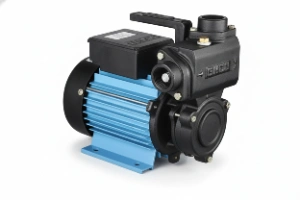 Water Tank and Pump Repair
 Waterproofing
 Waterproofing Services
 Waxing
 Window & Curtain Services
 Wooden Door Services