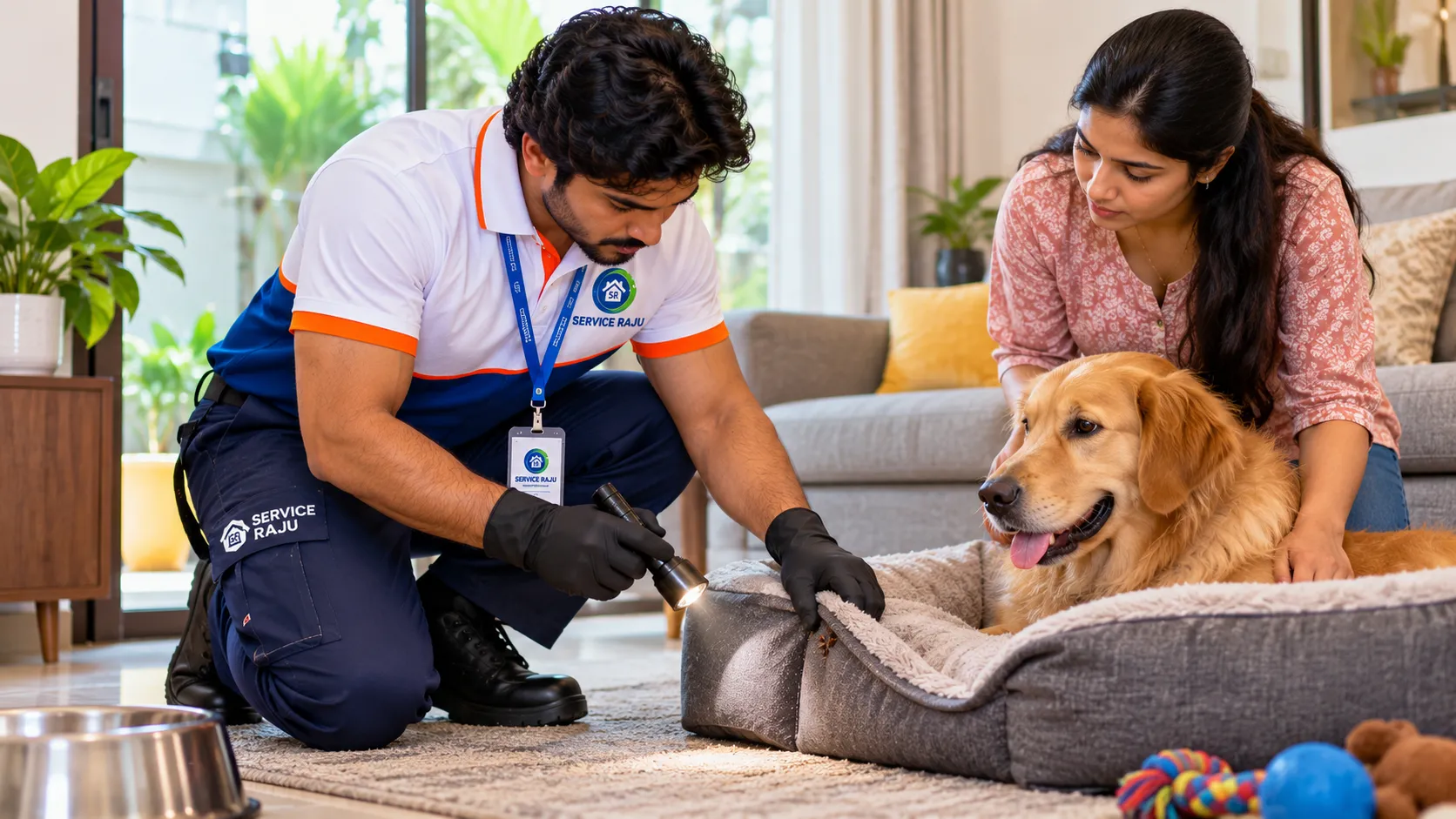
Ticks in Your Home? A Tick Infestation Prevention Guide
Finding a tick on your pet, bedding or floor can be worrying. If you are noticing ticks repeatedly inside your house, the important step is to identify how they are entering, inspect the places where pets rest, and determine whether the problem is isolated or recurring.
This guide explains how ticks may enter a home, where to inspect, practical home tick prevention steps, and when to ask a veterinarian or pest-control professional for help in Mysore (Mysuru).
Quick Answer: What Should You Do If You Find Ticks at Home?
- Check whether ticks are appearing on a pet, a person, pet bedding or another indoor surface.
- Inspect the pet's resting area, bedding seams, rugs, furniture edges and nearby floor gaps.
- Wash suitable pet bedding according to its care instructions and clean the surrounding area thoroughly.
- Check pets after outdoor activity and consult a veterinarian about suitable tick prevention or treatment.
- If ticks continue to appear, seek an inspection to identify the source and confirm whether professional premises treatment is appropriate.
Important: Treating an affected pet and treating a household infestation are different tasks. A veterinarian should advise on animal treatment. A pest-control professional can assess the premises if indoor tick activity continues.
How Can Ticks Enter Your Home?
Ticks are small arachnids, not insects. Depending on the species, they may attach to animals or people outdoors and be carried inside. Some ticks associated with dogs can also infest indoor environments, making recurring activity more complicated than finding a single tick after a walk.
Common ways ticks may get indoors
- Pets returning from outdoors: Dogs and other animals may carry ticks in their fur after visiting gardens, grassy areas or places frequented by animals.
- Pet bedding and resting spots: A tick may be carried to the bed, mat or area where an animal regularly rests.
- Clothing and outdoor equipment: People can carry ticks indoors on clothing or equipment after spending time in tick-prone outdoor areas.
- Outdoor-to-indoor access: Gardens, animal resting areas, kennels and nearby vegetation may need inspection if ticks repeatedly appear.
- Recurring indoor activity: Repeated sightings may indicate that more than one tick is present or that an indoor resting or harbourage area needs attention.
Finding one tick does not automatically mean the entire home is infested. However, repeated sightings, several ticks in the same area or continued activity around a pet's resting place deserve closer inspection.
Where Should You Look for Ticks Indoors?
Start with the places where pets spend the most time and expand the inspection if ticks continue to appear. Use a torch and examine fabric edges, creases and small gaps carefully.
| Area to inspect | What to check | Practical next step |
|---|---|---|
| Pet beds and mats | Seams, folds, undersides and surrounding floor edges | Wash suitable bedding and inspect the floor beneath it. |
| Sofa and upholstered furniture | Cushion seams, fabric folds and areas where pets rest | Vacuum suitable surfaces and inspect the area around the furniture. |
| Rugs and carpets | Edges, folds and spaces beneath movable rugs | Vacuum carefully and dispose of collected debris securely. |
| Floor edges and gaps | Cracks, skirting edges and gaps close to animal resting areas | Clean accessible areas and note where sightings occur. |
| Pet resting or kennel areas | Bedding, corners, crevices and nearby sheltered spaces | Clean the area and ask a professional to assess recurring activity. |
| Garden or outdoor access points | Overgrown vegetation, leaf litter and places used by animals | Maintain the area and reduce contact with tick-prone vegetation. |
Do not assume every small crawling creature is a tick. If identification is uncertain, take a clear photograph without handling the specimen directly, and ask a suitable professional for identification.
How to Prevent a Tick Infestation at Home
Effective home tick prevention combines pet care, cleaning, inspection and outdoor maintenance. Cleaning alone may not resolve an established infestation, but it can help remove ticks and make activity easier to monitor.
1. Check pets after outdoor activity
Examine pets regularly, especially after they have been in gardens, grassy areas or places where other animals gather. Ask your veterinarian about the best preventive product for your pet and the risks relevant to your location.
2. Keep pet bedding clean
Wash bedding when the material allows it, following the care label. Inspect the underside of mats and the floor beneath beds. Clean any removable covers and allow items to dry fully before reuse.
3. Vacuum and inspect likely hiding places
Pay attention to rugs, upholstery seams, furniture edges and the spaces around pet resting areas. Empty the vacuum according to the manufacturer's instructions and dispose of collected material securely.
4. Maintain the garden and outdoor areas
Keep grass trimmed, remove accumulated leaf litter and reduce unnecessary overgrowth near entrances and pet resting areas. Where possible, limit pets' contact with dense vegetation that may harbour ticks.
5. Monitor where ticks are found
Record the date and location of each sighting. Note whether ticks appear on a pet, in bedding, near a doorway or in the same room repeatedly. This information can help a veterinarian or pest-control professional assess the likely source.
6. Avoid unapproved chemical treatment
Do not spray household pesticides, agricultural chemicals or pet-treatment products indiscriminately. The appropriate product, application method and precautions depend on the intended use and the people and animals present. Follow the product label and professional instructions.
What Should You Do If Your Pet Has Ticks?
If you find ticks on a dog, cat or another pet, contact a veterinarian for advice on safe removal, treatment and prevention. Do not assume a household pest spray is suitable for use on an animal.
- Ask a veterinarian which tick-control product is appropriate for the animal's species, age, weight and health.
- Never apply a dog tick product to a cat unless a veterinarian specifically confirms it is safe. Some products used for dogs can be dangerous to cats.
- Follow the veterinarian's directions for treatment, repeat applications and checks for further ticks.
- Clean the pet's bedding and inspect nearby resting areas while addressing the animal's tick problem.
- Seek veterinary advice promptly if your pet seems unwell, has changes in appetite or behaviour, or develops other concerning symptoms after tick exposure.
For additional general guidance, read the CDC guidance on preventing ticks on pets. Although it is not a substitute for local veterinary advice, it explains how pets can carry ticks indoors and why regular checks matter.
What If a Tick Is Attached to a Person?
Remove an attached tick promptly and carefully. Use clean, fine-tipped tweezers to grasp it close to the skin and pull upward with steady, even pressure. Avoid twisting or crushing the tick. Clean the bite area and your hands after removal.
Do not use heat, nail polish, petroleum jelly or other substances in an attempt to make the tick detach. If you develop fever, a rash or other concerning symptoms after a tick bite, seek medical advice and mention the exposure.
Read the CDC's guidance on what to do after a tick bite for detailed removal instructions. Seek medical care when appropriate; pest-control services do not diagnose or treat tick-borne illness.
When Should You Consider Professional Tick Pest Control?
Professional assessment may be appropriate when:
- You repeatedly find ticks inside the home despite cleaning and pet checks.
- Several ticks appear around pet bedding, a kennel or the same indoor area.
- You cannot identify where ticks are entering or harbouring.
- Indoor activity continues after the affected pet has received veterinary attention.
- You need guidance on the premises, cleaning requirements and safe treatment precautions.
A suitable professional should first understand the problem and inspect the relevant areas. Ask which pest has been identified, what locations are included in the treatment, which products and methods are proposed, what preparation is required, and when people and pets may safely re-enter treated areas.
There is no single treatment that is appropriate for every tick situation. The approach depends on identification, the extent of activity, the location and the product label. If ticks are being carried indoors by an untreated animal, premises treatment alone may not solve the underlying issue.
Tick Control in Mysore: What Local Homeowners Should Know
Homeowners in Mysore (Mysuru) who find ticks indoors should start by checking pets, bedding and outdoor access points. Homes with gardens, animal resting areas or frequent pet movement may benefit from a more systematic inspection when sightings recur.
For broader household pest-control assistance, visit Service Raju's home-services and pest-control directory in Mysuru. Choose a service that matches the pest and problem you have identified.
Service availability note: Tick-specific residential treatment has not been independently confirmed in the published Service Raju service list. Contact the team before booking to confirm whether it currently handles tick infestations, whether an inspection is available and what treatment scope can be offered. Do not assume that a general pest-control booking automatically includes tick treatment.
How to Prepare for a Pest-Control Inspection
If a professional confirms that the service is suitable for your tick problem, the following information can help the inspection:
- Tell the technician where and when ticks were seen.
- Explain whether pets live in the home and whether they have received veterinary tick treatment.
- Point out pet bedding, kennels, rugs or rooms where ticks appear repeatedly.
- Ask which items need washing, moving or covering before any treatment.
- Request written product-specific safety, ventilation and re-entry instructions.
- Keep children and pets away from treated areas for the period specified by the product label and the professional.
- Ask whether follow-up inspection is recommended and what signs should prompt another visit.
Never assume that a product described as natural, herbal or pet-friendly is automatically safe in every situation. Follow the label and the instructions supplied by the qualified professional.
Frequently Asked Questions About Ticks in the House
1. Why am I finding ticks inside my house?
Ticks may enter on pets, clothing or equipment after outdoor activity. Repeated indoor sightings may also indicate that ticks are present around pet resting areas or another sheltered location that needs inspection.
2. Can ticks live inside a house?
Some tick species can persist indoors, particularly species associated with dogs and kennels. Whether an indoor infestation develops depends on the tick species and the conditions available. Repeated sightings warrant identification and assessment.
3. Where do ticks hide indoors?
Start by checking pet bedding, kennel areas, upholstery seams, rugs, floor edges and nearby gaps. Inspect the areas where pets rest most frequently rather than assuming ticks will only be found on the animal.
4. Will vacuuming get rid of a tick infestation?
Vacuuming can help remove ticks from suitable surfaces and make inspections easier, but it may not resolve an established infestation by itself. Combine cleaning with veterinary treatment where needed and professional assessment if indoor activity continues.
5. Should I use household insecticide on my pet?
No. Do not use household insecticides or premises-treatment products on an animal unless the product is specifically approved for that use and a veterinarian confirms it is appropriate. Ask a veterinarian about safe tick treatment for your pet.
6. Can ticks spread from pets to people?
Pets can carry ticks indoors, where the ticks may later attach to people. Check pets after outdoor activity and inspect people and clothing when returning from places where ticks may be present.
7. When should I call a tick pest-control service in Mysore?
Consider a professional assessment if ticks appear repeatedly, several are found in the same area, or cleaning and veterinary treatment have not stopped indoor sightings. Confirm in advance that the provider specifically handles residential tick infestations.
8. Does Service Raju provide tick-control treatment?
Service Raju lists general pest-control services in Mysuru, but tick-specific treatment needs confirmation. Contact the team before booking to verify availability, inspection options and the proposed treatment scope.
9. What should I do if a tick bites a person?
Remove an attached tick carefully using fine-tipped tweezers and clean the bite area. Seek medical advice if you develop fever, a rash or other concerning symptoms after a tick bite.
10. Is professional treatment enough if my pet still has ticks?
Not necessarily. Household treatment and veterinary treatment address different parts of the problem. Ask a veterinarian to manage ticks on the animal and have the premises assessed if ticks continue to appear indoors.
Conclusion: Deal With Tick Activity at Its Source
Finding ticks in your home is a reason to inspect carefully, not to spray every surface immediately. Check pets, clean suitable bedding, inspect likely hiding places and reduce exposure around outdoor resting areas. If sightings continue, seek veterinary advice for affected animals and a qualified premises assessment for recurring indoor activity.
Looking for household pest-control assistance in Mysore? Explore the Service Raju service directory and confirm directly with the team whether residential tick-control treatment is available before making a booking.
 AC Repair
.webp) Ant Control Service
Ant Control Service
 Basin & Sink Services
.webp) Bath & Shower Services
Bath & Shower Services
.webp) Bath Fittings & Mirrors
Bath Fittings & Mirrors
 Bathroom Cleaning Service
 Bathroom Renovation Services
 Bed Bug Control Services
 Bedroom Painting
 Book a Carpenter Consultation
 Book Electrical Consulting
.webp) Cabinet Painting & Wood Refinishing
Cabinet Painting & Wood Refinishing
 Chimney Cleaning
 Civil Masonry Work
 Clean-Up Services
.webp) Clothes Hanger Installation
Clothes Hanger Installation
 Cockroach Control Services
---mysore-mysore-standard-300x200.webp) Commercial Cleaning
Commercial Cleaning
 Commercial Pest Control AMC Service
 Cupboard & Drawer Services
 Decorative Wall Panels
 Deep Sanitisation Service
 Detan & Bleach
 Door, Grill & Cabinet Painting Service
.webp) Doorbell & security
Doorbell & security
 Drain Blockage Clearing
 Electrical Appliance Services
 Electrical Wiring Services
 Empty Home Deep Cleaning
.webp) Fabrication
Fabrication
 Facials
.webp) Fan Installation & Repair
Fan Installation & Repair
 Full Home Cleaning Service
 Full Home Renovation
 Furniture Repair Service
 Gas Stove & Hob Repair
.webp) General Pest Control Services
General Pest Control Services
 General Plumbing & Consultation
 Geyser Repair
 Glass Cleaning
 Head Massage
.webp) Honeybee & Wasp-Services
Honeybee & Wasp-Services
 Kitchen & Bathroom Painting Service
 Kitchen Cleaning
 Kitchen Fittings
.webp) Kitchen Renovation
Kitchen Renovation
.webp) Laptop/Desktop service
Laptop/Desktop service
 Leak Detection and Repair
 LED TV Repair
 Living and Dining Room Painting
 Makeup, Saree & Styling
 Manicure & Pedicure
 MCB,Meter & Fuse Services
 Microwave Repair
 Mosquito Pest Control Service
 Multi-Room Painting Service
 Painting Consultation
 Quick Mini Cleaning Services
 Refrigerator Repair
 RO Water Purifier
.webp) Rodent Control Services (Rat & Mice Treatment)
Rodent Control Services (Rat & Mice Treatment)
.webp) Rooms Cleaning
Rooms Cleaning
 Shelves & Decor
 Sofa, Carpet & Mattress Cleaning
 Solar Water Heater Service
 Sump & Tank Cleaning
 Switch & Socket Services
 Tap & Mixer Service
.webp) Termite-Control-Services
Termite-Control-Services
 Threading & Face Wax
.webp) Tile & Granite Installation & Polishing
Tile & Granite Installation & Polishing
 Toilet & Commode Services
.webp) UPS and Inverter Repair Services
UPS and Inverter Repair Services
.webp) Wall Painting Service
Wall Painting Service
 Washing Machine Repair
 Water Level Controllers
 Water Tank and Pump Repair
 Waterproofing
 Waterproofing Services
 Waxing
 Window & Curtain Services
 Wooden Door Services