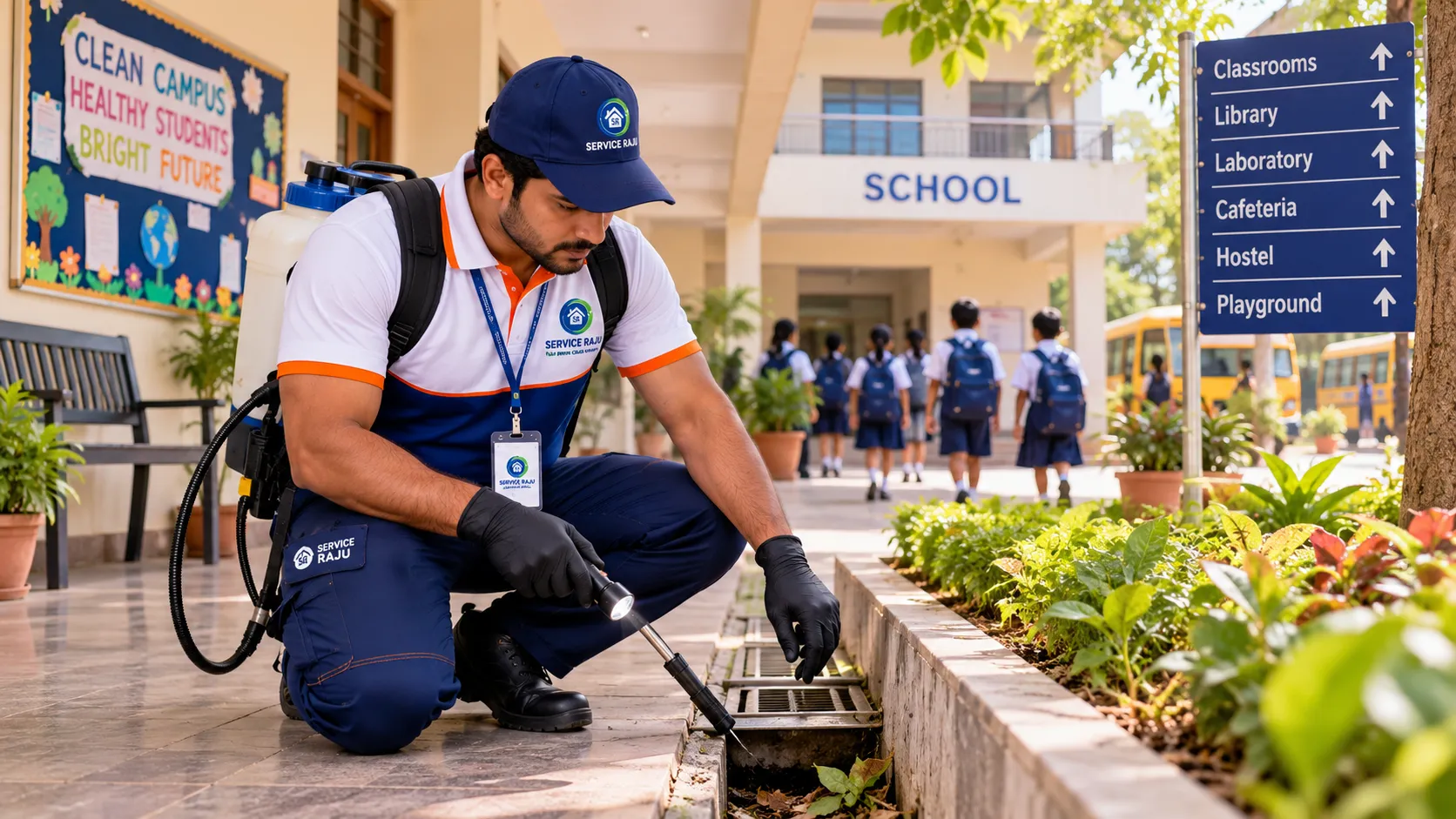
School Pest Control in Mysore: A Campus Safety Checklist
Schools, colleges and hostels need more than routine cleaning to maintain a hygienic learning environment. Food preparation areas, storage rooms, drains, waste collection points, student accommodation and outdoor grounds can all attract pests when moisture, food waste or suitable hiding places are available.
For administrators looking for pest control for schools, the goal should be to identify pest activity early, prevent recurring problems and select treatments that are appropriate for the location and its occupants.
Effective school pest management is not simply about spraying chemicals whenever insects appear. It combines regular inspections, sanitation, moisture control, entry-point management, monitoring and carefully planned professional treatment when necessary.
This guide provides a practical checklist for school management teams, hostel wardens, facility managers and procurement teams considering school pest control in Mysore.
Why Do Schools Need a Structured Pest-Control Plan?
Educational campuses contain different environments, each with its own pest risks. A cafeteria may attract cockroaches and ants, while standing water around the grounds can provide mosquito-breeding opportunities. Poorly managed waste areas may attract rodents, flies and other unwanted pests.
Hostels also require attention because food storage, shared bathrooms, laundry areas and student belongings can create conditions that support pest activity.
A structured pest-management plan helps an institution:
- Identify pest activity before it becomes widespread.
- Maintain cleaner kitchens, cafeterias and food-storage areas.
- Reduce conditions that attract rodents, insects and mosquitoes.
- Identify entry points and maintenance defects.
- Plan appropriate professional treatments around school activities.
- Maintain inspection records and corrective-action reports.
- Improve coordination between housekeeping, maintenance and pest-control teams.
- Support a safer, more hygienic campus environment.
No pest-control programme can guarantee that a campus will remain completely pest-free. Regular monitoring and timely corrective action help reduce the likelihood of recurring infestations.
School Pest Control Checklist: Areas That Need Inspection
A professional campus inspection should consider the full property rather than concentrating only on classrooms where pests have already been noticed.
1. School Kitchen and Cafeteria
Kitchens and cafeterias require particular attention because food residues, spills, warmth and moisture can attract pests.
Inspect the following areas:
- Food preparation counters and undersides of work surfaces.
- Areas beneath refrigerators, cooking equipment and storage racks.
- Food-storage cupboards and pantry shelves.
- Waste bins and waste collection points.
- Drain openings and areas with persistent moisture.
- Cracks, gaps and spaces around service penetrations.
- Delivery and food-unloading areas.
Keep food in suitable closed containers, remove waste regularly and clean food residues promptly. Any pest treatment in a food-handling area must be selected and scheduled according to the product label, applicable requirements and the precautions needed to protect food, utensils and occupants.
2. Dry Food Stores and Pantry Rooms
Rice, flour, pulses, cereals and other stored food can attract pantry insects if packages are damaged or storage conditions are unsuitable.
Campus food-store checks should include:
- Inspection of stored food for insects or damaged packaging.
- Checking older stock and applying appropriate stock-rotation practices.
- Keeping shelves and storage containers clean and dry.
- Removing spilled grains and food residues.
- Checking for signs of rodents or damaged packages.
- Separating suspect stock from unaffected food while it is assessed.
Infested food should not be served to students. Follow the institution's food-safety procedures for segregation and disposal.
3. Classrooms and Staff Rooms
Classrooms may attract ants and other insects when food crumbs, uncovered bins or accessible entry points are present.
Include these checks:
- Under desks, cupboards and classroom storage units.
- Waste bins and areas around them.
- Door and window gaps.
- Wall cracks and openings around utility lines.
- Staff pantry areas and shared refreshment spaces.
- Ceiling voids or storage spaces where pest evidence is reported.
Encourage students and staff to dispose of food waste properly. Repair suitable entry gaps and maintain regular housekeeping routines.
4. Student Hostels and Dormitories
Hostel pest control requires a combination of room inspections, housekeeping, maintenance and clear reporting procedures.
Common areas to inspect include:
- Beds, bed frames and nearby furniture where pest activity has been reported.
- Mattresses and bed joints when bed bugs are suspected.
- Wardrobes, luggage-storage areas and furniture gaps.
- Bathrooms, wash areas and damp corners.
- Shared kitchens and food-storage spaces.
- Laundry rooms and waste collection points.
- Door frames, windows and other possible entry points.
Different pests require different inspection and treatment methods. For example, suspected bed bugs require a targeted assessment rather than a general surface spray.
Where treatment is necessary, management should coordinate access, occupant communication, preparation and re-entry instructions with the responsible professional.
5. Toilets, Bathrooms and Drainage Areas
Persistent moisture, drain defects and organic residues can support certain pest problems.
Check:
- Blocked or slow-draining outlets.
- Leaking taps, pipes and concealed service areas where accessible.
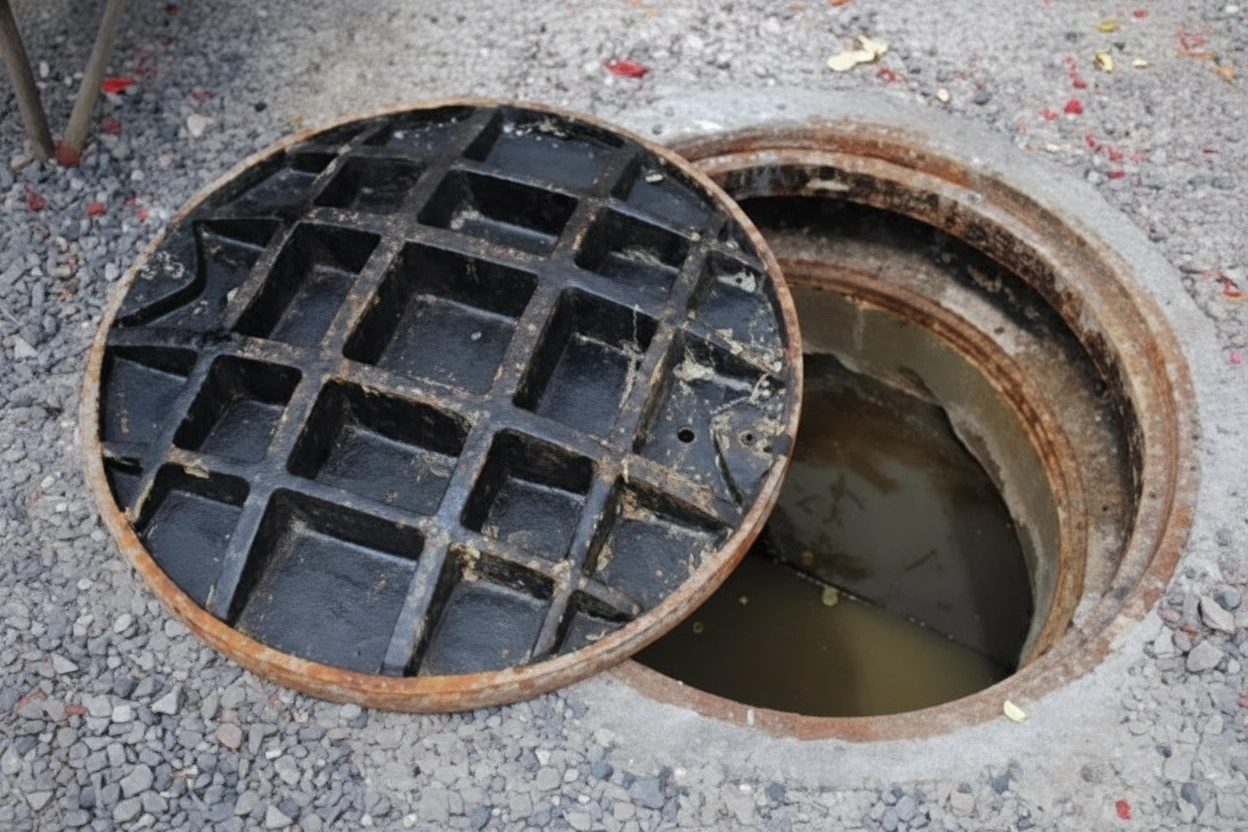
- Damaged drain covers and unsuitable openings.
- Accumulated waste around drainage points.
- Standing water and damp floor corners.
- Gaps around pipes and wall penetrations.
Repair leaks, maintain drainage and clean the affected areas. Pest-control treatment alone will not solve an ongoing plumbing leak or a persistent drainage defect.
6. Outdoor Grounds and Play Areas
Outdoor areas can influence pest activity inside the school buildings. Poorly managed vegetation, discarded containers and standing water can create suitable conditions for certain pests.
Include the following checks:
- Standing water in containers, discarded items and low-lying areas.
- Drainage channels and water-collection points.
- Waste accumulation near boundaries.
- Overgrown vegetation near building entrances.
- Gaps beneath doors and around service entries.
- Areas near canteens, food deliveries and waste storage.
Remove unnecessary standing water where practical, maintain drainage and arrange repairs for persistent water-collection problems.
7. Waste Storage and Collection Points
Waste-management areas can attract rodents, flies and other pests when food waste remains accessible or bins are not maintained.
School management should confirm that:
- Waste is placed in suitable containers with secure lids.
- Collection happens at an appropriate frequency.
- Food waste is not left exposed overnight.
- Bins are cleaned according to the facility's hygiene procedures.
- Waste storage areas are kept tidy and accessible for inspection.
- Evidence of rodents or insects is recorded and investigated.
Improving waste handling often forms an important part of long-term pest prevention.
Which Pests Should Schools Monitor?
The appropriate inspection priorities depend on the campus layout, food-handling activities, surrounding environment and previous pest reports.
| Pest | Common Warning Signs | Recommended Preventive Focus |
|---|---|---|
| Cockroaches | Live insects, droppings or egg cases | Sanitation, moisture control, targeted inspection and appropriate treatment |
| Ants | Repeated trails near food or entry gaps | Food containment, cleaning and identifying entry routes |
| Rodents | Droppings, gnaw marks or damaged food packaging | Waste control, exclusion, monitoring and professional assessment |
| Mosquitoes | Adult mosquitoes or potential breeding sites | Standing-water management and appropriate site-specific control |
| Flies | Repeated activity around food or waste | Waste hygiene, drain maintenance and identification of breeding sources |
| Bed bugs | Suspected insects or characteristic evidence around beds | Targeted inspection, appropriate treatment and coordinated room management |
| Stored-product insects | Small beetles or larvae in stored grains and food | Stock inspection, food protection and appropriate disposal procedures |
These signs are indicators for further investigation, not definitive identification. When the pest is uncertain, arrange a suitable inspection before selecting a treatment.
What Is Integrated Pest Management (IPM) for Schools?
Integrated Pest Management (IPM) is a prevention-led approach that combines inspection, monitoring, sanitation, exclusion, maintenance and targeted treatment when needed.
For educational institutions, IPM helps management address the underlying reasons pests are appearing rather than relying entirely on repeated pesticide applications.
Step 1: Inspect and Identify
Record the location, type of pest evidence, frequency of reports and possible contributing conditions. Correct identification helps determine which response is appropriate.
Step 2: Remove Food, Water and Shelter
Improve cleaning, secure food storage, maintain waste bins, address leaks and remove unnecessary clutter that provides hiding places.
Step 3: Reduce Entry Points
Repair suitable gaps around doors, windows, pipes and other building openings. Use appropriate door seals, screens or other exclusion measures where suitable.
Step 4: Monitor Results
Use suitable monitoring methods and follow-up inspections to assess whether the problem is reducing. Keep records of recurring locations and unresolved maintenance issues.
Step 5: Use Treatment Only When Appropriate
Where non-chemical measures are insufficient, a suitably qualified professional should select an appropriate treatment based on the identified pest, site conditions and applicable requirements.
Products must be used according to their approved label and applicable Indian regulations. Treatment should not expose students, staff, food, drinking water or other sensitive areas to avoidable risks.
Step 6: Review and Improve
Review inspection findings, pest reports and completed corrective actions. Adjust the prevention plan when monitoring identifies recurring problems.
School Pest-Control Safety: What Administrators Should Confirm
Safety planning is essential whenever pest treatment is proposed in an educational environment.
Before approving a treatment, the responsible administrator should confirm the following:
- The pest and affected area have been identified as accurately as practical.
- The proposed treatment is suitable for the site and target pest.
- The provider is appropriately qualified and authorised for the work.
- The product is permitted for the intended use and will be applied according to its label.
- Food, utensils, drinking water and sensitive equipment will be protected as required.
- Students, teachers, visitors and other occupants will be kept away from treatment areas as necessary.
- Required preparation, ventilation and re-entry instructions will be communicated clearly.
- Any product-specific precautions and applicable waiting periods will be followed.
- The school has an identified contact for questions or concerns after treatment.
There is no single safe waiting period that applies to every pest-control product. Re-entry and ventilation requirements must be determined from the specific product instructions and the professional's approved treatment plan.
Do not assume that a treatment is safe simply because it is described as odourless or low-odour.
When Should School Pest Control Be Scheduled?
There is no universal treatment frequency suitable for every school. The schedule should reflect inspection findings, the site's risk profile, previous pest activity, maintenance conditions and the treatment method used.
Useful opportunities for inspection and preventive maintenance include:
- Before a new academic term begins.
- During scheduled deep cleaning or facility maintenance.
- After reports of recurring cockroaches, ants, rodents or other pests.
- When a cafeteria or food-storage area is reorganised.
- After plumbing leaks, drainage defects or building repairs.
- When hostel rooms or shared accommodation areas are prepared for new occupants.
- At the follow-up intervals recommended by the responsible professional.
Any treatment that requires the area to remain unoccupied should be coordinated with the school's calendar and the applicable safety instructions.
Should Schools Consider an Annual Maintenance Contract (AMC)?
A pest-control Annual Maintenance Contract can help institutions organise inspections, monitoring, preventive recommendations and agreed service visits through a documented maintenance arrangement.
An AMC may be useful for schools, colleges, hostels and other facilities with several kitchens, washrooms, storage areas and shared spaces.
What Should a School Pest-Control AMC Include?
- Defined campus areas covered by the agreement.
- Initial inspection and documented observations.
- Agreed service frequency and response arrangements.
- Monitoring and follow-up procedures.
- Recommendations for sanitation and building maintenance.
- Clear procedures for reporting new pest activity.
- Documentation of visits, findings and corrective actions.
- Details of treatment methods and relevant safety precautions.
- Transparent pricing, exclusions and additional-visit terms.
Ask whether emergency visits, specialised treatments, extensive infestations and building repairs are included or charged separately.
A maintenance contract should not be presented as a guarantee that pests will never appear. Its value depends on the scope of service, monitoring quality and the institution's cooperation with preventive measures.
How to Choose a School Pest-Control Service in Mysore
When comparing commercial pest control in Mysore, schools should assess more than the quoted price.
Use the following selection checklist:
- Relevant experience: Ask whether the provider can manage educational or other sensitive occupied premises.
- Qualifications and authorisation: Confirm that the provider and personnel meet the requirements for the proposed work.
- Inspection approach: Ask how the provider identifies the pest and its contributing conditions.
- Safety planning: Confirm how students, staff, food and sensitive areas will be protected.
- Treatment transparency: Request the proposed method and relevant product information.
- Documentation: Ask for service reports, findings and follow-up recommendations.
- Response arrangements: Understand how new pest reports and urgent issues will be handled.
- Commercial terms: Compare coverage, visit frequency, exclusions and AMC conditions.
A professional provider should be willing to explain the proposed work and its limitations before the institution commits to a contract.
School Pest Control in Mysore: How Service Raju Can Help
Service Raju offers home and commercial service solutions, including commercial pest-control AMC enquiries.
For a school, hostel or educational campus in Mysuru, the first step is to discuss the property layout, areas of concern, previous pest reports and the institution's operating schedule.
Depending on the agreed service scope and site assessment, a professional pest-management plan may address:
- Kitchen, cafeteria and food-storage inspections.
- Hostel and shared-facility pest concerns.
- Waste-management and drainage-related pest risks.
- Monitoring of recurring insect or rodent activity.
- Practical sanitation and entry-point recommendations.
- Appropriate treatment planning and follow-up arrangements.
- Documented service visits and maintenance recommendations.
The exact treatment, availability, service coverage and contract terms should be confirmed before booking. Work must be performed by appropriately qualified and authorised personnel using suitable methods and products.
Learn more about the Commercial Pest Control AMC Service in Mysuru.
School Pest-Control Checklist for Facility Managers
Use this checklist during routine facility reviews and when preparing for a professional inspection.
- Kitchen and cafeteria cleaning routines are documented.
- Food is stored in suitable closed containers.
- Waste bins are covered and emptied regularly.
- Drains and plumbing defects are inspected and maintained.
- Standing water is identified and addressed where practical.
- Doors, windows and relevant entry points are maintained.
- Hostel rooms and shared spaces have a clear pest-reporting process.
- Suspected infestations are recorded by location and date.
- Previous treatment reports and follow-up actions are reviewed.
- Any pesticide treatment has a documented safety and re-entry plan appropriate to the product and site.
- Staff know whom to contact when new pest activity is noticed.
- Outstanding maintenance issues are assigned for corrective action.
Assign responsibility for each action and record completion dates. This turns the checklist into a practical maintenance tool rather than a one-time inspection exercise.
Frequently Asked Questions About School Pest Control
Why do schools need professional pest control?
Schools have kitchens, waste areas, drains, classrooms, storage rooms and shared facilities that can attract different pests. Professional inspections help identify pest activity, contributing conditions and appropriate corrective measures.
How often should a school arrange pest control?
The appropriate frequency depends on inspection results, previous pest activity, campus conditions and the proposed treatment. A professional should recommend a suitable schedule rather than applying the same frequency to every institution.
Is pest control safe for schools with children?
Safety depends on the pest, treatment method, product, application and site conditions. Use appropriately qualified professionals, follow product-label instructions and keep students and staff away from treatment areas for the required period.
What is Integrated Pest Management for schools?
Integrated Pest Management combines inspection, pest monitoring, sanitation, moisture control, entry-point management and targeted treatment where needed. It focuses on preventing recurring pest problems rather than relying only on routine pesticide application.
Can school kitchens receive pest-control treatment?
Yes, when the proposed treatment is appropriate and permitted for the specific setting. Food, utensils, preparation surfaces and drinking water must be protected according to the product instructions and applicable requirements.
Does school pest control include hostels?
Hostels can be included when they form part of the agreed service scope. Their inspection plan may need to cover sleeping areas, shared kitchens, bathrooms, laundry spaces and storage areas.
What is included in a school pest-control AMC?
A contract may include scheduled inspections, agreed treatment visits, monitoring, reporting and preventive recommendations. Confirm the exact locations, frequency, response arrangements, exclusions and additional charges before signing.
Can pest-control treatment be done during school holidays?
School holidays may provide a convenient scheduling opportunity for certain treatments, but the timing must follow the product instructions, safety requirements and any required re-entry conditions.
How can schools reduce mosquitoes without relying only on spraying?
Identify and remove avoidable standing water, maintain drains, manage containers and arrange appropriate inspection of potential breeding sites. Professional mosquito-control measures can be considered when site conditions require them.
How should a school choose a pest-control company in Mysore?
Compare qualifications, authorisation, inspection procedures, safety planning, documentation, response arrangements and contract scope. Ask the provider to explain the proposed work and how the institution will be informed of relevant precautions.
Arrange a School Pest-Control Inspection in Mysore
Managing pests across a school, hostel or college campus requires a coordinated approach to inspection, cleaning, maintenance, monitoring and appropriate professional treatment.
If you manage an educational institution in Mysuru, discuss your campus requirements before choosing a treatment plan or annual maintenance contract.
Service Raju – Commercial Pest Control Enquiries
Call or WhatsApp: +91 9964544445
Website: www.serviceraju.com
Enquire About Commercial Pest Control AMC in Mysuru
Trusted Home Services in Mysuru, Udupi, Mangaluru & Indore.
 AC Repair
.webp) Ant Control Service
Ant Control Service
 Basin & Sink Services
.webp) Bath & Shower Services
Bath & Shower Services
.webp) Bath Fittings & Mirrors
Bath Fittings & Mirrors
 Bathroom Cleaning Service
 Bathroom Renovation Services
 Bed Bug Control Services
 Bedroom Painting
 Book a Carpenter Consultation
 Book Electrical Consulting
.webp) Cabinet Painting & Wood Refinishing
Cabinet Painting & Wood Refinishing
 Chimney Cleaning
 Civil Masonry Work
 Clean-Up Services
.webp) Clothes Hanger Installation
Clothes Hanger Installation
 Cockroach Control Services
---mysore-mysore-standard-300x200.webp) Commercial Cleaning
Commercial Cleaning
 Commercial Pest Control AMC Service
 Cupboard & Drawer Services
 Decorative Wall Panels
 Deep Sanitisation Service
 Detan & Bleach
 Door, Grill & Cabinet Painting Service
.webp) Doorbell & security
Doorbell & security
 Drain Blockage Clearing
 Electrical Appliance Services
 Electrical Wiring Services
 Empty Home Deep Cleaning
.webp) Fabrication
Fabrication
 Facials
.webp) Fan Installation & Repair
Fan Installation & Repair
 Full Home Cleaning Service
 Full Home Renovation
 Furniture Repair Service
 Gas Stove & Hob Repair
.webp) General Pest Control Services
General Pest Control Services
 General Plumbing & Consultation
 Geyser Repair
 Glass Cleaning
 Head Massage
.webp) Honeybee & Wasp-Services
Honeybee & Wasp-Services
 Kitchen & Bathroom Painting Service
 Kitchen Cleaning
 Kitchen Fittings
.webp) Kitchen Renovation
Kitchen Renovation
.webp) Laptop/Desktop service
Laptop/Desktop service
 Leak Detection and Repair
 LED TV Repair
 Living and Dining Room Painting
 Makeup, Saree & Styling
 Manicure & Pedicure
 MCB,Meter & Fuse Services
 Microwave Repair
 Mosquito Pest Control Service
 Multi-Room Painting Service
 Painting Consultation
 Quick Mini Cleaning Services
 Refrigerator Repair
 RO Water Purifier
.webp) Rodent Control Services (Rat & Mice Treatment)
Rodent Control Services (Rat & Mice Treatment)
.webp) Rooms Cleaning
Rooms Cleaning
 Shelves & Decor
 Sofa, Carpet & Mattress Cleaning
 Solar Water Heater Service
 Sump & Tank Cleaning
 Switch & Socket Services
 Tap & Mixer Service
.webp) Termite-Control-Services
Termite-Control-Services
 Threading & Face Wax
.webp) Tile & Granite Installation & Polishing
Tile & Granite Installation & Polishing
 Toilet & Commode Services
.webp) UPS and Inverter Repair Services
UPS and Inverter Repair Services
.webp) Wall Painting Service
Wall Painting Service
 Washing Machine Repair
 Water Level Controllers
 Water Tank and Pump Repair
 Waterproofing
 Waterproofing Services
 Waxing
 Window & Curtain Services
 Wooden Door Services