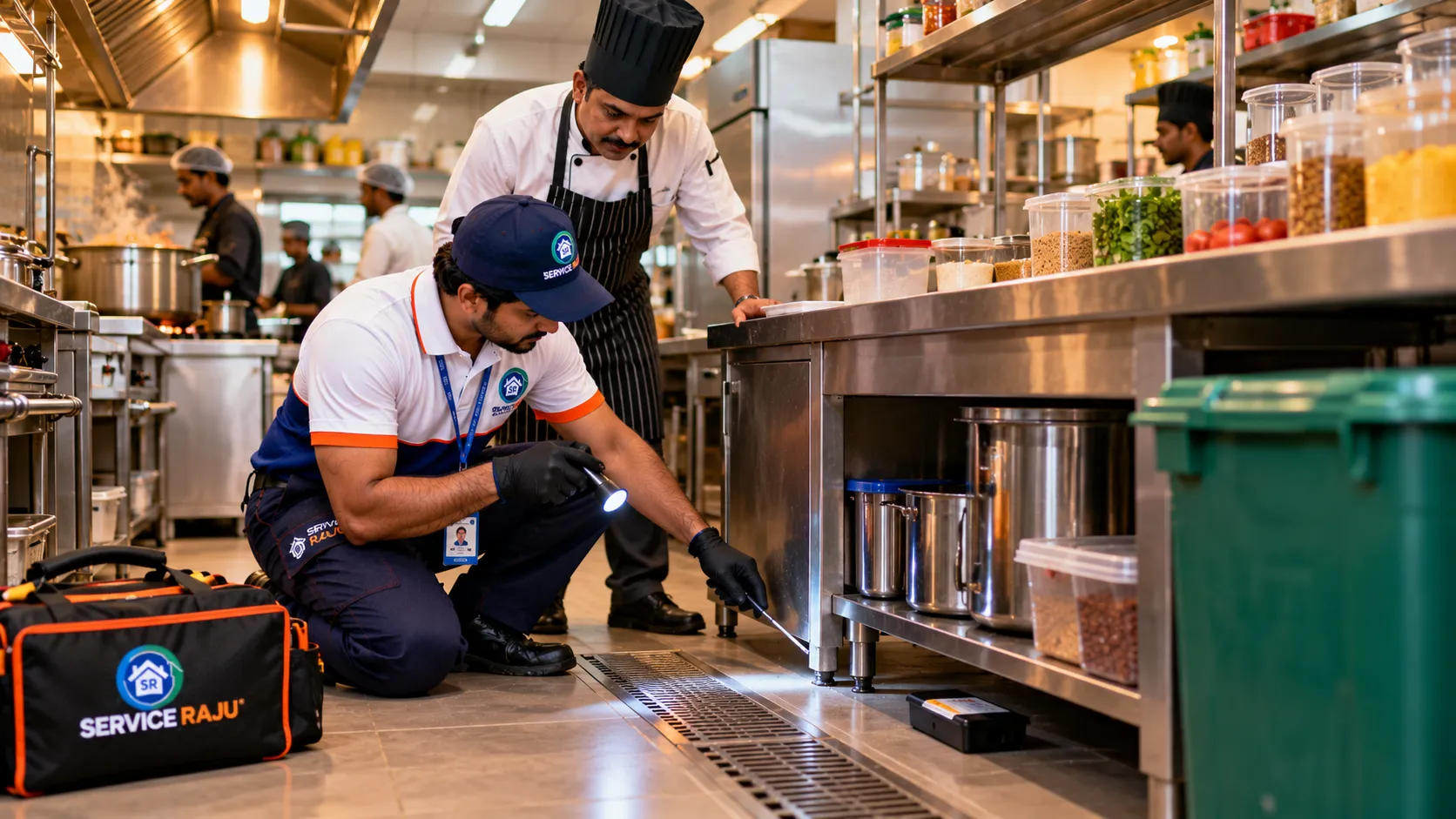
Restaurant Pest Control Before Dasara: 10 Checks for Kitchens & Food Businesses
Restaurant Pest Control Mysore becomes especially important when restaurant, café, bakery and hotel traffic increases during the Dasara season. More customers, longer operating hours, higher food turnover, more waste and increased kitchen activity can make small pest problems much harder to manage.
Mysuru's official 2026 Dasara programme lists the main Food Mela from 11 October to 25 October 2026 at Maharaja's College Ground. The official Dasara Food Fest is running from 28 September to 7 October 2026 with 40 food stalls, including vegetarian, non-vegetarian, sweets, beverages, street-food and bakery stalls.
For food businesses, pest control is not simply about making the kitchen look clean. FSSAI hygiene requirements state that food businesses need an effective Food Safety Management System and compliance with the applicable hygiene requirements. FSSAI pest-control guidance also calls for preventing pest access, dealing with infestations promptly, using permissible control agents without compromising food safety and maintaining records of pesticide/insecticide use.
This makes the pre-Dasara period a useful time for restaurants and food businesses to inspect hidden pest-risk areas before customer traffic becomes heavier.
Quick Answer: What Should a Restaurant Check Before Dasara?
A professional commercial pest control Mysore inspection should look at more than the visible kitchen floor.
- Cockroach hiding areas
- Rodent entry points
- Food-storage areas
- Kitchen drains
- Waste-storage zones
- Equipment gaps
- Grease and food residue
- False ceilings and concealed spaces
- Store rooms and delivery/storage areas
- Dining and customer-facing areas
The objective is to identify pest access, food sources, water sources and harbourage before choosing the treatment.
Table of Contents
- Why Restaurant Pest Control Needs a Different Approach
- 10 Pest-Control Checks Before Dasara
- Cockroach Risk Areas in Commercial Kitchens
- Rodent Risk Areas in Restaurants
- Why One-Time Treatment May Not Be Enough
- When Should a Restaurant Consider Pest Control AMC?
- Why Pest-Control Records Matter for Food Businesses
- What to Ask a Commercial Pest-Control Provider
- Restaurant Pest Control Service in Mysore
- FAQs
- Final Takeaway
Why Restaurant Pest Control Needs a Different Approach
A residential kitchen and a commercial kitchen may both have food, water and drains, but the scale and operating conditions are very different.
A restaurant may have:
- Continuous food preparation
- Multiple cooking stations
- Large quantities of ingredients
- Frequent deliveries
- Grease accumulation
- High waste volumes
- Multiple floor drains
- Storage rooms
- Late-night operating hours
- High customer turnover
These conditions create more opportunities for pests to find food, water and shelter.
FSSAI guidance states that food establishments should keep buildings and equipment in good repair to prevent pest access and eliminate potential breeding sites. It also recommends sealing or protecting holes, drains and other access points, storing food in pest-proof containers and addressing infestations promptly.
That means a restaurant pest-control programme should include both treatment and prevention.
10 Pest-Control Checks Before Dasara
1. Inspect Under and Behind Kitchen Equipment
Large appliances and fixed kitchen equipment can create dark, warm and protected spaces.
Inspect areas around:
- Refrigerators
- Freezers
- Cooking equipment
- Dishwashing equipment
- Storage racks
- Food-preparation counters
- Electrical appliance gaps
Grease, crumbs and moisture can accumulate under equipment even when the visible kitchen floor appears clean.
For kitchen pest control, these concealed areas should be part of the inspection rather than treating only the open floor.
2. Check Kitchen Drains and Drain Surroundings
Commercial kitchens generate significant wastewater and frequently have multiple drains.
Inspect:
- Floor drains
- Drain covers
- Sink drains
- Grease-prone drainage areas
- Drain pipe entry points
- Areas around drainage channels
FSSAI pest-control guidance specifically identifies drains and other potential access points as areas that should be properly sealed or protected to prevent pest access.
Slow drainage, persistent food residue or damaged drain covers should be corrected rather than ignored.
3. Inspect Food-Storage Areas
Food storage is one of the first places a commercial pest inspection should examine.
Check:
- Dry-storage shelves
- Ingredient containers
- Flour and grain storage
- Sugar and sweet storage
- Packaging materials
- Cardboard cartons
- Low-level storage
FSSAI guidance recommends keeping food materials in pest-proof containers and storing them above the ground and away from walls.
This also makes inspections easier because pests and droppings are easier to detect when storage areas are organised.
4. Look for Cockroach Harbourage
Cockroaches can hide in very small and protected spaces.
Common commercial-kitchen risk areas include:
- Behind refrigerators
- Under sinks
- Inside cabinet voids
- Around pipes
- Behind cooking equipment
- Electrical and service gaps
- Warm equipment areas
- Cracks and crevices
Warning signs include droppings, egg cases, live cockroaches, shed skins and repeated activity after dark.
If signs are present, use a dedicated cockroach control for restaurants approach rather than treating the entire issue as ordinary household pest control.
5. Check Rodent Entry Points
Rodents need access, food and shelter. Restaurants can unintentionally provide all three.
Inspect:
- Back doors
- Delivery entrances
- Pipe penetrations
- Ventilation openings
- Damaged wall sections
- Gaps beneath doors
- Ceiling penetrations
- Storage-room openings
Look for:
- Droppings
- Gnaw marks
- Greasy rub marks
- Damaged food packaging
- Nesting material
For rodent control for restaurants, sealing and exclusion should be considered alongside population-control measures.
6. Check Waste and Garbage Areas
Waste storage can become a major pest-attraction point when food businesses are busy.
Inspect:
- Kitchen waste bins
- External garbage areas
- Food-waste containers
- Bin-washing areas
- Waste-room floors
- Nearby drains
FSSAI guidance recommends regular removal of waste and keeping waste-handling areas clean because accumulated refuse can contribute to pest problems.
Use covered, suitable waste containers and maintain a regular waste-removal routine.
7. Inspect Grease, Oil and Food Residue
Restaurant kitchens naturally generate grease. Problems arise when grease accumulates in areas that are difficult to reach.
Check:
- Under cooking equipment
- Behind equipment
- Kitchen exhaust surroundings
- Wall-floor junctions
- Drain edges
- Storage-room corners
Cleaning and pest management should work together. Removing the food and grease sources reduces the conditions supporting pest activity.
8. Check False Ceilings and Concealed Voids
Restaurants often have concealed spaces above ceilings, inside service shafts and around electrical or plumbing installations.
These areas can provide protected routes for rodents, cockroaches and other pests.
Look for:
- Droppings
- Odour
- Gnawing
- Insect activity
- Damaged insulation
- Open service penetrations
Do not open electrical or structural areas unnecessarily. A trained technician should determine how these spaces can be safely inspected.
9. Inspect Store Rooms and Delivery Areas
Food businesses can unintentionally bring pests inside through incoming goods and packaging.
Inspect:
- Cardboard cartons
- Ingredient deliveries
- Storage pallets
- Unused equipment
- Dark corners
- Stock rooms
- Loading areas
Keep storage organised and allow enough access for routine inspection.
10. Do Not Forget the Dining Area
Customer-facing areas are part of the pest-control programme too.
Check:
- Dining tables and chair areas
- Wall-floor edges
- Under seating
- Buffet areas
- Drinks stations
- Entry doors
- Windows
- Outdoor dining areas
Ants, flies and cockroaches can move between kitchen and dining areas. Customers may notice pest activity in the dining room before staff realise there is a wider infestation.
Cockroach Risk Areas in Commercial Kitchens
Cockroaches can become particularly difficult to control when multiple food and moisture sources are available.
| Area | What to Check |
|---|---|
| Under sinks | Moisture, pipes and hidden gaps |
| Behind refrigerators | Food residue, warmth and harbourage |
| Cooking equipment | Grease and concealed spaces |
| Drains | Residue, damaged covers and access points |
| Storage | Food contamination, cartons and hidden activity |
| Wall gaps | Entry routes and concealed harbourage |
Repeated cockroach sightings after treatment are a reason to reassess the whole kitchen environment rather than simply spraying visible insects again.
Rodent Risk Areas in Restaurants
Rodent control requires more than removing one visible rat or mouse.
A commercial inspection should consider:
- Entry routes
- Food access
- Water sources
- Waste areas
- Nesting locations
- Storage practices
- External building gaps
FSSAI food-establishment guidance recommends maintaining the building to prevent pest access, sealing holes and drains, keeping storage pest-proof and dealing with infestations without compromising food safety.
Why One-Time Treatment May Not Be Enough
A restaurant has changing conditions.
New deliveries arrive. Staff move equipment. Ingredients change. Waste levels fluctuate. Drains are used continuously. Doors open frequently. New gaps can develop.
That is why recurring restaurant pest control service can be more appropriate for some food businesses than waiting until pests become visible.
A professional commercial programme can combine:
- Initial inspection
- Pest identification
- Targeted treatment
- Entry-point recommendations
- Monitoring
- Follow-up visits
- Documentation
FSSAI training guidance states that pest-management programmes should be documented and identify target pests, plans, methods, schedules, control procedures and, where necessary, training requirements.
When Should a Restaurant Consider Pest Control AMC?
A pest control AMC can be worth considering when pest risk is continuous rather than occasional.
An AMC model may be appropriate for:
- Restaurants
- Cafés
- Hotels
- Bakeries
- Catering kitchens
- Cloud kitchens
- Food-processing areas
- Large commercial kitchens
The exact visit schedule should be based on the property's pest risk and agreed service plan.
Before signing an AMC, ask:
- Which pests are covered?
- How often are inspections performed?
- What treatment methods are included?
- Are emergency visits included?
- Are monitoring devices included?
- Will service reports be provided?
- Which chemicals or control agents may be used?
- What records will be maintained?
FSSAI guidance specifically refers to documented pest-management programmes and maintaining records of pesticide/insecticide use, dates and frequency.
Why Pest-Control Records Matter for Food Businesses
A restaurant should be able to maintain a clear record of its pest-management activities.
Depending on the business and service arrangement, records may include:
- Inspection date
- Target pest
- Treatment date
- Treatment area
- Control method
- Product/chemical details where applicable
- Technician details
- Follow-up date
- Observations
- Corrective recommendations
FSSAI's third-party audit material specifically includes checks for pest-control programmes, approved pest-control chemicals, trained personnel, rodent-trap mapping, insect-control equipment and records.
This makes documentation a practical part of commercial pest management rather than unnecessary paperwork.
What to Ask a Commercial Pest-Control Provider
Before booking a commercial pest control Mysore provider, ask these questions:
- Will you inspect the entire premises before treatment?
- Which pests are currently covered?
- Will the kitchen and food-storage areas receive separate inspection?
- How will treatment be carried out without compromising food safety?
- What preparation is required before treatment?
- What re-entry or cleaning instructions apply?
- Will drains, storage areas and waste zones be checked?
- How will rodent entry points be handled?
- Do you provide service reports?
- Do you offer a pest-control AMC?
For a food business, the cheapest treatment is not automatically the best treatment. The service must fit the operational environment and food-safety requirements.
Restaurant Pest Control Service in Mysore
Service Raju provides commercial pest-control services in Mysuru for food businesses and other commercial properties.
The commercial pest-control service can be considered for:
- Restaurants
- Cafés
- Bakeries
- Hotels
- Commercial kitchens
- Cloud kitchens
- Food shops
- Offices and commercial premises
Depending on the property, the inspection can focus on:
- Cockroach activity
- Rodent entry points
- Ant activity
- Fly risk areas
- Food-storage zones
- Drains
- Waste areas
- Kitchen equipment gaps
- Store rooms
- Customer dining areas
Commercial Pest Inspection
Before treatment, tell the technician:
- Type of food business
- Kitchen size
- Operating hours
- Known pest problem
- Previous pest treatment
- Any current pest sightings
- Whether an AMC or recurring programme is required
This allows the pest-control plan to be designed around the actual commercial environment.
Book Commercial Pest Inspection in Mysore
Call / WhatsApp: 9964544445
Website: www.serviceraju.com
Service Raju — Your Home & Commercial Service Partner
FAQs About Restaurant Pest Control in Mysore
Why does a restaurant need different pest control from a home?
Restaurants have continuous food preparation, higher food and waste volumes, multiple drains, deliveries, storage areas and longer operating hours. These conditions can create more pest-access and harbourage opportunities.
What pests are most important to check in a restaurant?
The inspection should be based on the site, but common concerns include cockroaches, rodents, ants and flies. The technician should identify actual activity rather than assume a pest type.
Why are cockroaches common in commercial kitchens?
Commercial kitchens can provide food residue, moisture, warmth and protected harbourage. Areas behind equipment, under sinks, around drains and inside service gaps deserve particular attention.
How can restaurants prevent rodents?
Combine pest management with exclusion: seal practical entry points, secure food storage, manage waste, inspect delivery areas and remove potential nesting conditions.
What is pest control AMC for a restaurant?
A pest-control AMC is a recurring service arrangement in which inspections, treatments and/or monitoring are carried out according to an agreed schedule and scope. The exact frequency and services should be defined in the contract.
Are pest-control records important for restaurants?
Yes. FSSAI guidance and audit materials refer to documented pest-management programmes and records of pest-control activities and treatments.
Can pest control be performed while the restaurant is operating?
It depends on the treatment method, location and product instructions. Treatment near food-handling areas should be planned to protect food, equipment and workers, with appropriate preparation and re-entry procedures.
How often should a restaurant get pest control?
There is no single schedule for every restaurant. Pest pressure, property design, food operations and previous activity should determine the appropriate inspection and treatment frequency.
Should drains be included in restaurant pest inspections?
Yes. Drains can be potential pest-access points and should be inspected, maintained and protected as part of the overall pest-management programme. FSSAI guidance specifically highlights holes, drains and other access points.
Does Service Raju provide commercial pest control in Mysore?
Yes. Service Raju provides commercial pest-control services in Mysuru, including pest-management support for food businesses and other commercial properties.
Final Takeaway
Restaurant Pest Control Mysore should be treated as part of food-business maintenance, not as a last-minute response after customers or staff start seeing pests.
Before Dasara, use this sequence:
Inspect → Identify → Seal → Clean → Treat → Monitor → Document → Repeat as required.
Check the kitchen, drains, food storage, waste areas, equipment gaps, store rooms, false ceilings, delivery areas and dining spaces before the busiest festival period.
With the Mysuru Dasara Food Fest running through 7 October and the official Dasara Food Mela scheduled for 11–25 October, food businesses have a timely reason to review pest-control preparedness now.
For ongoing operations, consider whether a structured pest control AMC gives your restaurant better continuity than waiting for the next visible infestation.
Running a restaurant, café, bakery or commercial kitchen in Mysore?
Book a Commercial Pest Inspection with Service Raju before the Dasara rush.
Call / WhatsApp: 9964544445
Website: www.serviceraju.com
 AC Repair
.webp) Ant Control Service
Ant Control Service
 Basin & Sink Services
.webp) Bath & Shower Services
Bath & Shower Services
.webp) Bath Fittings & Mirrors
Bath Fittings & Mirrors
 Bathroom Cleaning Service
 Bathroom Renovation Services
 Bed Bug Control Services
 Bedroom Painting
 Book a Carpenter Consultation
 Book Electrical Consulting
.webp) Cabinet Painting & Wood Refinishing
Cabinet Painting & Wood Refinishing
 Chimney Cleaning
 Civil Masonry Work
 Clean-Up Services
.webp) Clothes Hanger Installation
Clothes Hanger Installation
 Cockroach Control Services
---mysore-mysore-standard-300x200.webp) Commercial Cleaning
Commercial Cleaning
 Commercial Pest Control AMC Service
 Cupboard & Drawer Services
 Decorative Wall Panels
 Deep Sanitisation Service
 Detan & Bleach
 Door, Grill & Cabinet Painting Service
.webp) Doorbell & security
Doorbell & security
 Drain Blockage Clearing
 Electrical Appliance Services
 Electrical Wiring Services
 Empty Home Deep Cleaning
.webp) Fabrication
Fabrication
 Facials
.webp) Fan Installation & Repair
Fan Installation & Repair
 Full Home Cleaning Service
 Full Home Renovation
 Furniture Repair Service
 Gas Stove & Hob Repair
.webp) General Pest Control Services
General Pest Control Services
 General Plumbing & Consultation
 Geyser Repair
 Glass Cleaning
 Head Massage
.webp) Honeybee & Wasp-Services
Honeybee & Wasp-Services
 Kitchen & Bathroom Painting Service
 Kitchen Cleaning
 Kitchen Fittings
.webp) Kitchen Renovation
Kitchen Renovation
.webp) Laptop/Desktop service
Laptop/Desktop service
 Leak Detection and Repair
 LED TV Repair
 Living and Dining Room Painting
 Makeup, Saree & Styling
 Manicure & Pedicure
 MCB,Meter & Fuse Services
 Microwave Repair
 Mosquito Pest Control Service
 Multi-Room Painting Service
 Painting Consultation
 Quick Mini Cleaning Services
 Refrigerator Repair
 RO Water Purifier
.webp) Rodent Control Services (Rat & Mice Treatment)
Rodent Control Services (Rat & Mice Treatment)
.webp) Rooms Cleaning
Rooms Cleaning
 Shelves & Decor
 Sofa, Carpet & Mattress Cleaning
 Solar Water Heater Service
 Sump & Tank Cleaning
 Switch & Socket Services
 Tap & Mixer Service
.webp) Termite-Control-Services
Termite-Control-Services
 Threading & Face Wax
.webp) Tile & Granite Installation & Polishing
Tile & Granite Installation & Polishing
 Toilet & Commode Services
.webp) UPS and Inverter Repair Services
UPS and Inverter Repair Services
.webp) Wall Painting Service
Wall Painting Service
 Washing Machine Repair
 Water Level Controllers
 Water Tank and Pump Repair
 Waterproofing
 Waterproofing Services
 Waxing
 Window & Curtain Services
 Wooden Door Services