Rats in Mysore Homes After Monsoon: 10 Signs of a Hidden Rodent Problem
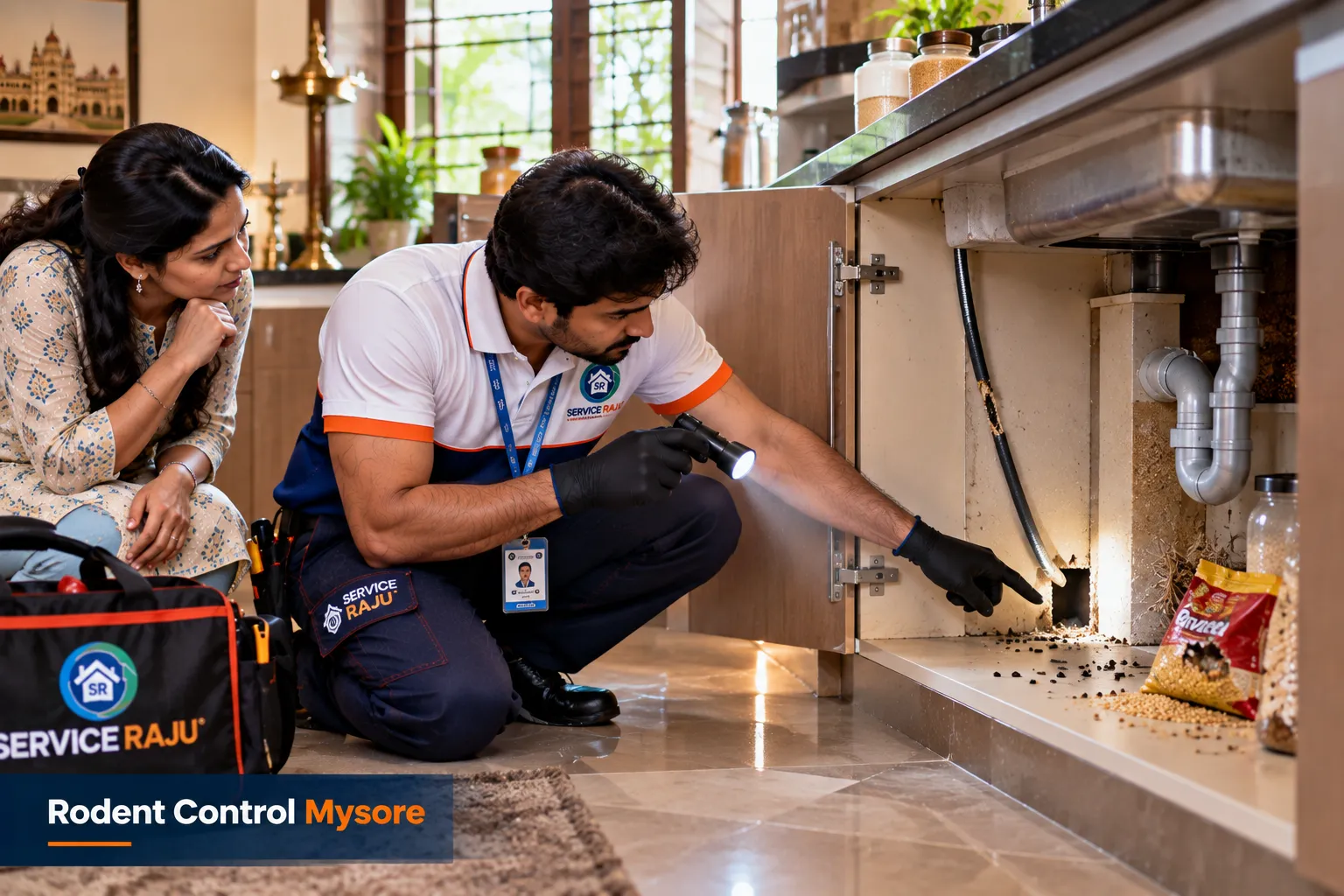
Rodent control Mysore becomes an urgent search when homeowners start hearing scratching at night, finding droppings in kitchen cabinets, noticing damaged food packets or discovering gnawed electrical wires. The difficult part is that rats and mice can stay hidden for long periods, so the first sign may appear before you actually see the animal.
Mysuru is currently in the run-up to Dasara 2026, with Yuva Sambhrama scheduled from September 28 to October 5 and the main Dasara festival from October 11 to 21. The official programme also lists the Aahara Mela from October 11 to 25.
For homeowners and businesses preparing for increased activity, it is useful to inspect hidden parts of the property rather than waiting until rats become easy to spot.
Rodent control is also more than simply removing one rat. A lasting solution usually involves finding entry points, identifying activity areas, removing food and shelter sources, controlling the rodents and preventing new entry.
Quick Answer: What Are the First Signs of Rats or Mice in a Home?
Ten common warning signs include:
- Rodent droppings
- Scratching or movement sounds at night
- Gnawed electrical wires
- Damaged food packets
- Greasy or dirty marks near walls
- Nesting material
- Unusual stale or musty odour
- Movement above ceilings or in concealed areas
- Holes and gaps that can act as entry points
- Repeated night-time sightings
EPA guidance similarly identifies droppings, nesting material, chewed food packaging, entry holes and stale smells as signs that a rodent infestation may be present.
Table of Contents
- Why Rats May Become More Noticeable After Monsoon
- 10 Signs of a Hidden Rodent Problem
- Where Rats Commonly Enter Mysore Homes
- How a Professional Rodent Inspection Works
- What Rodent Treatment Should Include
- How to Prevent Rats From Returning
- Important Safety Points Around Rodent Control
- Rodent Control Service in Mysore, Udupi, Mangaluru & Indore
- FAQs
- Final Takeaway
Why Rats May Become More Noticeable After Monsoon
Weather changes can alter conditions around homes, drains, gardens, construction areas and storage spaces. When rodents find shelter, food and accessible entry points, they can move into protected areas of a building.
However, not every post-monsoon rat problem is caused directly by rainfall. The more useful question is whether the property provides food, water, shelter and an easy route inside.
EPA and CDC guidance both emphasize reducing food and water sources, removing nesting opportunities and sealing openings as important parts of rodent prevention.
10 Signs of a Hidden Rodent Problem
1. You Find Small Droppings
Droppings are one of the clearest signs that a rodent has been active in an area.
Check:
- Kitchen cabinets
- Under the sink
- Behind refrigerators
- Near food storage
- Inside drawers
- Along wall edges
- Storerooms
- Ceiling or utility areas
EPA and CDC identify rodent droppings as an important sign of rodent presence. CDC also notes that if new droppings continue to appear after an area is cleaned, that indicates continuing rodent activity.
Important: Do not sweep or vacuum rodent droppings dry. Follow appropriate rodent-waste cleaning precautions and avoid unnecessary contact with contaminated material.
2. You Hear Scratching or Running at Night
Rats and mice can be active when the house is quiet, making night-time sounds an important clue.
You may hear:
- Scratching inside a false ceiling
- Movement behind cabinets
- Running sounds above the ceiling
- Rustling inside stored material
- Gnawing sounds
A single unexplained sound does not prove that you have rats. But repeated noises in the same concealed area deserve inspection.
Try to record the location and time when you hear the noise. That information can help a technician identify the likely activity zone.
3. Electrical Wires Have Gnaw Marks
Gnawed electrical insulation should be taken seriously.
Check visible cables around:
- Refrigerators
- Washing machines
- Inverters
- TV units
- Kitchen appliances
- Electrical cabinets
- False ceilings
Rodents can chew materials while creating access routes or maintaining their teeth. CDC identifies gnaw marks as a useful sign of rodent activity.
If wiring is visibly damaged, do not touch exposed electrical conductors. Have the electrical fault addressed separately by a qualified electrician.
4. Food Packets Are Damaged
Small holes or gnaw marks on food packaging can be an early sign of rodent activity.
Inspect:
- Rice and grain bags
- Flour packets
- Pet food
- Biscuits
- Dry snacks
- Stored grocery cartons
Even if you have not seen a rat, repeated packaging damage should trigger an inspection of nearby cabinets, walls and entry points.
EPA specifically lists chewing on food packaging among common signs of rodent infestation.
5. You See Greasy Marks Along Walls
Rodents often travel close to walls, furniture edges and other protected surfaces.
You may sometimes notice dark or greasy-looking marks along frequently used routes.
Look near:
- Kitchen skirting
- Cabinet edges
- Behind appliances
- Storeroom walls
- Pipe routes
- Dark corners
A mark alone does not prove that rats are present, so compare it with other signs such as droppings, gnawing or scratching sounds.
6. Nesting Material Appears
Rats and mice may collect soft or shredded material to create sheltered nesting areas.
Check for:
- Shredded paper
- Cloth pieces
- Cardboard
- Dry plant material
- Insulation material
- Other disturbed soft materials
EPA identifies shredded paper, fabric and dried plant material among materials that can indicate rodent nesting.
Common hidden areas include the back of cabinets, stored cartons, ceiling voids and low-traffic storage areas.
7. There Is an Unusual Stale or Musky Odour
A persistent unusual smell in a closed cabinet, false ceiling, storeroom or wall-adjacent space can be another clue.
EPA identifies stale smells coming from hidden areas as a possible indication of rodent activity.
If the smell is strong or there is evidence of a dead animal, avoid handling it directly. A professional inspection and appropriate cleanup may be necessary.
8. You Hear Movement Above the Ceiling
False ceilings can provide concealed routes where rodents move without entering the main living area.
Warning patterns include:
- Repeated scratching above the same room
- Movement near ceiling lights
- Droppings around ceiling access points
- Damaged insulation
- Unusual odour from ceiling spaces
Do not open electrical or ceiling systems unnecessarily just to search for rodents. A controlled inspection is safer.
9. You Find Holes or Gaps Near Pipes and Walls
A rat infestation can begin with a small opening.
Inspect around:
- Water pipes
- Sewer pipes
- Gas lines
- Electrical cables
- Drain openings
- Doors
- Windows
- Cabinets
- Floor-wall junctions
- Roof and ceiling openings
CDC specifically recommends checking gaps around kitchen cabinets, appliances, plumbing pipes, drains, doors, windows and utility lines because these can provide routes into a building.
10. You See Rats or Mice at Night
Actually seeing a rodent is one of the clearest reasons to investigate further.
Record:
- Where you saw it
- Approximate time
- Direction in which it moved
- Whether it disappeared into a gap
- Whether droppings or food damage were nearby
One sighting does not necessarily tell you how large the problem is. The surrounding evidence is important.
Where Rats Commonly Enter Mysore Homes
Entry-point inspection is a major part of home rat control.
| Potential Entry Area | What to Check |
|---|---|
| Kitchen cabinets | Gaps behind and underneath cabinets |
| Sink area | Pipe penetrations and wall openings |
| Washing-machine area | Water and drain pipe gaps |
| Electrical points | Openings around cables and conduits |
| Doors | Gaps below and around frames |
| Windows | Damaged screens and frame gaps |
| Roof/ceiling | Ventilation and service openings |
| Floor drains | Openings and surrounding gaps |
| External walls | Cracks, utility penetrations and holes |
| Garages/store rooms | Gaps around doors and stored materials |
CDC recommends checking both the inside and outside of the home and sealing gaps around pipes, electrical lines, doors, windows, vents and other building penetrations.
How a Professional Rodent Inspection Works
A professional rodent inspection should not begin with bait placement alone.
Step 1: Identify the Evidence
The technician records droppings, gnaw marks, nesting material, odours, tracks and other visible signs.
Step 2: Map the Activity
The technician checks which rooms and concealed areas show evidence and whether activity appears concentrated around the kitchen, ceiling, storage or external perimeter.
Step 3: Find Entry Points
Potential routes around plumbing, drainage, electrical lines, doors, windows and structural gaps are examined.
Step 4: Check Food and Water Sources
The technician identifies conditions that may support continued rodent activity, such as exposed food, waste, standing water or accessible storage.
Step 5: Recommend the Control Plan
Depending on the site, the service plan may involve trapping, appropriate baiting, exclusion work, monitoring and follow-up.
EPA guidance emphasizes identifying and preventing rodent access before relying on control products.
What Rodent Treatment Should Include
Good rodent infestation treatment should address both the current animals and the conditions that allow new rodents to enter.
A property-specific service may include:
- Rodent inspection
- Activity mapping
- Entry-point assessment
- Trap placement where appropriate
- Approved baiting methods where appropriate
- Food and shelter-source reduction
- Entry-point exclusion
- Follow-up inspection
EPA states that homeowners have options including trapping and properly deployed rodenticide bait stations, while emphasizing that children and pets should be protected from exposure and product labels followed.
The correct method should be selected according to the property, rodent activity, access conditions and applicable safety requirements.
How to Prevent Rats From Returning
Seal Entry Points
Find and close practical gaps around walls, cabinets, plumbing, electrical penetrations, doors, windows and other openings.
CDC recommends checking for gaps indoors and outdoors and sealing them using appropriate materials for the size and location of the opening.
Store Food Properly
Keep grains, snacks and other food in tightly closed containers. Clean spills promptly.
Control Waste
Use bins with tight-fitting lids and avoid leaving food waste accessible overnight.
Reduce Outdoor Shelter
Keep unnecessary clutter, brush, waste and nesting material away from the building.
Fix Water Sources
Repair leaks and remove unnecessary standing water.
EPA and CDC both emphasize food, water and shelter reduction as important parts of rodent prevention.
Important Safety Points Around Rodent Control
Rodent droppings, urine and nesting material should be handled carefully. CDC notes that rodents and their waste can transmit disease, making safe cleanup and prevention important.
For chemical rodent control:
- Keep children and pets away from baits and traps.
- Use bait stations and products only as directed.
- Never place rodent poison next to food.
- Do not use unidentified or improvised chemicals.
- Follow the product label and professional instructions.
EPA specifically warns that misuse of rodenticide products can harm people, children and pets and recommends keeping baits inaccessible to them.
Rodent Control Service in Mysore, Udupi, Mangaluru & Indore
Service Raju provides pest-control support for residential and commercial properties across its listed service areas, including Mysuru/Mysore, Udupi, Mangaluru/Mangalore and Indore.
Rodent service can be considered for:
- Rat activity inside homes
- Mouse activity in kitchens
- Rats in false ceilings
- Rodents inside storerooms
- Damaged food packets
- Gnawed wiring
- Droppings and nesting material
- Commercial kitchen rodent problems
- Warehouse and shop rodent activity
When Should You Book a Rodent Inspection?
Book an inspection when:
- New droppings continue appearing.
- Scratching is heard repeatedly.
- Food packets are damaged.
- Electrical wires show gnaw marks.
- Rodent activity is seen at night.
- You cannot identify the entry point.
- The problem returns after previous treatment.
- Rodents are entering a commercial food area.
The objective is not only to remove the rodent you happen to see. It is to identify how rodents are entering and why the property continues to support the infestation.
Book a Rodent Inspection
Service Raju — Your Home Service Partner
Call / WhatsApp: 9964544445
Website: www.serviceraju.com
FAQs About Rodent Control in Mysore
What is the first sign of rats in a house?
Droppings, gnaw marks, damaged food packets, scratching sounds and nesting material can appear before you actually see a rat or mouse. EPA and CDC both identify droppings and gnaw marks as important signs.
Why do I hear scratching at night?
Repeated scratching or movement sounds can indicate activity in a concealed area such as behind cabinets, inside a ceiling void or around stored materials. The sound should be investigated together with other evidence.
Can rats damage electrical wires?
Yes. Gnaw marks on electrical insulation can be a warning sign of rodent activity. Any visibly damaged electrical wiring should be handled by a qualified electrician.
Where do rats usually enter a home?
Common areas include gaps around pipes, electrical lines, doors, windows, drains, cabinets, appliances, roof spaces and other building penetrations. CDC specifically recommends inspecting these locations when rodent entry is suspected.
Is one rat a sign of an infestation?
One sighting does not establish how large the problem is. Look for supporting evidence such as fresh droppings, gnaw marks, nesting material, repeated sightings or continued activity.
Can I solve a rat problem with poison alone?
Poison or bait alone may not address the entry route. EPA recommends identifying and preventing infestations, including sealing openings and removing food and shelter sources. Where rodenticides are used, they should be used according to product directions and placed where children and pets cannot access them.
Should I seal rat holes before treatment?
Entry-point control is an important part of rodent prevention, but the correct timing can depend on where the rodents are currently active. A professional inspection can determine which openings should be addressed and how the remaining activity should be managed.
How can I prevent rats from returning?
Seal gaps, store food securely, control waste, remove outdoor shelter, repair leaks and monitor previously affected areas. CDC and EPA both emphasize exclusion and removal of food, water and shelter.
When should I call professional rodent control?
Arrange professional inspection when activity is recurring, widespread, concealed, affecting electrical wiring, entering food-storage areas or continuing after DIY attempts.
Does Service Raju provide rodent control in Mysore?
Yes. Service Raju provides rodent-control support as part of its pest-control services in Mysuru/Mysore and its listed service areas.
Final Takeaway
Rodent control Mysore should not start only when you finally see a rat running across the floor.
Watch for the earlier evidence:
Droppings → Scratching → Gnaw marks → Damaged food → Greasy tracks → Nesting material → Odour → Ceiling movement → Entry holes → Night sightings.
When these signs appear, use the right sequence:
Inspect → Find the Entry Point → Identify Activity → Control the Rodents → Seal Access → Remove Food/Shelter Sources → Follow Up.
That approach addresses both the current rodent problem and the conditions that could allow new rats or mice to enter.
Hearing rats at night or finding droppings in your Mysore home?
Book a Rodent Inspection with Service Raju.
Call / WhatsApp: 9964544445
Website: www.serviceraju.com
 AC Repair
.webp) Ant Control Service
Ant Control Service
 Basin & Sink Services
.webp) Bath & Shower Services
Bath & Shower Services
.webp) Bath Fittings & Mirrors
Bath Fittings & Mirrors
 Bathroom Cleaning Service
 Bathroom Renovation Services
 Bed Bug Control Services
 Bedroom Painting
 Book a Carpenter Consultation
 Book Electrical Consulting
.webp) Cabinet Painting & Wood Refinishing
Cabinet Painting & Wood Refinishing
 Chimney Cleaning
 Civil Masonry Work
 Clean-Up Services
.webp) Clothes Hanger Installation
Clothes Hanger Installation
 Cockroach Control Services
---mysore-mysore-standard-300x200.webp) Commercial Cleaning
Commercial Cleaning
 Commercial Pest Control AMC Service
 Cupboard & Drawer Services
 Decorative Wall Panels
 Deep Sanitisation Service
 Detan & Bleach
 Door, Grill & Cabinet Painting Service
.webp) Doorbell & security
Doorbell & security
 Drain Blockage Clearing
 Electrical Appliance Services
 Electrical Wiring Services
 Empty Home Deep Cleaning
.webp) Fabrication
Fabrication
 Facials
.webp) Fan Installation & Repair
Fan Installation & Repair
 Full Home Cleaning Service
 Full Home Renovation
 Furniture Repair Service
 Gas Stove & Hob Repair
.webp) General Pest Control Services
General Pest Control Services
 General Plumbing & Consultation
 Geyser Repair
 Glass Cleaning
 Head Massage
.webp) Honeybee & Wasp-Services
Honeybee & Wasp-Services
 Kitchen & Bathroom Painting Service
 Kitchen Cleaning
 Kitchen Fittings
.webp) Kitchen Renovation
Kitchen Renovation
.webp) Laptop/Desktop service
Laptop/Desktop service
 Leak Detection and Repair
 LED TV Repair
 Living and Dining Room Painting
 Makeup, Saree & Styling
 Manicure & Pedicure
 MCB,Meter & Fuse Services
 Microwave Repair
 Mosquito Pest Control Service
 Multi-Room Painting Service
 Painting Consultation
 Quick Mini Cleaning Services
 Refrigerator Repair
 RO Water Purifier
.webp) Rodent Control Services (Rat & Mice Treatment)
Rodent Control Services (Rat & Mice Treatment)
.webp) Rooms Cleaning
Rooms Cleaning
 Shelves & Decor
 Sofa, Carpet & Mattress Cleaning
 Solar Water Heater Service
 Sump & Tank Cleaning
 Switch & Socket Services
 Tap & Mixer Service
.webp) Termite-Control-Services
Termite-Control-Services
 Threading & Face Wax
.webp) Tile & Granite Installation & Polishing
Tile & Granite Installation & Polishing
 Toilet & Commode Services
.webp) UPS and Inverter Repair Services
UPS and Inverter Repair Services
.webp) Wall Painting Service
Wall Painting Service
 Washing Machine Repair
 Water Level Controllers
 Water Tank and Pump Repair
 Waterproofing
 Waterproofing Services
 Waxing
 Window & Curtain Services
 Wooden Door Services