
Mosquito Control in Mysore: 12 Hidden Breeding Spots After Rain
1. Mosquito Control in Mysore: 12 Hidden Breeding Spots Around Your Home After Rain
After rain, many homeowners look for mosquitoes only inside bedrooms, living rooms and balconies. But the real source may be outside the house.
A few centimetres of stagnant water in a plant tray, blocked drain, discarded container or other small water-holding area can create a suitable breeding location for mosquitoes.
That is why effective mosquito control in Mysore should not focus only on killing adult mosquitoes. The first step is to find where mosquitoes may be breeding and remove or manage those conditions.
If mosquitoes keep returning even after using coils, sprays or electric repellents, it is worth checking the property for hidden breeding spots.
2. Quick Answer: Why Do Mosquitoes Keep Coming Back?
Mosquitoes can keep returning when breeding sites remain around the property.
Common problem areas include:
- Plant pots and saucers
- Blocked floor drains
- Open buckets and containers
- Discarded tyres
- Roof and terrace water collection
- Clogged gutters
- Water-filled plastic sheets
- Unused vessels and containers
- Construction materials holding rainwater
- Birdbaths and decorative water containers
- Leaking outdoor taps and plumbing areas
- Overgrown or poorly drained outdoor areas
Removing these conditions can be an important part of mosquito management. Professional treatment may be useful when mosquito activity continues despite basic prevention.
3. Why Mosquito Control Is More Than Indoor Spraying
Seeing mosquitoes inside the house does not necessarily mean that they are breeding inside the bedroom.
Mosquitoes may enter from outdoor areas where water has accumulated. Depending on the species and environment, breeding can occur in relatively small water-holding containers.
This creates a common cycle:
Rain → Water Collection → Breeding → Adult Mosquitoes → Indoor Entry → Repeated Bites
If the breeding environment remains, simply killing the mosquitoes currently flying inside may provide only temporary relief.
4. 12 Hidden Mosquito Breeding Spots Around a Mysore Home
5. 1. Plant Pots and Saucers
Plant pots are common around balconies, terraces, entrances and gardens.
The saucer underneath a plant can collect water after rain or watering. If it remains wet for several days, it should be checked regularly.
Do not look only at large containers. Small amounts of standing water can also deserve attention.
6. 2. Blocked Floor Drains
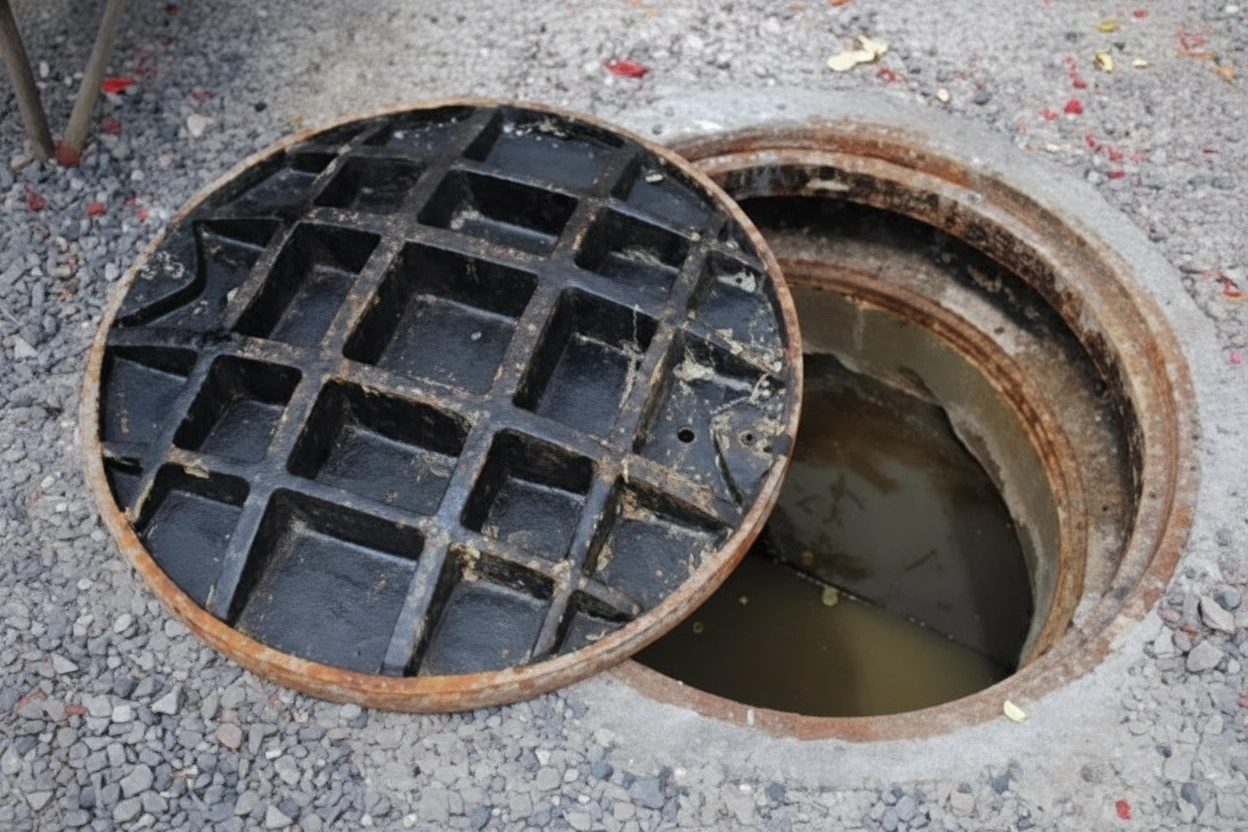
Outdoor floor drains can collect leaves, mud and debris.
When drainage becomes slow or blocked, water may remain around the drain for longer than expected.
Check:
- Garden drains
- Balcony drains
- Terrace drains
- Parking-area drains
- Utility-area drains
7. 3. Open Buckets and Containers
Unused buckets, tubs, drums and containers can collect rainwater.
Keep water-storage containers tightly covered where appropriate, and empty unnecessary containers regularly.
8. 4. Old Tyres
Discarded tyres are particularly important to inspect because their shape can allow rainwater to remain trapped inside.
Old tyres should not be left outdoors where they can collect water.
9. 5. Terrace Water Collection
Terraces may develop small areas where rainwater remains because of uneven surfaces, blocked outlets or drainage problems.
After rainfall, inspect:
- Roof corners
- Drain outlets
- Pipe junctions
- Low spots
- Unused containers
- Areas around stored materials
If water repeatedly remains in the same location, the underlying drainage problem should also be investigated.
10. 6. Clogged Gutters and Downpipes
Leaves and debris can restrict water flow through gutters and downpipes.
Blocked drainage can create standing water and also contribute to other property-maintenance problems.
Keep rainwater drainage systems clear, especially during the rainy season.
11. 7. Plastic Sheets and Covers
Loose plastic sheets, tarpaulins and covers can form small pockets that collect rainwater.
These areas are easy to overlook because the water may be hidden underneath the folds.
After rainfall, check outdoor covers and remove trapped water where possible.
12. 8. Unused Vessels and Containers
Old pots, cans, bottles, trays, boxes and other discarded items can hold water.
A simple outdoor inspection can identify many of these potential breeding locations.
13. 9. Construction and Renovation Areas
Homes undergoing renovation can temporarily have more water-holding objects around the property.
Check:
- Construction buckets
- Open cement containers
- Plastic sheets
- Unused pipes
- Material storage areas
- Temporary drainage points
Keeping the work area organised can reduce unnecessary water collection.
14. 10. Birdbaths and Decorative Water Features
Birdbaths, decorative containers and outdoor water features should be maintained regularly.
Where water is intentionally stored outdoors, follow an appropriate cleaning and maintenance routine to prevent mosquito breeding.
15. 11. Outdoor Plumbing Leaks
A leaking tap or pipe may continuously create damp or wet conditions around the property.
Inspect:
- Garden taps
- External water pipes
- AC drainage areas
- Water-tank overflow points
- Washing areas
Fixing the source of unnecessary water can support long-term mosquito prevention.
16. 12. Hidden Water Around the Property
Some breeding locations are not obvious during a normal walk-through.
Check behind stored materials, under outdoor equipment, around vegetation, near boundary walls and in low-lying areas where water may remain after rain.
17. Why Mosquitoes Can Still Be a Problem in a Clean Home
A clean house does not automatically mean a mosquito-free property.
Mosquitoes are influenced by environmental conditions such as water availability, shelter and access to the property.
A home can be well maintained indoors while having:
- A blocked outdoor drain
- Water in plant trays
- An uncovered container
- Water trapped on a terrace
- A leaking outdoor tap
- Water collected in discarded materials
This is why mosquito prevention needs to include the surrounding property, not only the rooms inside the home.
18. What Should You Do After Heavy Rain?
After significant rainfall, spend a few minutes checking the property.
Follow this simple routine:
- Walk around the property.
- Empty unnecessary water-holding containers.
- Check plant pots and saucers.
- Inspect drains and gutters.
- Look for water trapped under covers.
- Check terraces and balconies.
- Inspect outdoor plumbing.
- Remove unnecessary discarded containers.
- Check water-storage areas.
- Arrange professional inspection if mosquito activity remains high.
19. Does Fogging Alone Solve a Mosquito Problem?
Fogging can help reduce adult mosquito populations in appropriate situations, but it should not automatically be considered a complete solution.
If breeding sites remain, new mosquitoes may continue to emerge.
A more practical approach is:
Inspect → Find Breeding Sources → Remove or Manage Water → Treat Appropriate Areas → Monitor
The treatment method should depend on the property, mosquito activity and potential breeding conditions.
20. What Is Integrated Mosquito Control?
Integrated mosquito management combines multiple control measures instead of relying on one method.
Depending on the situation, this can involve:
- Breeding-site inspection
- Standing-water reduction
- Larval control where appropriate
- Adult mosquito treatment
- Entry-point prevention
- Environmental management
- Follow-up monitoring
This approach focuses on reducing the conditions that allow mosquitoes to continue reproducing.
21. When Should You Book Professional Mosquito Control in Mysore?
Consider professional mosquito control when:
- Mosquito activity remains high despite regular cleaning.
- You find repeated breeding locations.
- Mosquitoes are entering the home every evening.
- Your property has large outdoor areas.
- There are drainage or water-collection issues.
- You manage an apartment, villa, office or commercial property.
- The problem keeps returning after temporary treatments.
- You need help identifying breeding and resting areas.
22. Professional Mosquito Control Process
23. 1. Property Inspection
The technician checks indoor and outdoor areas for mosquito activity, potential breeding points and conditions that may support infestation.
24. 2. Source Identification
Potential water-holding and mosquito-resting areas are identified.
25. 3. Treatment Planning
The appropriate treatment method is selected according to the property and infestation conditions.
26. 4. Targeted Treatment
Where required, professional mosquito-control methods may include appropriate larval treatment, adult mosquito treatment or other targeted measures.
27. 5. Prevention Guidance
The customer is advised about standing water, drainage, entry points and property conditions that may contribute to recurring mosquito activity.
28. 6. Follow-Up
Where required, follow-up treatment or monitoring can be recommended based on the service plan and infestation conditions.
29. How to Reduce Mosquitoes Inside Your Home
- Use properly fitted window and door screens.
- Keep doors closed when practical.
- Remove standing water around the property.
- Check indoor plant trays regularly.
- Keep bathrooms and utility areas dry where possible.
- Repair plumbing leaks.
- Keep outdoor drains clear.
- Reduce unnecessary clutter around the property.
- Inspect balconies and terraces after rain.
30. Why Professional Inspection Matters
When mosquito activity is persistent, the most useful question is not simply:
“How do I kill the mosquitoes?”
A better question is:
“Why are mosquitoes able to keep coming back?”
Finding the conditions supporting the infestation can help make control efforts more effective.
31. Mosquito Control Service in Mysore
Service Raju provides professional mosquito control services for homes, apartments and other properties in Mysore and surrounding areas.
Our mosquito-control approach can include:
- Property inspection
- Mosquito activity assessment
- Breeding-source identification
- Larvicide treatment where appropriate
- ULV fogging where appropriate
- Residual treatment where appropriate
- Prevention guidance
- Follow-up support according to the service plan
The objective is not simply to treat the mosquitoes you see. The goal is to understand the conditions contributing to recurring mosquito activity.
32. Simple Mosquito Prevention Checklist
33. Outside the Home
- ☐ Plant trays checked
- ☐ Buckets emptied or covered
- ☐ Old tyres removed
- ☐ Outdoor drains checked
- ☐ Gutters cleaned
- ☐ Terrace checked after rain
- ☐ Plastic covers checked
- ☐ Outdoor taps checked for leaks
- ☐ Discarded containers removed
34. Inside the Home
- ☐ Window screens checked
- ☐ Door gaps checked
- ☐ Indoor plant trays checked
- ☐ Bathroom areas kept dry
- ☐ Water leaks repaired
- ☐ Mosquito activity monitored
35. Frequently Asked Questions About Mosquito Control in Mysore
36. Why are mosquitoes increasing after rain?
Rain can create temporary water-holding areas where mosquitoes may lay eggs. Containers, drains, plant trays and other water-holding locations should therefore be checked after rainfall.
37. Can mosquitoes breed in very small amounts of water?
Yes. Some mosquito species can use relatively small water-holding containers as breeding sites. Regularly removing standing water is an important prevention measure.
38. Does keeping my house clean prevent mosquitoes?
Good housekeeping helps, but cleanliness alone cannot prevent mosquitoes if water-holding or entry conditions remain around the property.
39. Is mosquito fogging enough?
Fogging may reduce adult mosquitoes in suitable situations, but controlling breeding sources and environmental conditions is also important for longer-term management.
40. Should I check my terrace after rain?
Yes. Check for standing water, blocked drains, containers, plastic sheets and other areas where rainwater may remain.
41. Can a leaking tap contribute to mosquito problems?
A leaking tap or pipe can create persistent wet conditions or small water collections. Repairing unnecessary water sources can support mosquito prevention.
42. When should I call a professional mosquito-control service?
If mosquito activity remains high despite removing standing water and improving basic prevention, a professional inspection can help identify less obvious breeding or resting areas.
43. Does Service Raju provide mosquito control in Mysore?
Yes. Service Raju provides mosquito pest-control services in Mysore and other service areas, with inspection and treatment options based on the property and mosquito problem.
44. Final Takeaway
Mosquito control starts before the mosquito enters your bedroom.
After rain, check the places where water can quietly collect:
Plant Pots → Drains → Buckets → Tyres → Gutters → Terrace → Plastic Covers → Outdoor Plumbing → Hidden Containers
Removing breeding conditions is one of the most important parts of mosquito prevention. When mosquito activity continues despite regular cleaning and source removal, professional inspection and targeted treatment can help identify the next step.
Find the source. Control the breeding conditions. Then treat the infestation.
For professional Mosquito Control Service in Mysore:
Service Raju
9964544445 | 9620550955
www.serviceraju.com
Mysore / Mysuru & Bangalore
 AC Repair
.webp) Ant Control Service
Ant Control Service
 Basin & Sink Services
.webp) Bath & Shower Services
Bath & Shower Services
.webp) Bath Fittings & Mirrors
Bath Fittings & Mirrors
 Bathroom Cleaning Service
 Bathroom Renovation Services
 Bed Bug Control Services
 Bedroom Painting
 Book a Carpenter Consultation
 Book Electrical Consulting
.webp) Cabinet Painting & Wood Refinishing
Cabinet Painting & Wood Refinishing
 Chimney Cleaning
 Civil Masonry Work
 Clean-Up Services
.webp) Clothes Hanger Installation
Clothes Hanger Installation
 Cockroach Control Services
---mysore-mysore-standard-300x200.webp) Commercial Cleaning
Commercial Cleaning
 Commercial Pest Control AMC Service
 Cupboard & Drawer Services
 Decorative Wall Panels
 Deep Sanitisation Service
 Detan & Bleach
 Door, Grill & Cabinet Painting Service
.webp) Doorbell & security
Doorbell & security
 Drain Blockage Clearing
 Electrical Appliance Services
 Electrical Wiring Services
 Empty Home Deep Cleaning
.webp) Fabrication
Fabrication
 Facials
.webp) Fan Installation & Repair
Fan Installation & Repair
 Full Home Cleaning Service
 Full Home Renovation
 Furniture Repair Service
 Gas Stove & Hob Repair
.webp) General Pest Control Services
General Pest Control Services
 General Plumbing & Consultation
 Geyser Repair
 Glass Cleaning
 Head Massage
.webp) Honeybee & Wasp-Services
Honeybee & Wasp-Services
 Kitchen & Bathroom Painting Service
 Kitchen Cleaning
 Kitchen Fittings
.webp) Kitchen Renovation
Kitchen Renovation
.webp) Laptop/Desktop service
Laptop/Desktop service
 Leak Detection and Repair
 LED TV Repair
 Living and Dining Room Painting
 Makeup, Saree & Styling
 Manicure & Pedicure
 MCB,Meter & Fuse Services
 Microwave Repair
 Mosquito Pest Control Service
 Multi-Room Painting Service
 Painting Consultation
 Quick Mini Cleaning Services
 Refrigerator Repair
 RO Water Purifier
.webp) Rodent Control Services (Rat & Mice Treatment)
Rodent Control Services (Rat & Mice Treatment)
.webp) Rooms Cleaning
Rooms Cleaning
 Shelves & Decor
 Sofa, Carpet & Mattress Cleaning
 Solar Water Heater Service
 Sump & Tank Cleaning
 Switch & Socket Services
 Tap & Mixer Service
.webp) Termite-Control-Services
Termite-Control-Services
 Threading & Face Wax
.webp) Tile & Granite Installation & Polishing
Tile & Granite Installation & Polishing
 Toilet & Commode Services
.webp) UPS and Inverter Repair Services
UPS and Inverter Repair Services
.webp) Wall Painting Service
Wall Painting Service
 Washing Machine Repair
 Water Level Controllers
 Water Tank and Pump Repair
 Waterproofing
 Waterproofing Services
 Waxing
 Window & Curtain Services
 Wooden Door Services