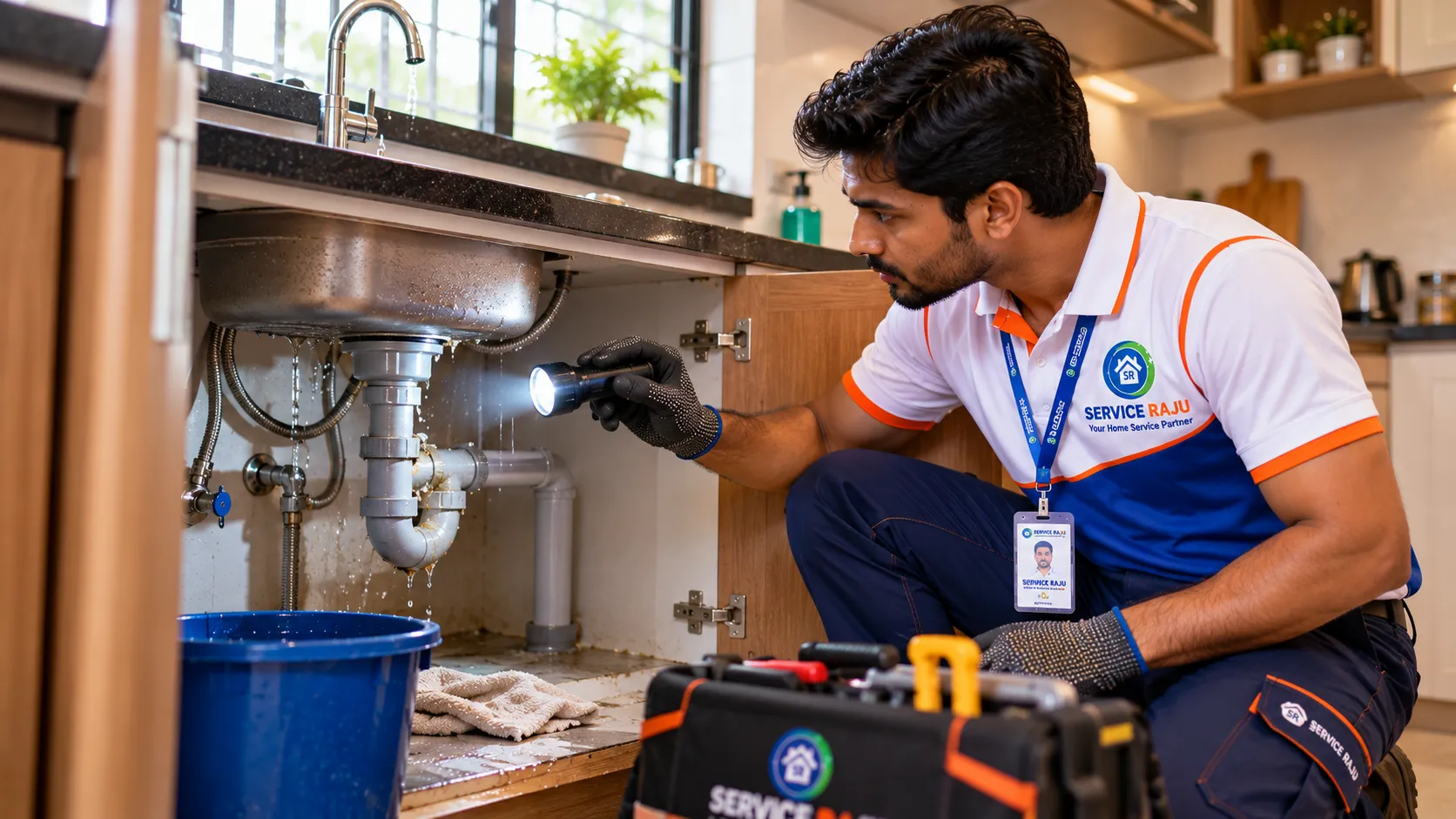
Kitchen Sink Leaking Under the Cabinet? 8 Places Water May Be Coming From
1. Kitchen Sink Leaking Under the Cabinet? 8 Places Water May Be Coming From
Finding water inside the cabinet beneath your kitchen sink can be confusing. The tap may look completely normal, the sink may drain properly, and yet the cabinet floor keeps getting wet. The actual source could be the faucet, a flexible hose, an angle valve, the sink waste coupling, bottle trap, drain connection, sink seal or even a concealed pipe.
Before assuming that the entire sink needs replacement, it helps to identify where the water appears and when the leak happens. This can narrow down the likely source and help you decide when professional kitchen sink leakage repair Mysore is required.
This guide explains eight common places water can come from and gives you a simple way to distinguish a supply-side leak from a drainage-side leak.
2. Quick Diagnosis: When Does the Leak Happen?
The timing of the leak is one of the most useful clues.
If water appears only when you turn on the tap, the problem is more likely to involve the faucet, supply hose, valve or another pressurised connection.
If water appears only when the sink is draining, inspect the waste coupling, bottle trap, P-trap, drain pipe and associated joints.
If water appears continuously even when the tap has not been used, a supply-side connection, valve or concealed pipe should be investigated.
| When You Notice Water | Areas to Investigate First |
|---|---|
| Only when the tap is running | Faucet, flexible hose, angle valve and supply connections |
| Only when the sink is draining | Waste coupling, bottle trap, P-trap and drain-pipe joints |
| Water appears continuously | Supply connection, valve or concealed plumbing |
| Water appears around the sink edge | Sink seal, mounting or countertop joint |
| Leak occurs after cleaning or washing heavily | Sink edge, waste connection or drain system |
This simple observation does not replace a professional diagnosis, but it can help you describe the problem accurately when booking a plumber.
3. 8 Places Your Kitchen Sink May Be Leaking From
Water under a kitchen sink does not necessarily mean that the visible pipe is the source. Water can travel along surfaces and appear several centimetres away from the actual leak.
4. 1. Faucet or Tap Base
The faucet is one of the first places to inspect when water is appearing around the upper part of the sink or cabinet.
A leak can develop around the faucet base, connection underneath the sink or associated fitting. Water may then travel downward and collect inside the cabinet.
5. Possible clues
- Water appears when the tap is being used.
- The area directly below the faucet feels wet.
- Moisture is visible around the tap mounting point.
- Water runs down the sink or countertop before reaching the cabinet.
If the tap itself is damaged or the connection is leaking, faucet leakage repair may be sufficient rather than replacing the entire sink.
6. 2. Flexible Inlet Hose
The flexible hose supplies water to the faucet. A damaged hose, loose connection or deteriorated seal can allow pressurised water to escape.
Because the hose is usually underneath the sink, a small leak can go unnoticed until the cabinet floor becomes wet.
7. Warning signs
- Water appears while the tap is running.
- A connection feels wet around the fitting.
- There is moisture along the hose.
- The cabinet becomes wet quickly during tap use.
Do not attempt to tighten or dismantle pressurised plumbing connections if you are unsure how the fitting works. Incorrect tightening can damage the connection or seal.
8. 3. Angle Valve
The angle valve controls the water supply to the faucet. It is another important connection underneath the sink.
A worn valve, damaged seal or loose connection can cause water to collect inside the cabinet. Because the leak may be relatively small, it can remain unnoticed for a long time.
If the water appears even when the faucet is not running, the angle valve and supply side deserve particular attention.
9. 4. Sink Waste Coupling
The waste coupling connects the sink basin to the drainage system. It is normally located directly underneath the sink.
If its seal is damaged, loose or incorrectly fitted, water can escape whenever the sink drains.
10. Typical clue
The sink is dry when unused, but water appears underneath immediately after draining.
This pattern points more strongly toward the waste side than the incoming water supply.
11. 5. Bottle Trap or P-Trap
The trap is the curved or bottle-shaped section of the drainage system underneath the sink. It helps maintain a water seal and connects the sink waste to the drain line.
Leaks can occur around the trap body, threaded connections, washers or joints.
12. Common clues
- Water appears after draining the sink.
- The leak is concentrated around the trap.
- Moisture is visible around a threaded connection.
- The cabinet floor becomes wet after washing utensils.
A damaged or poorly fitted trap may require resealing, adjustment or replacement depending on its condition.
13. 6. Drain-Pipe Joint
The drain pipe carries wastewater away from the sink. Even if the bottle trap looks dry, another joint further along the drainage route could be leaking.
Water may also run along the outside of a pipe before dripping at a lower point. This can make the apparent leak location misleading.
If the cabinet has several connected drain components, a plumber may need to inspect the complete drainage path rather than replacing the first wet fitting that is found.
14. 7. Sink Seal or Edge Joint
Water can sometimes enter underneath the sink rim if the seal between the sink and countertop has deteriorated.
This type of leak may become noticeable when water is splashed around the sink edge during cleaning or washing.
15. Possible signs
- Water appears around the sink rim.
- The cabinet becomes wet after cleaning the countertop.
- The area underneath the sink is damp even though the pipes appear dry.
- Old or damaged sealant is visible around the sink edge.
The solution may involve removing deteriorated sealant, correcting the mounting or resealing the sink properly.
16. 8. Concealed Plumbing Pipe
Sometimes the visible plumbing underneath the sink is completely dry while water continues appearing inside the cabinet. In such cases, a concealed supply pipe or connection may need to be investigated.
This is particularly important when:
- Water appears without using the tap.
- The visible fittings remain dry.
- Moisture is appearing inside a wall or cabinet panel.
- The leak returns after visible pipe connections have been repaired.
A concealed leak should not be diagnosed by randomly breaking tiles or cabinets. The appropriate inspection method depends on the plumbing arrangement, pipe type and location of the suspected leak.
17. How to Identify the Likely Source
| Symptom | Likely Area | What It Suggests |
|---|---|---|
| Leak only when tap runs | Faucet, hose or angle valve | Supply-side problem |
| Leak only when water drains | Waste coupling, trap or drain joint | Drainage-side problem |
| Water around faucet base | Faucet mounting or seal | Tap-related leakage |
| Water around bottle trap | Trap connection or washer | Drain connection problem |
| Cabinet remains wet continuously | Valve, supply line or concealed pipe | Possible continuous supply leakage |
| Water around sink rim | Sink seal or countertop joint | Sealing problem |
These are diagnostic clues, not guaranteed fault identifications. Water can travel from one component to another, so the actual source should be confirmed before major repair work.
18. Why You Should Not Ignore Water Under the Sink
A small leak can seem harmless because it is hidden inside a cabinet. However, repeated moisture can gradually damage the surrounding materials.
19. Cabinet damage
Moisture can damage cabinet boards, laminate edges, wooden components and stored items.
20. Unpleasant odours
Persistent dampness can create a musty smell inside an enclosed cabinet.
21. Mould and microbial growth
Repeated moisture can create favourable conditions for mould and other unwanted growth on suitable surfaces.
22. Floor and wall moisture
If water escapes from the cabinet for long enough, it can reach the flooring or adjacent wall.
23. Higher repair cost
A small plumbing repair is usually easier to address than extensive cabinet replacement or secondary water damage.
24. What You Can Safely Do Before the Plumber Arrives
If you discover water under the kitchen sink, a few simple steps can help prevent further damage while waiting for professional assistance.
- Remove items from the wet section of the cabinet.
- Dry the visible water using a clean cloth.
- Keep the cabinet doors open to improve ventilation.
- Avoid using the sink if the leak is significant.
- If safe and accessible, turn off the local water supply when a continuous supply-side leak is suspected.
- Take a photo or short video of the leak pattern for the technician.
- Do not dismantle multiple plumbing connections just to find the source.
- If electrical equipment or wiring is exposed to significant water, keep clear and arrange appropriate professional assistance.
Do not use excessive force on old plumbing fittings. Corroded or brittle connections can break and turn a small leak into a much larger one.
25. When Does a Kitchen Sink Need Professional Repair?
Professional sink leakage repair is recommended when the source is unclear, the leak continues after basic checks, or the plumbing connection requires dismantling or replacement.
You should particularly consider professional help when:
- The cabinet repeatedly becomes wet.
- The source of the leak cannot be identified.
- The leak is coming from a concealed pipe.
- A flexible hose or valve appears damaged.
- The bottle trap or waste connection needs replacement.
- The sink seal has failed.
- Water is reaching the cabinet base or flooring.
- The same leak returns after a previous repair.
A good plumbing diagnosis should identify the likely source first and then recommend the appropriate repair rather than replacing multiple components unnecessarily.
If you have water under the kitchen sink and cannot determine where it is coming from, Service Raju provides plumbing inspection and repair services for common sink, faucet, drainage and leakage problems.
The inspection can focus on the faucet, supply connections, angle valve, sink waste, bottle trap, drain joints and other accessible plumbing points. Where the visible plumbing does not explain the moisture, further leakage investigation may be recommended.
Service Raju's plumbing service network includes sink and basin services, tap repair, leak detection and repair and general plumbing services. :chatgpt-content-referenceindex="0"
- Plumbing & Drainage Services
- Sink & Basin Services
- Tap & Faucet Repair
- Water Leakage Detection
- Kitchen Deep Cleaning
Kitchen sink leaking? Don't wait for the cabinet, flooring or stored items to suffer further water damage.
Book Kitchen Plumbing Repair for inspection and professional repair.
Call Service Raju: +91 9964544445
Trusted Home Services in Mysuru, Udupi, Mangaluru & Indore.
27. Frequently Asked Questions
28. Why is there water under my kitchen sink?
Water can come from the faucet, flexible inlet hose, angle valve, sink waste coupling, bottle trap, drain-pipe joint, sink seal or concealed plumbing. The timing of the leak can help identify the likely area.
29. Why does my kitchen sink leak only when I use the tap?
If water appears only while the tap is running, inspect the faucet, flexible inlet hose, angle valve and other supply-side connections first.
30. Why does water leak only when the kitchen sink drains?
A drainage-only leak is more likely to involve the sink waste coupling, bottle trap, P-trap or drain-pipe connection.
31. Why is my kitchen cabinet wet when all visible pipes are dry?
Water may be entering through the sink seal, travelling along another surface or coming from a concealed plumbing connection. A professional inspection may be required to identify the actual source.
32. Can I fix a leaking sink myself?
Very minor accessible issues may appear straightforward, but dismantling plumbing connections without knowing the system can cause additional leakage. Professional repair is preferable when the source is unclear or a connection requires replacement.
33. How do I know whether the faucet or drain is leaking?
Observe when the water appears. A leak that occurs while the tap is running points toward the supply side. A leak that occurs only while water drains points more strongly toward the waste and drainage side.
34. Should I replace the whole kitchen sink because it is leaking?
Not necessarily. Many sink leaks originate from replaceable fittings, seals, hoses, valves, waste couplings or traps. The actual source should be diagnosed before replacing the sink.
35. When should I call a plumber for a kitchen sink leak?
Call a professional when the leak is recurring, the source cannot be identified, water is continuously entering the cabinet, a concealed pipe may be involved, or a plumbing component requires replacement.
 AC Repair
.webp) Ant Control Service
Ant Control Service
 Basin & Sink Services
.webp) Bath & Shower Services
Bath & Shower Services
.webp) Bath Fittings & Mirrors
Bath Fittings & Mirrors
 Bathroom Cleaning Service
 Bathroom Renovation Services
 Bed Bug Control Services
 Bedroom Painting
 Book a Carpenter Consultation
 Book Electrical Consulting
.webp) Cabinet Painting & Wood Refinishing
Cabinet Painting & Wood Refinishing
 Chimney Cleaning
 Civil Masonry Work
 Clean-Up Services
.webp) Clothes Hanger Installation
Clothes Hanger Installation
 Cockroach Control Services
---mysore-mysore-standard-300x200.webp) Commercial Cleaning
Commercial Cleaning
 Commercial Pest Control AMC Service
 Cupboard & Drawer Services
 Decorative Wall Panels
 Deep Sanitisation Service
 Detan & Bleach
 Door, Grill & Cabinet Painting Service
.webp) Doorbell & security
Doorbell & security
 Drain Blockage Clearing
 Electrical Appliance Services
 Electrical Wiring Services
 Empty Home Deep Cleaning
.webp) Fabrication
Fabrication
 Facials
.webp) Fan Installation & Repair
Fan Installation & Repair
 Full Home Cleaning Service
 Full Home Renovation
 Furniture Repair Service
 Gas Stove & Hob Repair
.webp) General Pest Control Services
General Pest Control Services
 General Plumbing & Consultation
 Geyser Repair
 Glass Cleaning
 Head Massage
.webp) Honeybee & Wasp-Services
Honeybee & Wasp-Services
 Kitchen & Bathroom Painting Service
 Kitchen Cleaning
 Kitchen Fittings
.webp) Kitchen Renovation
Kitchen Renovation
.webp) Laptop/Desktop service
Laptop/Desktop service
 Leak Detection and Repair
 LED TV Repair
 Living and Dining Room Painting
 Makeup, Saree & Styling
 Manicure & Pedicure
 MCB,Meter & Fuse Services
 Microwave Repair
 Mosquito Pest Control Service
 Multi-Room Painting Service
 Painting Consultation
 Quick Mini Cleaning Services
 Refrigerator Repair
 RO Water Purifier
.webp) Rodent Control Services (Rat & Mice Treatment)
Rodent Control Services (Rat & Mice Treatment)
.webp) Rooms Cleaning
Rooms Cleaning
 Shelves & Decor
 Sofa, Carpet & Mattress Cleaning
 Solar Water Heater Service
 Sump & Tank Cleaning
 Switch & Socket Services
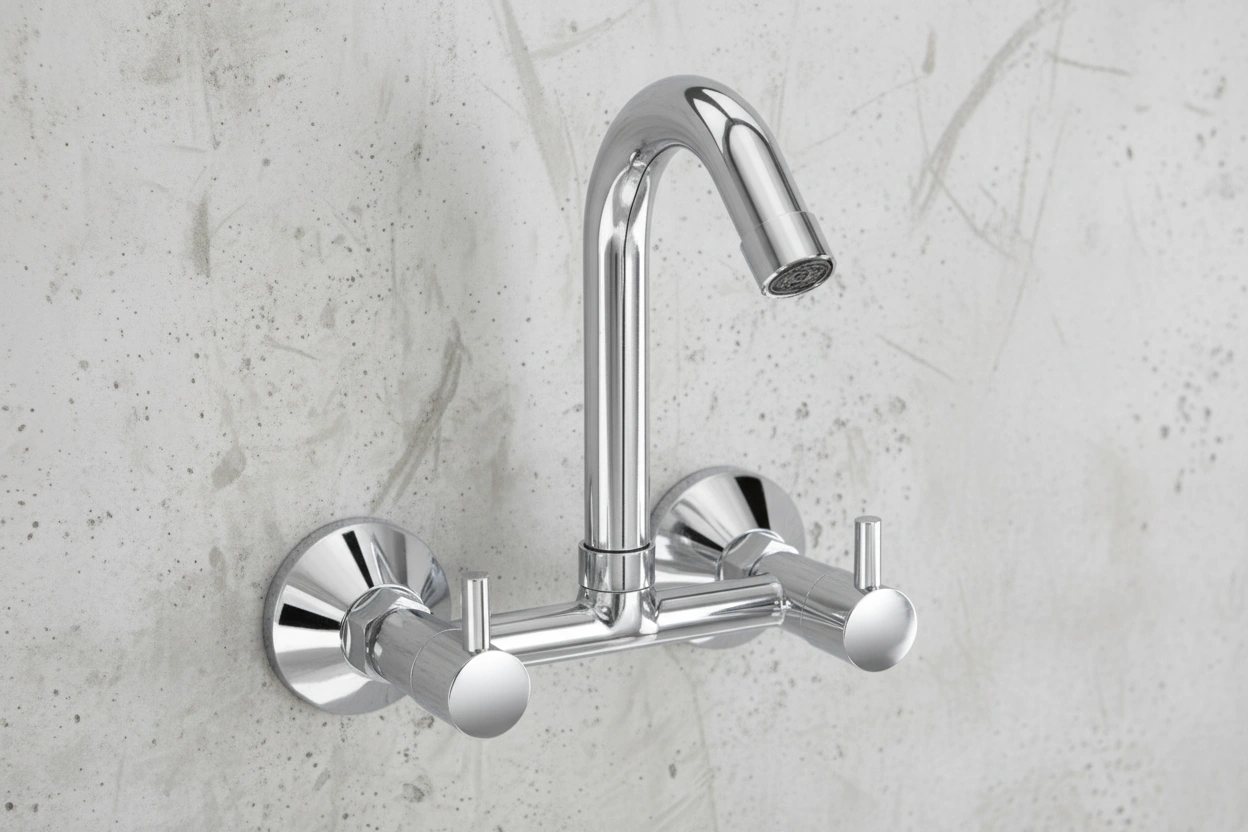 Tap & Mixer Service
.webp) Termite-Control-Services
Termite-Control-Services
 Threading & Face Wax
.webp) Tile & Granite Installation & Polishing
Tile & Granite Installation & Polishing
 Toilet & Commode Services
.webp) UPS and Inverter Repair Services
UPS and Inverter Repair Services
.webp) Wall Painting Service
Wall Painting Service
 Washing Machine Repair
 Water Level Controllers
 Water Tank and Pump Repair
 Waterproofing
 Waterproofing Services
 Waxing
 Window & Curtain Services
 Wooden Door Services