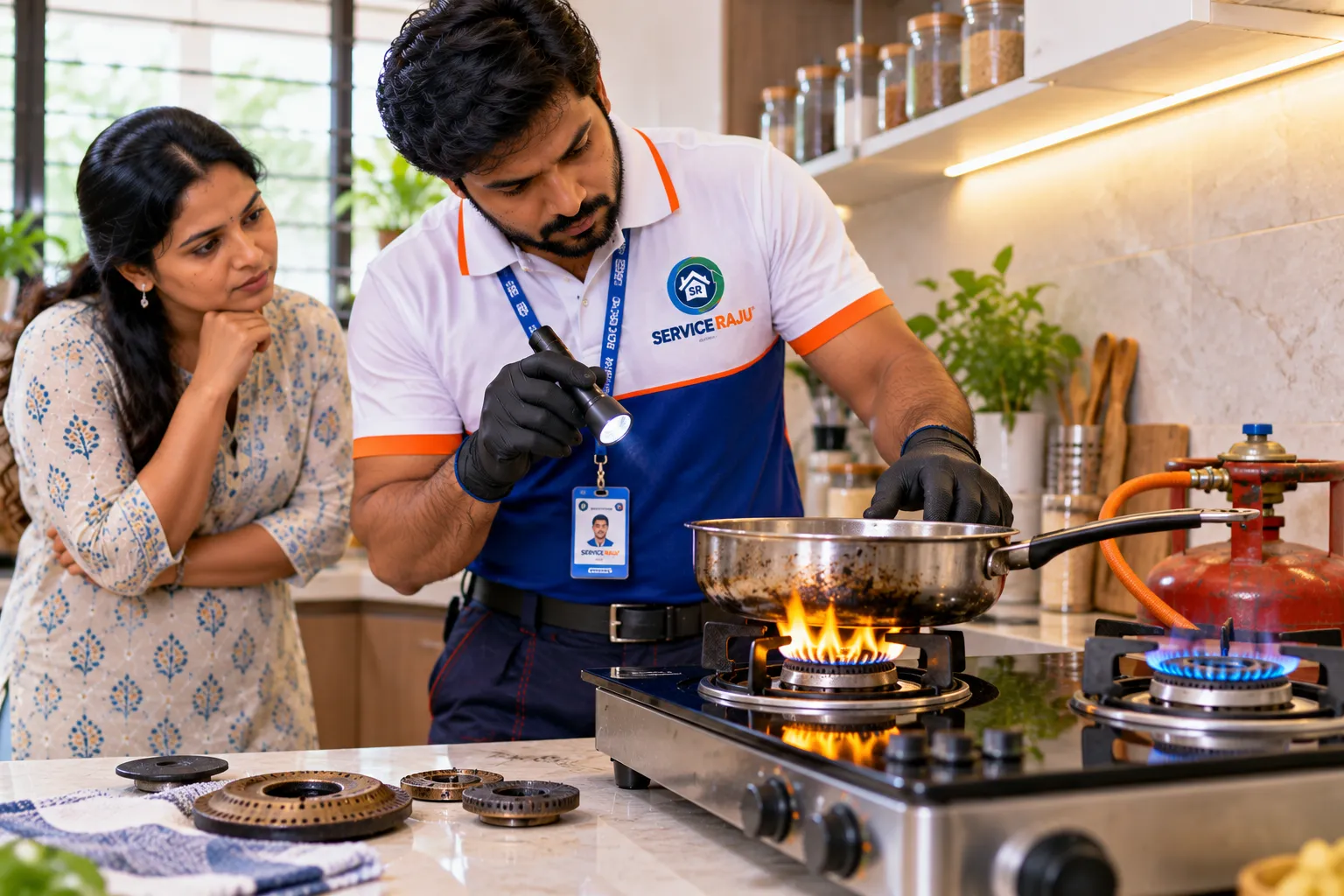
Gas Stove Flame Turning Yellow? 8 Causes to Check Before Using It Again
A gas stove flame problem can begin with a small change that is easy to ignore: a burner that was once blue now looks yellow or orange, the flame becomes weak or uneven, or black soot starts appearing on your vessels. But flame colour can provide an important clue about how the burner is operating.
For a properly operating LPG burner, a blue flame generally indicates more complete combustion. BIS guidance for domestic LPG stoves explains that yellow, orange or red flame can be a sign of incomplete combustion and identifies insufficient air-fuel mixing or insufficient air supply among possible causes.
That means a yellow flame gas stove should not simply be treated as a cosmetic issue. The cause may be something relatively simple, such as a dirty burner, but it can also indicate an airflow, pressure, burner or appliance problem that needs professional attention.
This guide explains 8 common causes of yellow, weak or uneven gas-stove flames, what you can safely check, when burner cleaning may help and when you should stop using the appliance and arrange professional service.
Quick Answer: Why Is My Gas Stove Flame Yellow?
Common causes can include:
- Blocked burner ports
- Grease or food contamination around the burner
- Incorrect air-to-gas mixture
- Burner cap or burner-head misalignment
- Weak or irregular gas supply
- Incorrect pressure or regulator-related problems
- Moisture inside or around the burner
- Burner, hose, connection or appliance faults
The correct cause cannot be identified from flame colour alone. The burner, gas supply, air intake and appliance condition may all need to be considered.
Table of Contents
- Blue vs Yellow vs Weak Flame: What Does It Mean?
- 8 Causes of a Yellow or Unstable Flame
- Safe Burner Cleaning Checks
- Important Gas Safety: When to Stop Using the Stove
- When You Need Professional Gas Stove Repair
- What a Technician Should Inspect
- Gas Stove Service in Mysore
- FAQs
- Final Takeaway
Blue vs Yellow vs Weak Flame: What Does It Mean?
| Flame Appearance | What It May Indicate | What to Do |
|---|---|---|
| Steady blue flame | Generally indicates proper combustion | Continue normal maintenance |
| Yellow or orange flame | Possible incomplete combustion or air/fuel imbalance | Stop and investigate if persistent |
| Weak flame | Possible restricted burner, gas-supply or pressure issue | Check safely and arrange service if unresolved |
| Uneven flame | Possible blocked ports, burner contamination or misalignment | Clean/check burner when cool |
| Flame lifting from burner | Possible air-fuel or pressure imbalance | Professional inspection |
| Flame repeatedly going out | Possible burner, ignition, gas-supply or safety-device issue | Stop using if unresolved and arrange inspection |
IndianOil notes that the correct LPG-air mixture produces the desired blue flame and that an imbalance can cause flame problems such as flame lifting. BIS similarly distinguishes blue complete combustion from yellow/orange/red incomplete combustion.
8 Causes of a Yellow or Unstable Flame
1. Burner Ports Are Blocked
This is one of the first things to check when a previously normal burner becomes yellow or uneven.
Food particles, grease and other residue can obstruct the small openings through which the gas-air mixture exits the burner.
Typical symptoms include:
- Yellow flame
- Uneven flame around the burner
- Some burner holes not producing flame
- Weak cooking flame
- Flame concentrated in only part of the burner
IndianOil specifically advises customers to clean choked burner holes when the hotplate is cooled off.
Possible solution: switch the burner off, allow it to cool completely, remove the appropriate removable burner components according to the manufacturer's instructions and clean them safely.
Do not attempt to clean a hot burner.
2. Grease or Food Residue Is Affecting the Burner
Heavy cooking can leave grease around the burner cap, burner head and nearby surfaces.
This can disturb the flame pattern and may contribute to yellow or uneven combustion.
Look for:
- Sticky grease
- Food deposits
- Oil around burner ports
- Blackened residue
- Flame pattern that changes after cleaning
Possible solution: clean removable components according to the manufacturer's instructions and make sure they are completely dry before reinstalling.
3. The Air-to-Gas Mixture Is Not Correct
Gas burners require an appropriate mixture of fuel and air for combustion.
BIS identifies insufficient mixing of air and fuel and insufficient air supply as causes of incomplete combustion. A yellow/orange flame can therefore indicate that the burner is not receiving the correct combustion conditions.
IndianOil also explains that the correct air-LPG mixture gives a blue flame and that burners may need checking or cleaning when the mixture is not correct.
Possible solution: have the burner and appliance air-supply arrangement checked by a qualified technician rather than attempting to modify internal gas settings yourself.
4. Burner Cap or Burner Head Is Not Positioned Correctly
If the burner cap is not seated correctly after cleaning, the flame can become uneven or unstable.
Check for:
- Cap sitting at an angle
- Burner head not properly seated
- Visible gap where there should not be one
- Uneven flame after reinstalling the burner
Safe check: after the burner is completely cool, verify that removable components are positioned exactly as described in the appliance manual.
Do not force a burner component into place.
5. The Gas Supply Is Weak or Irregular
A weak flame is not always a burner-cleaning problem.
If several burners suddenly become weak, consider whether the problem may be related to the gas supply rather than one individual burner.
Useful clues include:
- All burners are weak
- Flame strength changes unexpectedly
- One burner works normally while others do not
- The problem started after changing the cylinder or gas connection
A technician can determine whether the problem is local to the burner or affects the wider gas-supply system.
6. Pressure or Regulator Problems
Incorrect gas pressure can affect burner performance.
IndianOil notes that pressure outside the designed rating can contribute to abnormal burner behaviour and recommends checking the pressure regulator where appropriate.
If the flame is unusually weak, excessively strong or lifting away from the burner ports, do not try to alter the regulator yourself.
Possible solution: professional inspection of the regulator, supply arrangement and appliance.
7. Moisture Around the Burner
Water or cleaning residue around a burner can temporarily disturb ignition or flame behaviour.
This may happen after:
- Cleaning the cooktop
- Boiling over liquids
- Washing removable burner parts
- Spillage during cooking
Allow the removable components to dry fully before using the burner again.
If the abnormal flame continues after the burner is clean and completely dry, the problem needs further inspection.
8. Burner, Hose, Connection or Appliance Fault
If cleaning does not correct the problem, the burner assembly, ignition system, gas connection or another appliance component may need inspection.
Pay particular attention if you notice:
- Yellow flame that remains after cleaning
- Black soot on vessels
- Burner repeatedly going out
- Strong abnormal odour
- Gas smell
- Flame lifting from the burner
- Unusual sound from the burner
- Visible damage to the LPG hose or connection
IndianOil's LPG safety guidance recommends checking the installation and contacting a trained mechanic when something appears wrong with the equipment.
Safe Burner Cleaning Checks
Some flame problems can be related to a dirty burner, but cleaning should be done carefully.
Step 1: Turn the Burner Off
Make sure the flame is completely extinguished.
Step 2: Allow the Burner to Cool
Do not remove or clean burner components while they are hot.
Step 3: Remove Only Parts Designed to Be Removed
Use the appliance manufacturer's instructions rather than forcing components apart.
Step 4: Remove Visible Food and Grease
Clean suitable removable components carefully and keep burner ports free from obvious contamination.
Step 5: Dry Completely
Moisture can interfere with ignition and flame stability.
Step 6: Reinstall Correctly
Make sure the burner head and cap sit correctly before testing.
IndianOil's current LPG guidance specifically recommends cleaning choked burner holes after the hotplate has cooled and maintaining the hotplate regularly.
Important Gas Safety: When to Stop Using the Stove
Yellow Flame Is a Warning Sign
A persistent yellow, orange or visibly abnormal flame should not simply be ignored. BIS identifies yellow/orange/red flame as a possible incomplete-combustion issue, and gas-appliance safety guidance identifies yellow flames and soot as warning signs of poor combustion.
Stop using the affected burner and arrange professional inspection when the abnormal flame persists after safe cleaning and correct burner positioning.
Black Soot Is Another Warning Sign
If pots or the area around the burner develop unusual black soot, the appliance may not be combusting correctly.
Yellow flames and soot are recognized warning signs of abnormal gas-appliance combustion.
Strong Gas Smell Is an Emergency
If you smell LPG/gas, do not continue troubleshooting the stove yourself.
IndianOil's official safety guidance says to:
- Turn the pressure regulator to the OFF position.
- Put out all flames in and around the kitchen.
- Do not light a match or lighter.
- Do not switch electrical switches ON or OFF.
- Open doors and windows for ventilation.
- Contact your LPG distributor or the appropriate emergency service.
Do not attempt gas leakage repair yourself.
When You Need Professional Gas Stove Repair
Arrange gas stove repair Mysore when:
- The flame remains yellow after cleaning.
- Several burners are weak at the same time.
- The flame repeatedly goes out.
- The flame lifts away from the burner ports.
- Black soot continues appearing.
- The ignition system is not working correctly.
- The burner produces an unusual sound.
- The regulator or supply is suspected to be abnormal.
- The LPG hose or connection appears damaged.
A technician can determine whether the problem is related to the burner, ignition, pressure, hose, regulator, gas connection or another appliance component.
What a Technician Should Inspect
A professional gas stove service visit should not be limited to wiping the cooktop.
Depending on the symptoms, the technician may inspect:
| Component / Area | What Is Checked |
|---|---|
| Burner ports | Blockage, contamination and flame pattern |
| Burner cap/head | Position, condition and proper seating |
| Air-fuel mixing | Combustion condition and abnormal flame behaviour |
| Ignition | Spark and ignition performance |
| Gas supply | Flame strength and supply-related symptoms |
| Regulator | Pressure-related concerns where applicable |
| Hose and connections | Visible condition and possible leakage |
| Controls | Burner knob operation and related faults |
The exact inspection depends on the stove model and complaint.
Gas Stove Service in Mysore
Service Raju provides gas stove and hob service support in Mysuru, including check-up, cleaning, installation and related appliance-service requirements.
Service categories include:
- Gas Stove Check-Up
- Hob Check-Up
- Gas Stove Cleaning
- Hob Cleaning
- Gas Stove Installation
- Hob Installation
- Gas Stove Uninstallation
- Hob Uninstallation
For a persistent gas stove flame problem repair requirement, tell the technician:
- Which burner is affected
- Whether the flame is yellow, orange or weak
- Whether all burners are affected
- Whether the problem started after cleaning
- Whether black soot is appearing
- Whether ignition is working
- Whether there is any gas smell
Where gas smell is present, follow LPG emergency-safety procedures first rather than booking routine troubleshooting.
Gas Stove Inspection
Book Gas Stove Inspection to determine whether the problem is related to burner cleaning, ignition, appliance components, gas supply or another condition.
Service Raju — Your Home Service Partner
Call / WhatsApp: 9964544445
Website: www.serviceraju.com
FAQs About Yellow Gas Stove Flames
Is a yellow gas stove flame normal?
For a typical domestic LPG burner, a persistent yellow or orange flame is not something to ignore. BIS explains that blue indicates more complete combustion, while yellow/orange/red can indicate incomplete combustion.
Why is my gas stove flame yellow instead of blue?
Possible causes include blocked burner ports, grease or food contamination, insufficient air supply, incorrect air-fuel mixing, burner misalignment, pressure issues or another appliance fault.
Can cleaning the burner fix a yellow flame?
Sometimes. If the burner ports are clogged with food or grease, careful cleaning after the burner has cooled may restore the flame pattern. IndianOil specifically recommends cleaning choked burner holes when the hotplate is cool.
Why are my cooking vessels becoming black?
Black soot can be a sign of abnormal or incomplete combustion. Yellow flames and soot are recognized warning signs that a gas appliance may not be operating correctly.
Why is the flame weak on all burners?
If several burners become weak together, the cause may involve the gas supply, pressure, regulator or another system-level condition rather than one dirty burner. Professional inspection is appropriate when basic checks do not resolve it.
What should I do if the flame keeps going out?
Stop using the affected burner if the problem persists and arrange inspection. A flame that repeatedly goes out can indicate a burner, ignition, supply or safety-device problem.
Can I adjust the gas regulator myself?
No. Do not modify gas-pressure settings yourself. IndianOil's guidance recommends getting the pressure regulator checked when abnormal burner behaviour may be pressure-related.
What should I do if I smell LPG while using the stove?
Turn the regulator OFF, extinguish all flames, do not operate electrical switches, open doors and windows for ventilation and contact the LPG distributor/emergency service. Do not attempt to locate or repair the leak yourself.
Does Service Raju provide gas stove repair in Mysore?
Yes. Service Raju provides gas stove and hob check-up, cleaning, installation and related service support in Mysuru.
Final Takeaway
A gas stove flame problem should not be ignored simply because the burners still produce heat.
Use this sequence:
Check the flame → Turn off and cool the burner → Clean removable burner components safely → Re-seat them correctly → Observe the flame → Stop and arrange service if the problem remains.
Remember the important distinction:
Blue and steady: generally normal combustion.
Yellow/orange, weak, unstable or producing soot: investigate and arrange professional inspection if persistent.
Gas smell: treat it as a gas-leakage safety issue, not a normal repair problem. Follow LPG emergency procedures immediately.
Before increasing festive cooking, make sure your stove, burner and LPG installation are in proper working condition.
Yellow flame, weak flame or burner problem in Mysore?
Book Gas Stove Inspection with Service Raju.
Call / WhatsApp: 9964544445
Website: www.serviceraju.com
 AC Repair
.webp) Ant Control Service
Ant Control Service
 Basin & Sink Services
.webp) Bath & Shower Services
Bath & Shower Services
.webp) Bath Fittings & Mirrors
Bath Fittings & Mirrors
 Bathroom Cleaning Service
 Bathroom Renovation Services
 Bed Bug Control Services
 Bedroom Painting
 Book a Carpenter Consultation
 Book Electrical Consulting
.webp) Cabinet Painting & Wood Refinishing
Cabinet Painting & Wood Refinishing
 Chimney Cleaning
 Civil Masonry Work
 Clean-Up Services
.webp) Clothes Hanger Installation
Clothes Hanger Installation
 Cockroach Control Services
---mysore-mysore-standard-300x200.webp) Commercial Cleaning
Commercial Cleaning
 Commercial Pest Control AMC Service
 Cupboard & Drawer Services
 Decorative Wall Panels
 Deep Sanitisation Service
 Detan & Bleach
 Door, Grill & Cabinet Painting Service
.webp) Doorbell & security
Doorbell & security
 Drain Blockage Clearing
 Electrical Appliance Services
 Electrical Wiring Services
 Empty Home Deep Cleaning
.webp) Fabrication
Fabrication
 Facials
.webp) Fan Installation & Repair
Fan Installation & Repair
 Full Home Cleaning Service
 Full Home Renovation
 Furniture Repair Service
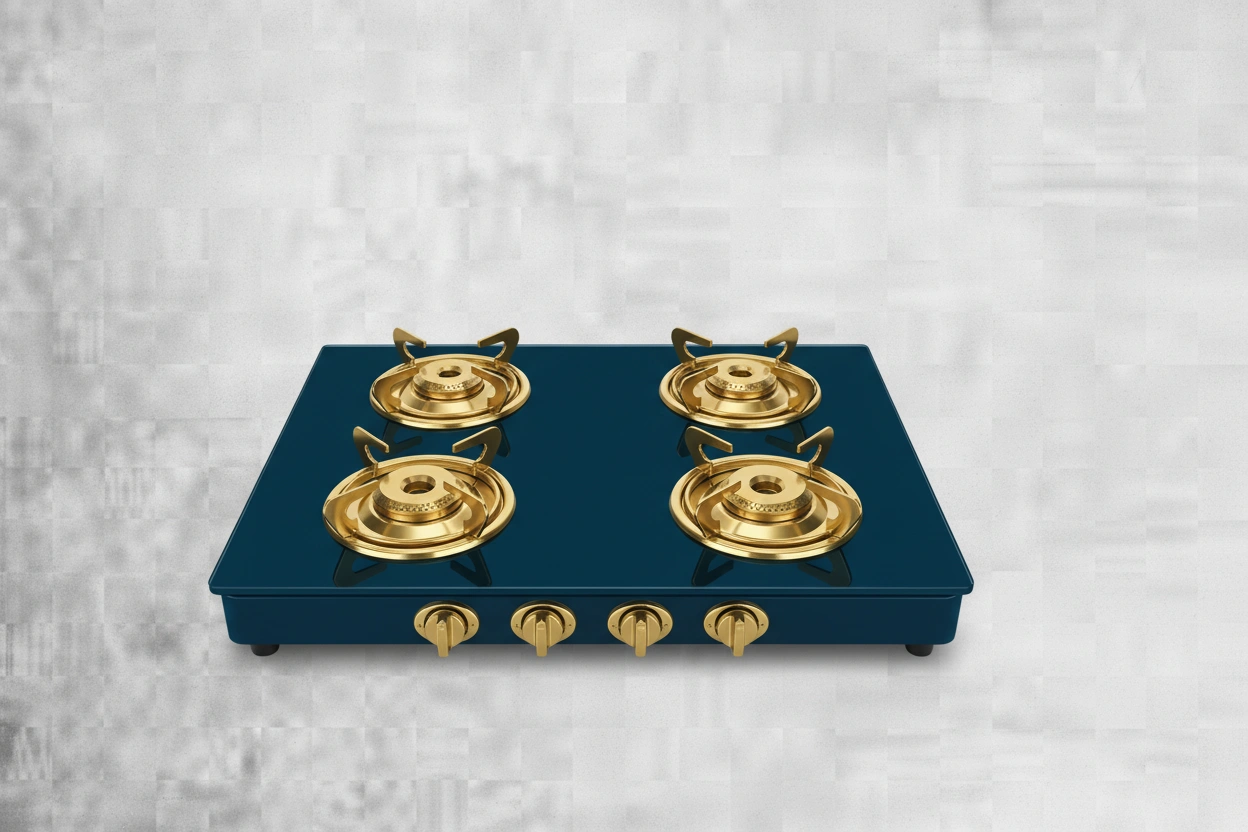 Gas Stove & Hob Repair
.webp) General Pest Control Services
General Pest Control Services
 General Plumbing & Consultation
 Geyser Repair
 Glass Cleaning
 Head Massage
.webp) Honeybee & Wasp-Services
Honeybee & Wasp-Services
 Kitchen & Bathroom Painting Service
 Kitchen Cleaning
 Kitchen Fittings
.webp) Kitchen Renovation
Kitchen Renovation
.webp) Laptop/Desktop service
Laptop/Desktop service
 Leak Detection and Repair
 LED TV Repair
 Living and Dining Room Painting
 Makeup, Saree & Styling
 Manicure & Pedicure
 MCB,Meter & Fuse Services
 Microwave Repair
 Mosquito Pest Control Service
 Multi-Room Painting Service
 Painting Consultation
 Quick Mini Cleaning Services
 Refrigerator Repair
 RO Water Purifier
.webp) Rodent Control Services (Rat & Mice Treatment)
Rodent Control Services (Rat & Mice Treatment)
.webp) Rooms Cleaning
Rooms Cleaning
 Shelves & Decor
 Sofa, Carpet & Mattress Cleaning
 Solar Water Heater Service
 Sump & Tank Cleaning
 Switch & Socket Services
 Tap & Mixer Service
.webp) Termite-Control-Services
Termite-Control-Services
 Threading & Face Wax
.webp) Tile & Granite Installation & Polishing
Tile & Granite Installation & Polishing
 Toilet & Commode Services
.webp) UPS and Inverter Repair Services
UPS and Inverter Repair Services
.webp) Wall Painting Service
Wall Painting Service
 Washing Machine Repair
 Water Level Controllers
 Water Tank and Pump Repair
 Waterproofing
 Waterproofing Services
 Waxing
 Window & Curtain Services
 Wooden Door Services