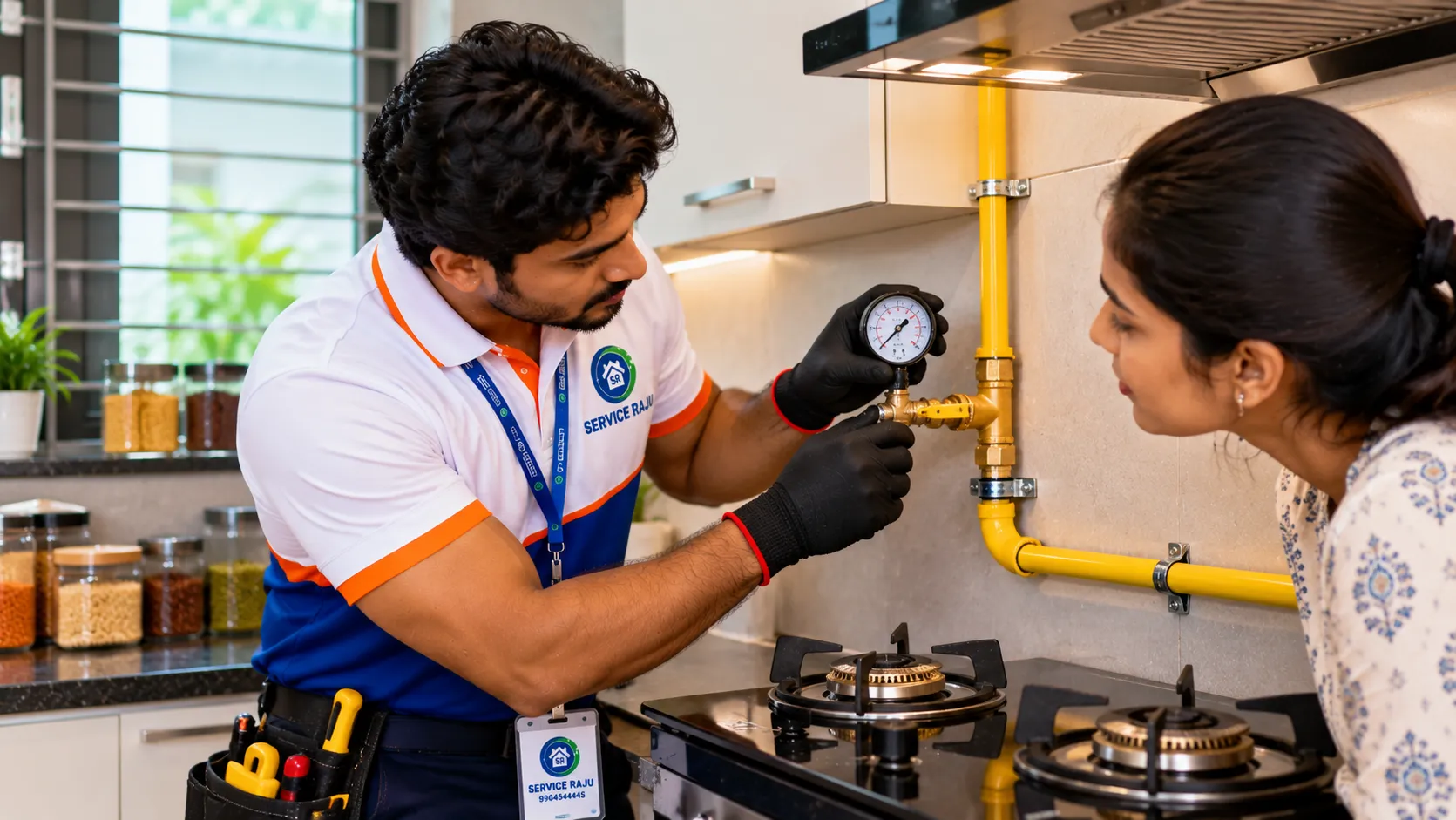
Gas Pipeline Installation in Mysore: Safety Checklist Before Booking
Planning a new kitchen, renovating your home or replacing your existing LPG cylinder arrangement with a suitable fixed gas pipeline? Before booking a gas pipeline installation near you, it is important to understand what a professional installation should include.
A domestic kitchen gas pipeline must be suitable for the gas supply, approved for its intended application, installed using compatible materials and tested according to the applicable requirements. Poorly selected fittings, unsuitable connections or inadequate testing can create serious safety risks.
If you are searching for gas pipeline installation in Mysore, this guide explains what to ask your installer, which safety checks matter, what documents to request and when a proposed installation needs further assessment.
This article is a customer checklist, not a DIY installation guide. Gas pipeline design, installation, alteration and testing should be handled by appropriately qualified and authorised professionals in accordance with applicable requirements and the relevant gas supplier's instructions.
Quick Answer: What Should a Professional Gas Pipeline Installation Include?
Before approving a domestic LPG pipeline installation, confirm that the service provider will address the following:
- Assessment of the kitchen layout and intended gas supply
- Confirmation that the proposed installation is permitted and suitable for the premises
- Selection of appropriate, compatible and compliant pipeline materials and fittings
- Planning of the pipeline route and connection points
- Installation by an appropriately qualified and authorised professional
- Inspection of joints, supports, connections and accessible sections
- Appropriate leak and pressure testing under the applicable procedure
- Verification of safe appliance connections and relevant ventilation requirements
- Clear handover instructions and records of the work and testing
The precise requirements depend on the type of gas supply, installation design, property and applicable regulations. Ask the installer to explain which checks apply to your particular project.
1. Confirm That the Installer Is Qualified and Authorised
The first step is to check who will actually carry out the gas pipeline work.
Not every general plumber, appliance technician or home-maintenance worker is authorised or suitably qualified to install or modify a gas pipeline. Gas work requires relevant competence, appropriate equipment and compliance with the applicable requirements.
Before booking, ask:
- Are you qualified and authorised to perform this type of domestic gas installation?
- Does this work require approval or involvement from the LPG supplier or another authorised agency?
- Who will be responsible for installation, testing and final handover?
- Can you explain the applicable safety and compliance requirements?
- Will the proposed work be documented?
Where supplier approval or an authorised agency is required, confirm this before work begins.
Important: Do not rely solely on a low quotation, online listing or verbal assurance that the installation is safe.
2. Ask for a Proper Kitchen Site Assessment
A professional kitchen gas pipeline installation should begin with an assessment of the premises rather than an immediate decision about pipe length or fittings.
The assessment should consider:
- The location and type of the intended gas supply
- The position and specifications of the gas appliance
- The proposed pipeline route
- Access for inspection and maintenance
- Existing building services and potential obstructions
- Ventilation and appliance-location requirements
- Any necessary approvals or restrictions
The installer should explain the proposed scope and identify any concerns before providing a final quotation.
If you are renovating a kitchen, arrange the gas installation assessment early enough to coordinate it with cabinetry, electrical work and other services.
3. Understand the Proposed Pipeline Materials
Different pipeline systems and components are designed for different applications. The appropriate choice depends on the intended gas supply, installation requirements, relevant standards and manufacturer specifications.
Ask the installer to identify the proposed materials and explain why they are suitable for your installation.
Copper Gas Pipeline Systems
Copper may be suitable for certain gas installations when the particular pipe, fittings, joining method and overall system meet the applicable requirements.
However, the word "copper" alone does not establish that a pipeline is suitable. The specific product, connection system and installation conditions must be appropriate for the intended application.
Other Approved Pipeline Systems
Other materials may be permitted for particular gas applications. Their suitability depends on the relevant requirements and the design of the installation.
Do not accept an arbitrary substitution of ordinary plumbing pipe, an incompatible connector or a material intended for another purpose.
Ask for the product identification, relevant specifications and confirmation that the proposed system is approved for the intended gas service.
4. Check the Pipeline Route and Installation Scope
The proposed route affects the installation cost, accessibility and future maintenance.
Before approving the quotation, ask the installer to explain:
- Where the pipeline will run
- Which sections will remain accessible for inspection
- Where the appliance connection will be located
- Whether any building work or finishing work is included
- Whether protective measures or supports are required
- Whether the route complies with applicable installation requirements
Do not request that the installer conceal a pipeline merely to improve the appearance of the kitchen. Any concealed section must be specifically permitted and installed according to the relevant requirements.
Ask for the final route to be documented where appropriate so that future renovation or maintenance work can avoid damaging the gas system.
5. Check Joints, Connectors and Fittings
Pipeline joints and appliance connections are important inspection points because an unsuitable or defective connection can allow gas to escape.
A professional installation should use compatible fittings and the joining methods specified for the approved system.
During the final inspection, the responsible installer should check the relevant accessible connections for correct installation and compliance with the applicable procedure.
As a customer, you should ask:
- Are all fittings compatible with the selected pipeline system?
- Have the joints and connections been inspected?
- Are the necessary supports and protective measures in place?
- Have the connections passed the required tests?
- Are any flexible connectors approved for their particular use?
Do not attempt to tighten gas fittings, dismantle joints or modify the connection yourself.
6. Ask How Leak Testing and Pressure Testing Will Be Verified
Testing is an essential part of professional gas pipeline installation. A visual inspection alone cannot establish that the complete system is leak-free.
Ask the installer to confirm that the appropriate testing procedure will be followed for the installed system and applicable requirements.
The process should address the relevant sections of the pipeline, connections and components within the approved test scope.
Ask these questions before booking:
- What testing procedure is applicable to this installation?
- Will the test be performed using suitable equipment and the prescribed method?
- Will the results be recorded or documented where required?
- Who is responsible for confirming that the installation is safe to commission?
- Will any failed test be investigated and corrected before the system is put into service?
Do not accept an unsupported verbal statement that the installation has been tested. Request a clear explanation of the checks completed and any available test record.
Never use a flame to check for gas leaks. Do not improvise pressure tests or operate a newly installed system before the responsible professional has confirmed that it is safe to use.
7. Confirm the Gas Supply and Appliance Compatibility
A pipeline must be suitable for the intended gas supply and connected appliance.
Before installation, provide the service provider with the relevant information about the gas source and the appliance that will be used.
The professional should confirm that the proposed arrangement is compatible and that the necessary approvals, connection components and commissioning procedures are addressed.
Do not assume that every gas stove, regulator, connector or pipeline component is interchangeable.
If you are replacing an appliance or changing the gas supply arrangement, ask whether the existing installation requires reassessment.
8. Check Ventilation and the Kitchen Environment
Gas appliance safety is not limited to the pipeline itself. The kitchen layout, appliance location and ventilation may also need consideration.
Depending on the appliance and applicable requirements, the installer should assess relevant ventilation provisions and any restrictions affecting the installation.
Ask whether the planned appliance position is appropriate and whether any changes are needed before commissioning.
Do not block required ventilation openings or use a kitchen exhaust arrangement as a substitute for a required safety provision.
9. Understand the Quotation Before Approving the Work
The lowest quotation is not necessarily the best choice for a gas installation. Compare the work included, materials, testing, documentation and responsibility for commissioning.
Your quotation should clearly explain the relevant items.
| Quotation Item | What to Confirm |
|---|---|
| Site assessment | Whether inspection and route planning are included |
| Materials | Specified pipeline, fittings and approved connection components |
| Installation labour | Scope of work and responsibility for installation |
| Building work | Whether drilling, access work and reinstatement are included or excluded |
| Testing | Applicable leak and pressure testing requirements |
| Commissioning | Who confirms the system is safe to put into use |
| Documentation | Available installation records and test documentation |
| Warranty or service terms | What is covered and what is excluded |
Ask for any additional charges to be explained before the work starts.
10. Ask for a Proper Handover After Installation
Before accepting the completed work, confirm that the installer has finished the applicable inspections and testing.
Depending on the project, request:
- The installation scope and final route details
- Material and component information
- Applicable testing records
- Confirmation of commissioning or approval, where required
- Relevant operating and safety instructions
- Warranty and service information
- Contact details for reporting a fault
Keep the documentation with your household maintenance records. It can help future professionals understand the system before undertaking repairs or renovations.
Gas Pipeline Installation vs Gas Stove Connection
These are related but different tasks. A gas stove connection may involve connecting a compatible appliance to an existing approved supply arrangement, while a new pipeline installation can require a broader assessment, route planning, materials, installation and testing.
| Service | Typical Scope |
|---|---|
| New gas pipeline installation | Assessment, design or route planning, approved materials, installation and applicable testing |
| Existing pipeline inspection | Assessment of accessible components, reported concerns and applicable safety checks |
| Gas stove connection | Verification and connection of a compatible appliance using an approved arrangement |
| Gas leakage investigation | Prompt assessment by an appropriately qualified professional using suitable procedures |
Confirm the exact service scope when booking so that the technician arrives prepared for the work required.
Warning Signs That Require Immediate Attention
If you smell gas, hear suspected gas escaping or suspect a leak, do not continue using the appliance or attempt to investigate the connection yourself.
- Do not light matches, smoke or use an open flame.
- Do not operate electrical switches or equipment in the affected area.
- Do not attempt to locate the leak using a flame.
- Leave the affected area and keep others away.
- From a safe location, contact your LPG supplier or the appropriate emergency service and follow their instructions.
Only operate a shut-off valve if it is safe to reach and you have been instructed or are otherwise able to do so safely. Do not delay evacuation to attempt to isolate the supply.
If there is an immediate danger, prioritise evacuation and emergency assistance over booking an ordinary home-service appointment.
Gas Pipeline Installation in Mysore: Why Choose a Professional Assessment?
Every kitchen is different. The suitability of a proposed gas pipeline depends on the gas supply, appliance, route, materials, building conditions and applicable requirements.
A professional assessment helps establish the actual scope before installation begins. It can also identify whether supplier coordination, approvals, additional building work or other specialist involvement is needed.
For homeowners in Mysuru, a clear written quotation and documented testing process are useful ways to compare service providers responsibly.
Gas Pipeline Installation Services by Service Raju
Service Raju lists gas pipeline installation and LPG gas pipeline check-up among its home-service offerings.
If you are planning a new kitchen gas pipeline or need an assessment of an existing arrangement, contact the team to discuss your requirements and confirm the available service scope.
Depending on the request, the enquiry can cover:
- Site assessment requirements
- Proposed installation scope
- Suitable materials and connection arrangements
- Applicable safety checks and testing
- Documentation and handover expectations
- Coordination with the relevant authorised gas provider, where required
Gas pipeline work must be assigned to an appropriately qualified and authorised professional. Confirm that the proposed provider is permitted to carry out the specific work before proceeding.
Explore the Service Raju Mysuru service directory to enquire about available home services.
Frequently Asked Questions
How do I find gas pipeline installation near me?
Look for a provider with the appropriate qualifications and authorisation for the intended gas installation. Ask about site assessment, materials, testing, commissioning and documentation before booking.
Is copper suitable for an LPG gas pipeline?
Copper may be suitable for certain applications when the specific pipe, fittings, joining method and installation comply with the applicable requirements. Suitability must be confirmed for the individual installation.
What should a gas pipeline installation quotation include?
Ask for the proposed scope, materials, labour, building work, applicable testing, commissioning responsibilities, documentation and service terms. Confirm any exclusions before approving the quotation.
Is leak testing necessary after gas pipeline installation?
Appropriate testing is an essential part of professional installation. The responsible professional must follow the procedure applicable to the system and confirm that the installation is safe to commission.
Can an ordinary plumber install an LPG pipeline?
Do not assume that general plumbing experience is sufficient. The installer must have the appropriate qualifications and authorisation for the particular gas work, and any supplier or regulatory requirements must be met.
Can I install a kitchen gas pipeline myself?
DIY installation or modification is not recommended. Gas pipeline work requires appropriate competence, materials, installation procedures and testing. Use a suitably qualified and authorised professional.
Should I book a pipeline installation or a gas stove connection?
If you need a new fixed gas route, ask about pipeline installation. If an approved supply arrangement already exists and you only need an appliance connected, ask whether a gas stove connection service is appropriate.
What should I do if I suspect a gas leak after installation?
Stop using the appliance, avoid flames and electrical switches, leave the affected area and contact your LPG supplier or the appropriate emergency service from a safe location. Do not attempt to repair the leak yourself.
Does a new gas pipeline need documentation?
Ask the installer which installation records, test results, approvals and handover documents apply to your project. Keep the available documentation for future inspection and maintenance.
Book a Gas Pipeline Installation Assessment in Mysore
Planning a new kitchen gas pipeline? Before confirming the installation, make sure you understand the proposed route, materials, connection arrangements, safety testing and handover requirements.
Choosing a suitable professional and confirming the work scope in advance can help you make a better-informed booking decision.
Service Raju – Home Services in Mysuru
Call or WhatsApp to enquire about gas pipeline installation and LPG pipeline check-up availability.
Phone: +91 9964544445
Trusted Home Services in Mysuru, Udupi, Mangaluru & Indore.
 AC Repair
.webp) Ant Control Service
Ant Control Service
 Basin & Sink Services
.webp) Bath & Shower Services
Bath & Shower Services
.webp) Bath Fittings & Mirrors
Bath Fittings & Mirrors
 Bathroom Cleaning Service
 Bathroom Renovation Services
 Bed Bug Control Services
 Bedroom Painting
 Book a Carpenter Consultation
 Book Electrical Consulting
.webp) Cabinet Painting & Wood Refinishing
Cabinet Painting & Wood Refinishing
 Chimney Cleaning
 Civil Masonry Work
 Clean-Up Services
.webp) Clothes Hanger Installation
Clothes Hanger Installation
 Cockroach Control Services
---mysore-mysore-standard-300x200.webp) Commercial Cleaning
Commercial Cleaning
 Commercial Pest Control AMC Service
 Cupboard & Drawer Services
 Decorative Wall Panels
 Deep Sanitisation Service
 Detan & Bleach
 Door, Grill & Cabinet Painting Service
.webp) Doorbell & security
Doorbell & security
 Drain Blockage Clearing
 Electrical Appliance Services
 Electrical Wiring Services
 Empty Home Deep Cleaning
.webp) Fabrication
Fabrication
 Facials
.webp) Fan Installation & Repair
Fan Installation & Repair
 Full Home Cleaning Service
 Full Home Renovation
 Furniture Repair Service
 Gas Stove & Hob Repair
.webp) General Pest Control Services
General Pest Control Services
 General Plumbing & Consultation
 Geyser Repair
 Glass Cleaning
 Head Massage
.webp) Honeybee & Wasp-Services
Honeybee & Wasp-Services
 Kitchen & Bathroom Painting Service
 Kitchen Cleaning
 Kitchen Fittings
.webp) Kitchen Renovation
Kitchen Renovation
.webp) Laptop/Desktop service
Laptop/Desktop service
 Leak Detection and Repair
 LED TV Repair
 Living and Dining Room Painting
 Makeup, Saree & Styling
 Manicure & Pedicure
 MCB,Meter & Fuse Services
 Microwave Repair
 Mosquito Pest Control Service
 Multi-Room Painting Service
 Painting Consultation
 Quick Mini Cleaning Services
 Refrigerator Repair
 RO Water Purifier
.webp) Rodent Control Services (Rat & Mice Treatment)
Rodent Control Services (Rat & Mice Treatment)
.webp) Rooms Cleaning
Rooms Cleaning
 Shelves & Decor
 Sofa, Carpet & Mattress Cleaning
 Solar Water Heater Service
 Sump & Tank Cleaning
 Switch & Socket Services
 Tap & Mixer Service
.webp) Termite-Control-Services
Termite-Control-Services
 Threading & Face Wax
.webp) Tile & Granite Installation & Polishing
Tile & Granite Installation & Polishing
 Toilet & Commode Services
.webp) UPS and Inverter Repair Services
UPS and Inverter Repair Services
.webp) Wall Painting Service
Wall Painting Service
 Washing Machine Repair
 Water Level Controllers
 Water Tank and Pump Repair
 Waterproofing
 Waterproofing Services
 Waxing
 Window & Curtain Services
 Wooden Door Services