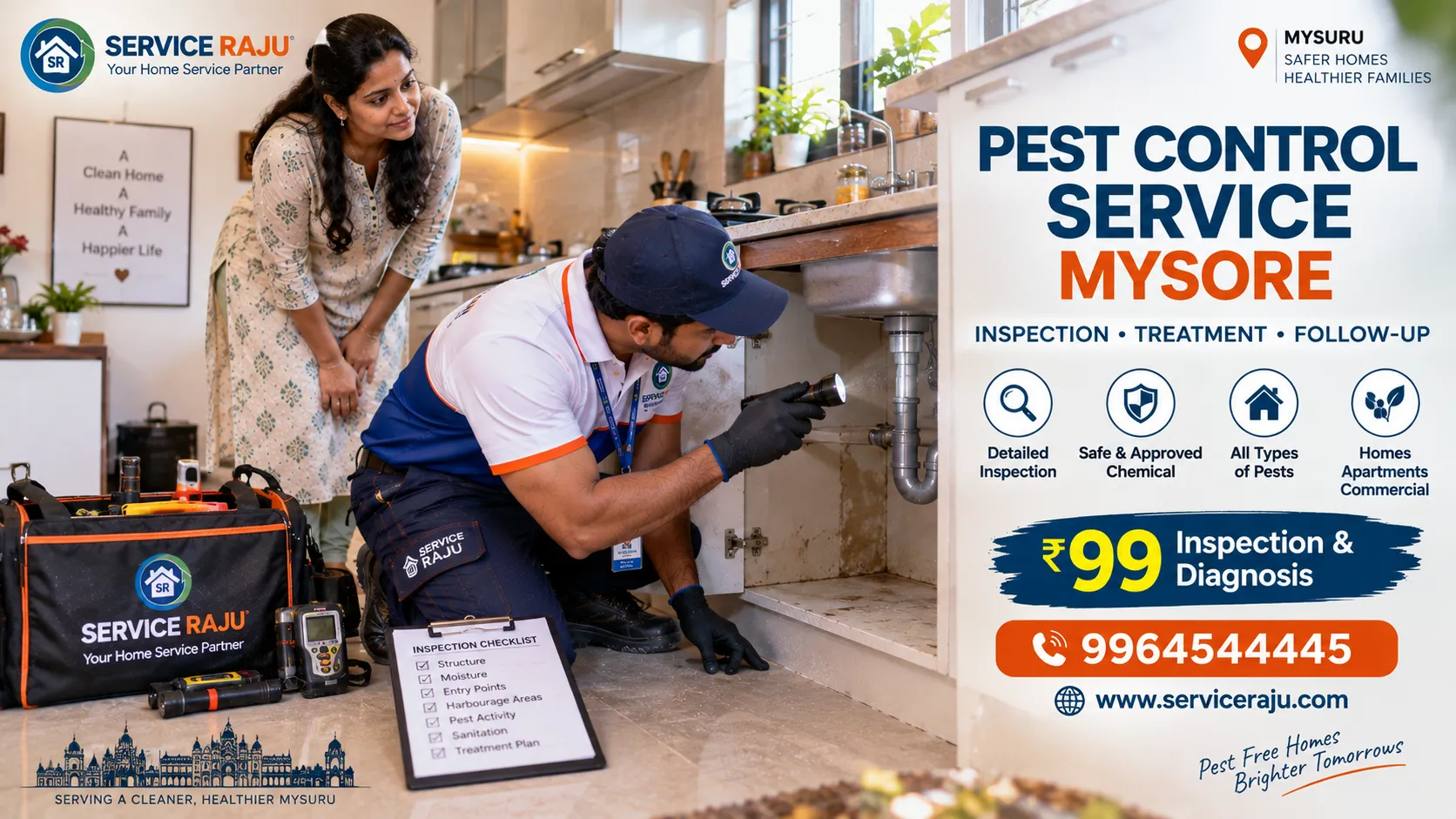
Pest Control Service Mysore: 10 Things a Technician Should Check Before Treatment
Pest Control Service Mysore should begin with inspection, not simply spraying the areas where a customer has seen an insect. A professional technician should first understand what pest is present, where it is active, how it may be entering, what is attracting it and how extensive the problem appears to be.
This matters because the same treatment approach is not appropriate for every pest or every property. A kitchen with cockroaches, a bedroom with bed bugs, a house with termites, an office with ants and a property with rodent activity can require very different inspection points and treatment plans.
Before booking pest control treatment Mysore, use this 10-point checklist to understand what a proper technician inspection should cover.
Quick Answer: What Should a Pest Control Technician Check?
Before treatment, a technician should normally check:
- The exact pest involved
- Where pest activity is concentrated
- The level and pattern of infestation
- Entry points and gaps
- Food, water and moisture sources
- Harbourage and nesting locations
- Previous treatment history
- Property-specific treatment requirements
- Customer safety and treatment preparation
- Follow-up, prevention and service documentation
This inspection-first approach helps connect the treatment to the actual pest problem instead of using the same solution everywhere.
Table of Contents
- Why Inspection Should Come Before Pest Treatment
- 10 Things a Technician Should Check
- Why Different Pests Need Different Treatment Plans
- What Your Pest Control Quote Should Explain
- How to Prepare Your Home Before Treatment
- What to Check After Treatment
- 7 Red Flags When Booking Pest Control
- Pest Control Service in Mysore
- FAQs
- Final Takeaway
Why Inspection Should Come Before Pest Treatment
Seeing one or two pests tells you that something has been noticed. It does not always tell you the full story.
A cockroach may be coming from a drain or hiding behind an appliance. Ants may be entering through a tiny wall or window gap. Bed bugs can remain concealed around beds, furniture and cracks. Rodents may enter through utility openings or damaged building gaps. Termites can remain concealed while the visible signs appear somewhere else.
That is why a proper pest control inspection Mysore should consider both the visible problem and the conditions that allow pest activity to continue.
An inspection-first approach is also consistent with integrated pest management guidance, which puts identification, monitoring and prevention ahead of simply applying control products. :contentReferenceindex=2
10 Things a Technician Should Check Before Treatment
1. Identify the Exact Pest
The first question should be simple:
What pest are we actually dealing with?
Not every small insect in a home is a cockroach, ant or bed bug. Correct identification helps determine where to inspect next and which control approach is appropriate.
The technician should ask about:
- What the customer has seen
- Where it was seen
- When activity is highest
- Whether the problem occurs every day
- Whether bites, droppings, damage or other signs are present
- Whether the pest has previously been treated
Good pest control starts with identifying the problem instead of guessing.
2. Locate the Main Activity Areas
The room where you notice the pest may not be the place where the infestation is concentrated.
A technician should inspect likely activity areas based on the pest involved.
Examples include:
- Kitchen cabinets and sink areas
- Bathroom and drain surroundings
- Bedrooms and bed frames
- Wardrobes and furniture
- Storerooms
- Utility areas
- Garbage and waste-storage areas
- Balconies and outdoor edges
- Wall-floor junctions
- Dark cracks and concealed spaces
The goal is to understand the pattern of activity, not merely spray where the customer happened to see the pest.
3. Estimate the Infestation Level
The next step is understanding whether the problem appears localized, moderate or widespread.
Ask the technician what evidence they found and what areas are affected.
Useful observations may include:
- Frequency of sightings
- Number of affected rooms
- Fresh pest evidence
- Visible harbourage
- Signs of breeding or nesting
- Damage to materials or food packaging
- Activity during different times of day
Infestation level can influence the treatment scope, preparation requirements and whether follow-up visits may be needed.
4. Check Entry Points
A professional technician should look for ways pests are entering or moving through the property.
Common areas to examine include:
- Gaps around plumbing pipes
- Cracks in walls
- Door gaps
- Window gaps
- Drain openings
- Utility penetrations
- Ventilation openings
- Broken screens
- Gaps around cabinets
Sealing or repairing an entry route may be part of prevention even when it is not part of the chemical treatment itself.
Inspection guidance from integrated pest management programs specifically includes checking entry points, food, water and areas where pests live. :contentReferenceindex=3
5. Check Food, Water and Moisture Sources
Pests need suitable conditions to survive. A technician should look for factors that may be supporting continued activity.
Check for:
- Food crumbs
- Unsealed food containers
- Overflowing waste bins
- Standing water
- Leaking taps
- Leaking pipes
- Wet sinks
- Damp corners
- Moist storage areas
This does not mean poor housekeeping is always responsible for an infestation. Building conditions, neighbouring properties, drainage, cracks and other factors can also contribute.
The important point is to identify conditions that should be corrected along with treatment.
6. Find Harbourage and Nesting Locations
Pests often choose protected spaces where they can hide and remain undisturbed.
Depending on the pest, a technician may inspect:
- Behind refrigerators
- Under kitchen sinks
- Inside cabinets
- Behind appliances
- Wall cracks
- Furniture joints
- Bed frames
- Stored cartons
- Dark storage spaces
- Outdoor clutter
Finding these areas can change the treatment plan significantly.
7. Ask About Previous Pest Control Treatment
Always tell the technician if another company has already treated your property.
Ask:
- When was the previous treatment?
- Which pest was treated?
- Was it a one-time service or part of a treatment programme?
- Did the pests reduce and later return?
- Were follow-up visits completed?
- Were any problem areas left untreated?
Repeated treatment without understanding what happened during the previous service can make diagnosis more difficult.
If a problem returns, the property should be reassessed instead of automatically repeating the exact same treatment.
8. Decide What Treatment Scope the Property Actually Needs
After inspection, the technician should be able to explain what is being proposed.
Depending on the pest problem, treatment may involve different combinations of:
- Targeted application
- Gel or bait-based treatment where appropriate
- Crack-and-crevice treatment
- Localized treatment
- Monitoring
- Preventive recommendations
- Follow-up treatment
Do not assume that a bigger spray area automatically means better pest control. The treatment should correspond to the pest, its behaviour and the areas where activity has been identified.
Professional Mysuru pest-control providers currently advertise inspection-based, targeted treatment and follow-up rather than a single identical procedure for every pest problem. :contentReferenceindex=4
9. Check Customer Safety and Treatment Preparation
Before treatment starts, the customer should be told what preparation is required.
This may include:
- Removing or covering exposed food
- Protecting utensils where necessary
- Keeping children away from the treatment area as instructed
- Managing pets according to the treatment instructions
- Following ventilation and re-entry instructions
- Following product-label or technician safety instructions
Preparation can vary depending on the treatment type. Do not rely on a generic “leave the house for one hour” rule for every pest treatment. The correct re-entry and cleaning instructions should come from the treatment product, service provider and site conditions.
Mysuru pest-control service guidance also commonly recommends moving or covering food, utensils and drinking water before treatment. :contentReferenceindex=5
10. Confirm Follow-Up, Warranty and Documentation
A professional pest-control service should make the after-service process clear.
Before you approve the job, ask:
- Is there a warranty?
- How long does it apply?
- What pest and areas are covered?
- What happens if activity returns?
- Is a follow-up inspection included?
- Will you receive an invoice or service report?
- Who should you contact if the problem returns?
Warranty terms should always be understood as written conditions rather than a general promise that the property will never have pests again.
Several current Mysuru providers use written warranty or revisit terms as part of their service process, making it a useful point for customers to compare before booking. :contentReferenceindex=6
Why Different Pests Need Different Treatment Plans
One of the biggest mistakes customers make is assuming that “general pest control” is the correct answer for every pest.
| Pest Problem | What the Technician Should Look For |
|---|---|
| Cockroaches | Food sources, drains, cracks, cabinets, appliances and harbourage |
| Ants | Trail routes, food sources, entry gaps and likely nesting routes |
| Bed Bugs | Bed frame, mattress surroundings, furniture, cracks and concealed areas |
| Termites | Wood damage, shelter tubes, moisture and possible entry routes |
| Rodents | Droppings, gnaw marks, entry gaps, food sources and nesting areas |
| Mosquitoes | Breeding water, drainage, stagnant water and surrounding outdoor areas |
This is why an inspection is valuable. The pest determines what should be inspected next.
What Your Pest Control Quote Should Explain
Before paying for professional pest control, make sure you understand what you are actually buying.
| Quote Item | What to Confirm |
|---|---|
| Pest | Which pest is being treated? |
| Property | Which rooms or areas are included? |
| Treatment | What type of treatment is planned? |
| Preparation | What should the customer do before treatment? |
| Safety | What are the re-entry and cleaning instructions? |
| Warranty | What period and conditions apply? |
| Follow-up | Is a revisit or inspection included? |
| Price | Is the quoted amount the final approved scope? |
Written treatment plans and clear quotes can make it easier for customers to compare services rather than comparing only the headline price. :contentReferenceindex=7
How to Prepare Your Home Before Treatment
Once the technician has explained the treatment, the customer should follow the specific preparation instructions given for that service.
As a general starting point:
- Store exposed food securely.
- Cover or remove exposed drinking water and utensils as instructed.
- Reduce unnecessary clutter in treatment areas.
- Provide access to cabinets, sinks and other inspection areas where required.
- Keep children and pets away from treated areas according to the safety instructions.
- Tell the technician about sensitive occupants, pets or specific concerns before treatment.
For chemical treatment, always follow the product label and professional instructions rather than relying on generic internet advice.
What to Check After Treatment
A pest-control service should not simply end when the technician leaves.
Ask the technician to explain:
- Which areas were treated
- What to avoid immediately after treatment
- When and how to clean treated areas
- When the property can be reoccupied, if temporary re-entry restrictions apply
- What pest activity may still be noticed temporarily
- When to report continued activity
- When a follow-up should happen, if applicable
Keep your invoice, treatment record and warranty details safely. These become useful if you need a follow-up or want to compare future pest activity with the original inspection.
7 Red Flags When Booking Pest Control
1. Price Given Without Asking About the Pest
A technician should at least understand what problem you are trying to solve before recommending treatment.
2. No Inspection at All
A service that immediately proposes treatment without understanding the affected areas gives you less information about why that treatment was selected.
3. No Clear Treatment Scope
You should know what rooms or areas are included.
4. No Safety Instructions
Customers should receive appropriate preparation and re-entry instructions for the actual treatment.
5. Vague Warranty
Ask for the warranty period and conditions in writing.
6. Same Treatment for Every Pest
Different pests behave differently and can require different inspection and control approaches.
7. No Follow-Up Process
Ask who to contact and what happens if pest activity continues after the service.
Pest Control Service in Mysore
Service Raju provides pest-control services for homes, apartments, offices, shops and other properties in Mysuru.
Our pest-control service categories include:
- General Pest Control
- Cockroach Control
- Termite Control
- Bed Bug Control
- Mosquito Pest Control
- Rodent Control
- Honey Bee / Wasp Removal
- Commercial Pest Control
Our service approach starts with understanding the pest problem and property conditions before selecting the appropriate treatment.
Termite, Bed Bug or General Pest Problem?
Do not book the wrong service simply because it is the cheapest option.
Tell us:
- What pest you have seen
- Which rooms are affected
- How long the problem has been occurring
- Whether another treatment was done previously
- Whether children, elderly people or pets are present
This information helps the technician understand the service requirement before visiting.
Inspection & Diagnosis
Visiting Charge: ₹99
The inspection/diagnosis helps determine the pest problem, activity areas, likely entry points and appropriate service requirement. Treatment charges are separate and depend on the actual requirement after inspection.
Book Pest Control Service in Mysore
Call / WhatsApp: 9964544445
Website: www.serviceraju.com
Service Raju — Your Home Service Partner
FAQs About Pest Control Service in Mysore
Should a pest control technician inspect before treatment?
Yes. Inspection helps identify the pest, understand activity areas and determine an appropriate treatment approach. Inspection and identification are core steps in integrated pest management. :contentReferenceindex=8
What should a technician check during a home pest inspection?
The technician should look at visible pest activity, likely harbourage, entry points, food and water sources, moisture conditions and affected rooms. The exact inspection varies by pest.
Do I need different treatment for termites and cockroaches?
Usually, yes. They have different behaviour, hiding patterns and treatment requirements. The technician should identify the pest before selecting the treatment approach.
Why do pests return after treatment?
Possible reasons include untreated harbourage, new entry routes, moisture or food sources, neighbouring pest activity, incorrect treatment for the pest involved, or the need for follow-up. A returning infestation should be reassessed rather than automatically repeating the same service.
Should I cover food before pest control treatment?
Exposed food and drinking water should generally be removed or protected according to the treatment instructions. Your technician should tell you exactly what needs to be covered or removed before the service.
Can I stay at home during pest control?
It depends on the treatment method, product, application area and manufacturer instructions. Ask the technician for the specific preparation and re-entry instructions for your service.
How long does pest control take?
The time depends on the pest, property size, treatment type and number of areas requiring attention. A technician can provide a more accurate estimate after inspection.
Does one pest control treatment guarantee that pests will never return?
No service should be understood as a permanent guarantee against every future pest entry. Building conditions, sanitation, surrounding properties and new pest entry can affect future activity. A proper service should explain its warranty and follow-up terms clearly.
What is the best way to choose a pest control service in Mysore?
Compare inspection quality, treatment scope, safety instructions, technician professionalism, written pricing, warranty and follow-up support—not just the lowest price.
Final Takeaway
A professional Pest Control Service Mysore should not begin with “Where should I spray?”
It should begin with:
What pest is it? Where is it active? How is it entering? What is supporting it? What treatment is appropriate? How will the result be checked?
That inspection-first approach gives the customer a much clearer understanding of the problem and helps the technician choose a treatment plan based on the property instead of guesswork.
Before booking any pest-control service, use the 10-point checklist in this article. Ask questions, understand the treatment scope and keep the service documentation for future follow-up.
Seeing cockroaches, termites, bed bugs, ants, mosquitoes or rodents in your Mysore property?
Book Service Raju Inspection & Diagnosis — ₹99 visiting charge.
Call / WhatsApp: 9964544445
Website: www.serviceraju.com
 AC Repair
.webp) Ant Control Service
Ant Control Service
 Basin & Sink Services
.webp) Bath & Shower Services
Bath & Shower Services
.webp) Bath Fittings & Mirrors
Bath Fittings & Mirrors
 Bathroom Cleaning Service
 Bathroom Renovation Services
 Bed Bug Control Services
 Bedroom Painting
 Book a Carpenter Consultation
 Book Electrical Consulting
.webp) Cabinet Painting & Wood Refinishing
Cabinet Painting & Wood Refinishing
 Chimney Cleaning
 Civil Masonry Work
 Clean-Up Services
.webp) Clothes Hanger Installation
Clothes Hanger Installation
 Cockroach Control Services
---mysore-mysore-standard-300x200.webp) Commercial Cleaning
Commercial Cleaning
 Commercial Pest Control AMC Service
 Cupboard & Drawer Services
 Decorative Wall Panels
 Deep Sanitisation Service
 Detan & Bleach
 Door, Grill & Cabinet Painting Service
.webp) Doorbell & security
Doorbell & security
 Drain Blockage Clearing
 Electrical Appliance Services
 Electrical Wiring Services
 Empty Home Deep Cleaning
.webp) Fabrication
Fabrication
 Facials
.webp) Fan Installation & Repair
Fan Installation & Repair
 Full Home Cleaning Service
 Full Home Renovation
 Furniture Repair Service
 Gas Stove & Hob Repair
.webp) General Pest Control Services
General Pest Control Services
 General Plumbing & Consultation
 Geyser Repair
 Glass Cleaning
 Head Massage
.webp) Honeybee & Wasp-Services
Honeybee & Wasp-Services
 Kitchen & Bathroom Painting Service
 Kitchen Cleaning
 Kitchen Fittings
.webp) Kitchen Renovation
Kitchen Renovation
.webp) Laptop/Desktop service
Laptop/Desktop service
 Leak Detection and Repair
 LED TV Repair
 Living and Dining Room Painting
 Makeup, Saree & Styling
 Manicure & Pedicure
 MCB,Meter & Fuse Services
 Microwave Repair
 Mosquito Pest Control Service
 Multi-Room Painting Service
 Painting Consultation
 Quick Mini Cleaning Services
 Refrigerator Repair
 RO Water Purifier
.webp) Rodent Control Services (Rat & Mice Treatment)
Rodent Control Services (Rat & Mice Treatment)
.webp) Rooms Cleaning
Rooms Cleaning
 Shelves & Decor
 Sofa, Carpet & Mattress Cleaning
 Solar Water Heater Service
 Sump & Tank Cleaning
 Switch & Socket Services
 Tap & Mixer Service
.webp) Termite-Control-Services
Termite-Control-Services
 Threading & Face Wax
.webp) Tile & Granite Installation & Polishing
Tile & Granite Installation & Polishing
 Toilet & Commode Services
.webp) UPS and Inverter Repair Services
UPS and Inverter Repair Services
.webp) Wall Painting Service
Wall Painting Service
 Washing Machine Repair
 Water Level Controllers
 Water Tank and Pump Repair
 Waterproofing
 Waterproofing Services
 Waxing
 Window & Curtain Services
 Wooden Door Services