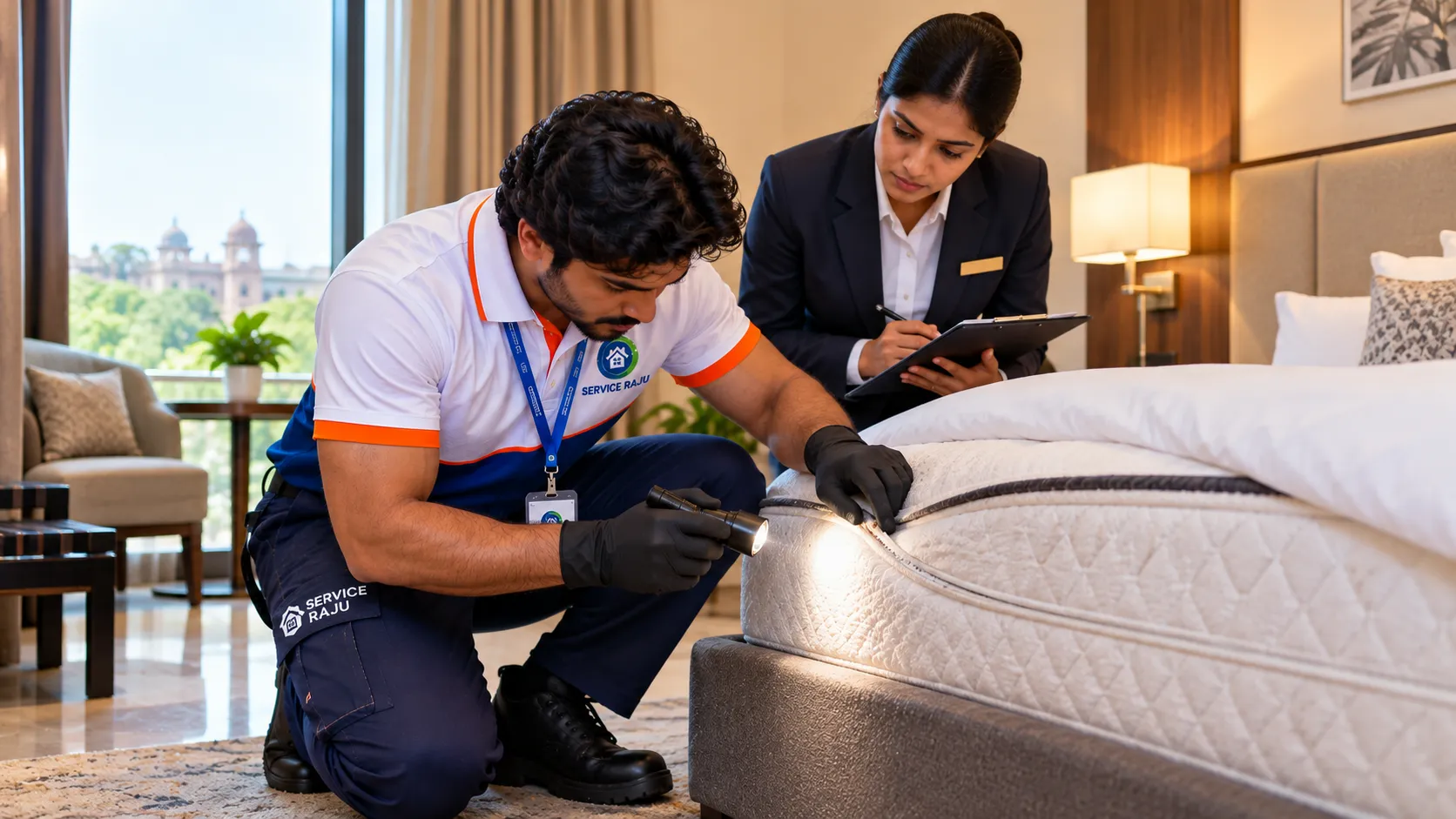
Bed Bugs in Hotel Rooms: An Inspection and Prevention Checklist for Mysore
For hotels, guesthouses, hostels and other accommodation providers, a suspected bed-bug finding needs a calm, documented response. Staff should know what to inspect, how to report evidence, how to prevent belongings from spreading the problem and when to bring in a qualified pest-management professional.
Bed bugs can occur in accommodation of any standard. A clean room is important for guest comfort, but cleanliness alone does not guarantee that bed bugs are absent. The best approach is a consistent inspection and response procedure, supported by professional assessment when needed.
This checklist is designed for accommodation teams in Mysore (Mysuru). It covers routine room checks, signs to report, immediate housekeeping actions, treatment coordination and follow-up.
Quick Hotel Bed Bug Inspection Checklist
Use this short checklist during room checks, when a guest reports a concern or when a room is being assessed by a pest-management professional.
- Inspect mattress seams, piping, labels and accessible folds.
- Check the bed frame, joints, screw holes, headboard and nearby cracks.
- Look at bedside furniture, upholstered chairs, luggage stands and nearby skirting.
- Report live insects, shed skins, eggs or suspicious dark spotting for identification.
- Record the room number, date, exact location and who observed the evidence.
- Keep the room out of normal room-turnover until management decides on the next step.
- Contact a qualified pest-management professional for confirmation and a suitable plan.
- Follow treatment preparation, safety and re-entry instructions.
- Complete scheduled follow-up inspections and record the outcome.
Important: Bite marks alone do not confirm a bed-bug infestation. Skin reactions differ between people, and other causes may produce similar marks. Look for physical evidence and arrange identification where necessary.
What Signs May Indicate Bed Bugs in a Hotel Room?
Bed bugs are small, flat insects that commonly hide in or near sleeping areas. Possible evidence includes:
- Live insects: Small, flat, reddish-brown insects found around mattress seams, bed frames or nearby furniture.
- Shed skins: Pale, insect-shaped skins left as bed bugs grow.
- Eggs or egg shells: Tiny pale material in protected crevices. Have uncertain findings identified rather than assuming.
- Dark spotting: Small dark marks on seams or nearby surfaces may be bed-bug faecal spots, but marks can have other causes.
- Blood marks: Small reddish stains on bedding can have several explanations and should be considered alongside other evidence.
- Guest concerns about bites: Treat reports respectfully, but do not use bite patterns alone to confirm the pest.
Bed bugs usually remain close to places where people rest or sleep, although they can spread through belongings and furnishings. Staff should inspect methodically rather than searching only the centre of the mattress.
For identification background, see the CDC's bed bug overview and the CDC's identification resource.
Where Should Hotel Staff Inspect?
Focus on the bed and nearby furniture first. Use a torch and inspect accessible seams, joints and crevices carefully. Avoid dismantling furniture unless authorised and trained to do so.
| Inspection area | What to check | What staff should record |
|---|---|---|
| Mattress | Seams, piping, labels, folds and corners | Exact side, edge or seam where evidence was observed |
| Bed frame and headboard | Joints, screw holes, cracks, gaps and rear surfaces accessible for inspection | Specific joint, gap or panel location |
| Bedside tables | Drawer joints, undersides, rear edges and nearby crevices | Furniture item and precise location |
| Upholstered seating | Seams, folds, undersides and areas close to the bed | Chair or sofa location and observed evidence |
| Luggage rack and other guest furniture | Joints, fabric seams and protected gaps | Item inspected and any suspicious finding |
| Room edges | Skirting, accessible cracks and gaps close to sleeping furniture | Wall or floor location and whether professional inspection is needed |
Do not rely on a quick visual check of the exposed mattress surface alone. If there is a credible concern, a professional may need to inspect more locations and adjacent areas.
How Should a Hotel Respond to a Guest Report?
When a guest reports suspected bed bugs, staff should respond promptly, courteously and without making premature conclusions. A clear process protects the guest's comfort and helps the property investigate accurately.
- Listen and document. Record the guest's description, the time reported and where they noticed the concern. Avoid arguing about whether the bites are bed bugs.
- Arrange a discreet room assessment. Have trained staff or a pest professional inspect for physical evidence.
- Offer an appropriate accommodation response. Management should decide whether to relocate the guest, based on the concern, evidence, room availability and property policy.
- Handle belongings carefully. Avoid moving potentially affected bedding, luggage or furniture through occupied rooms without a controlled plan.
- Escalate confirmed or credible findings. Contact the designated manager and a qualified pest-management provider.
- Keep communication factual. Explain what is being checked and what the next steps are. Do not promise that a room is pest-free before inspection and appropriate follow-up.
Bed bugs are not known to transmit disease, but bites may cause itching, discomfort and sleep disruption. Guest concerns should still be handled seriously and respectfully.
Housekeeping Actions After a Suspected Finding
Housekeeping should follow a written procedure approved by management and the pest-management professional. The goal is to avoid spreading suspected insects or infested items while preserving useful evidence.
Recommended actions
- Notify the supervisor and document the room and precise finding.
- Avoid shaking linens, blankets or soft furnishings.
- Follow the property's controlled bagging and laundry procedure for items identified for handling.
- Keep potentially affected items separate from clean linen and other guest belongings.
- Do not carry untreated furniture or bedding into another guest room.
- Do not apply household sprays, foggers or unapproved chemicals as an improvised response.
- Follow the professional's preparation instructions before treatment.
Laundry methods and temperatures should be appropriate for the fabric and consistent with professional instructions. The U.S. EPA's bed-bug guidance discusses laundering and drying as part of a broader control plan; a hotel should use methods suitable for its equipment, textiles and local product instructions.
See EPA guidance on integrated bed-bug management for an overview of combined control methods.
How to Manage a Room With Suspected Bed-Bug Activity
There is no single room-isolation rule that fits every property. Management should use the inspection findings and the pest professional's advice to decide which room or nearby areas require restricted use.
Management should:
- Mark the room as under investigation in the property's room-status system.
- Prevent routine room turnover until the inspection and response decision are complete.
- Ask the pest professional whether adjacent or connected rooms should also be inspected.
- Coordinate guest relocation and housekeeping access without moving suspect items unnecessarily.
- Keep a record of rooms inspected, rooms treated and rooms cleared for return to service.
Do not move a guest to another room and assume the concern is resolved. The new room should be appropriate, and management should follow the professional's advice about belongings and any possible spread.
Professional Bed-Bug Treatment and Follow-Up
Bed-bug management can be complex. A professional should inspect the affected room, identify likely harbourages, explain the proposed approach and provide preparation and safety instructions.
What a commercial treatment plan should address
- Inspection and identification: Determine whether bed bugs are present and assess the locations requiring attention.
- Scope: Identify the rooms, furnishings and relevant adjacent areas included in the plan.
- Preparation: Give housekeeping and management clear instructions for linen, furniture, belongings and room access.
- Treatment method: Explain the selected methods and the precautions required. The approach may combine physical and chemical measures where appropriate.
- Safety and re-entry: Provide product-specific instructions, including ventilation, drying and when the room may be used again.
- Monitoring and follow-up: Set a schedule for re-inspection and explain what evidence would require further action.
- Written records: Document the inspection, treatment, advice and follow-up findings.
Do not assume that a single visit will always eliminate bed bugs. Eggs may survive some control methods, and activity can be missed during an initial inspection. Follow-up inspection and, where needed, additional treatment are important parts of a responsible plan.
Ask providers about their experience with bed bugs in commercial accommodation, the treatment scope, follow-up arrangements and applicable credentials. The EPA's professional-selection guidance recommends integrated pest management and monitoring for insects missed during treatment. Its guidance is U.S.-based; local Indian requirements and product approvals must be followed.
A Bed-Bug Prevention Program for Hotels, Hostels and Guesthouses
Prevention is more effective when inspection and reporting are part of normal hotel operations—not only when a guest complaint occurs.
Build these practices into the housekeeping routine
- Train housekeeping staff to recognise possible bed-bug signs and report them promptly.
- Include mattress seams, bed frames and nearby furniture in a documented inspection routine.
- Use a consistent room inspection checklist and clear escalation contact.
- Inspect second-hand beds, headboards and upholstered furniture before placing them in guest rooms.
- Keep rooms and storage areas orderly enough for inspection and cleaning.
- Use a controlled procedure for handling guest reports and suspected items.
- Maintain records of sightings, inspections, treatment and follow-up.
- Review recurring findings to identify rooms, furniture or processes needing additional attention.
Hotels should set inspection frequency according to their property layout, turnover, risk assessment and professional advice. This article does not prescribe a universal inspection interval for every accommodation business.
Hotel Bed-Bug Inspection and Incident Record
A simple record helps management coordinate housekeeping, guest relations and pest-control follow-up. Use the same format for suspected findings and completed professional visits.
| Record field | What to enter |
|---|---|
| Date and time | When the concern was reported or the inspection occurred |
| Room / area | Room number and precise furniture or surface location |
| Reported by | Staff role or manager receiving the report |
| Evidence | Description and, where appropriate, a photograph for identification |
| Inspection outcome | Not confirmed, suspected, confirmed by identification, or other documented outcome |
| Action taken | Room status, guest response, item handling and professional referral |
| Professional visit | Provider, inspection date, scope and instructions supplied |
| Follow-up | Next inspection date, findings and room-release decision |
Store guest-related records securely and limit access to staff who need them. Keep communication factual and avoid publicly identifying guests or rooms.
Hotel Bed-Bug Control in Mysore: When to Request an Inspection
Accommodation operators in Mysore (Mysuru) may need professional support when staff find suspected insects, guests report recurring concerns or an inspection cannot confidently determine the source.
When contacting a pest-management provider, explain that the property is a hotel, hostel or guesthouse. Share the number of rooms involved, what evidence has been observed, the room status and any previous treatment history. Ask whether the provider can inspect commercial accommodation and offer a written treatment and follow-up plan.
Service Raju provides pest-control services in Mysuru. For a hotel or commercial bed-bug concern, contact the team to confirm whether it currently offers hotel-specific bed-bug inspection and treatment, the service scope, and follow-up availability before scheduling.
Frequently Asked Questions
1. Do bites prove that a hotel room has bed bugs?
No. Bite marks or skin reactions alone do not confirm bed bugs. Staff should look for physical evidence and arrange identification or professional inspection where needed.
2. Can bed bugs occur in a clean hotel?
Yes. Bed bugs can be introduced through belongings, furnishings or travel. Good housekeeping supports inspection and response, but cleanliness alone does not guarantee that bed bugs are absent.
3. Where should housekeeping look first?
Start with mattress seams, bed frames, headboards and nearby furniture. Inspect accessible joints, folds and crevices, and document the precise location of any suspicious evidence.
4. Should a hotel immediately spray a room after a guest complaint?
Not as an improvised response. First document the concern and arrange assessment. Any treatment should be selected and applied by a suitably qualified professional following the product label and safety instructions.
5. Should the hotel close the room?
Management should decide the room status based on the concern, inspection findings and professional advice. Avoid routine room turnover while a credible suspected finding is being assessed.
6. Do bed bugs spread disease?
Bed bugs are not known to spread disease to people, but bites can cause itching, discomfort and sleep disruption. Guest concerns still deserve a prompt and considerate response.
7. Is one treatment always enough?
No. Results depend on the infestation, inspection coverage and treatment method. A plan should include monitoring and follow-up inspection, with further action if evidence remains.
8. Should the hotel inspect neighbouring rooms?
Ask the pest-management professional to assess whether adjacent or connected rooms need inspection. The appropriate scope depends on the room layout and findings.
9. What should a hotel ask a pest-control provider?
Ask about commercial accommodation experience, inspection scope, treatment method, preparation, safety and re-entry instructions, documentation, monitoring and follow-up visits.
10. Does Service Raju offer hotel bed-bug treatment in Mysore?
Service Raju lists pest-control services in Mysuru, but hotel-specific bed-bug treatment and commercial follow-up should be confirmed directly before booking.
Conclusion: Make Bed-Bug Response Part of Hotel Operations
A consistent inspection and reporting process helps hotels respond to suspected bed-bug activity calmly and responsibly. Train housekeeping teams to inspect likely hiding places, record physical evidence, handle items carefully and escalate concerns for professional assessment.
For hotels, hostels and guesthouses in Mysore, a suitable commercial plan should include inspection, clear preparation and safety instructions, treatment matched to the findings, and follow-up monitoring—not simply a one-time spray.
Contact Service Raju to discuss pest-control needs in Mysuru and confirm whether hotel-specific bed-bug inspection and treatment are currently available.
 AC Repair
 Ant Control Service
 Basin & Sink Services
 Bath & Shower Services
 Bath Fittings & Mirrors
 Bathroom Cleaning Service
 Bathroom Renovation Services
 Bed Bug Control Services
 Bedroom Painting
 Book a Carpenter Consultation
 Book Electrical Consulting
 Cabinet Painting & Wood Refinishing
 Chimney Cleaning
 Civil Masonry Work
 Clean-Up Services
 Clothes Hanger Installation
 Cockroach Control Services
 Commercial Cleaning
 Commercial Pest Control AMC Service
 Cupboard & Drawer Services
 Decorative Wall Panels
 Deep Sanitisation Service
 Detan & Bleach
 Door, Grill & Cabinet Painting Service
 Doorbell & security
 Drain Blockage Clearing
 Electrical Appliance Services
 Electrical Wiring Services
 Empty Home Deep Cleaning
 Fabrication
 Facials
 Fan Installation & Repair
 Full Home Cleaning Service
 Full Home Renovation
 Furniture Repair Service
 Gas Stove & Hob Repair
 General Pest Control Services
 General Plumbing & Consultation
 Geyser Repair
 Glass Cleaning
 Head Massage
 Honeybee & Wasp-Services
 Kitchen & Bathroom Painting Service
 Kitchen Cleaning
 Kitchen Fittings
 Kitchen Renovation
 Laptop/Desktop service
 Leak Detection and Repair
 LED TV Repair
 Living and Dining Room Painting
 Makeup, Saree & Styling
 Manicure & Pedicure
 MCB,Meter & Fuse Services
 Microwave Repair
 Mosquito Pest Control Service
 Multi-Room Painting Service
 Painting Consultation
 Quick Mini Cleaning Services
 Refrigerator Repair
 RO Water Purifier
 Rodent Control Services (Rat & Mice Treatment)
 Rooms Cleaning
 Shelves & Decor
 Sofa, Carpet & Mattress Cleaning
 Solar Water Heater Service
 Sump & Tank Cleaning
 Switch & Socket Services
 Tap & Mixer Service
 Termite-Control-Services
 Threading & Face Wax
 Tile & Granite Installation & Polishing
 Toilet & Commode Services
 UPS and Inverter Repair Services
 Wall Painting Service
 Washing Machine Repair
 Water Level Controllers
 Water Tank and Pump Repair
 Waterproofing
 Waterproofing Services
 Waxing
 Window & Curtain Services
 Wooden Door Services