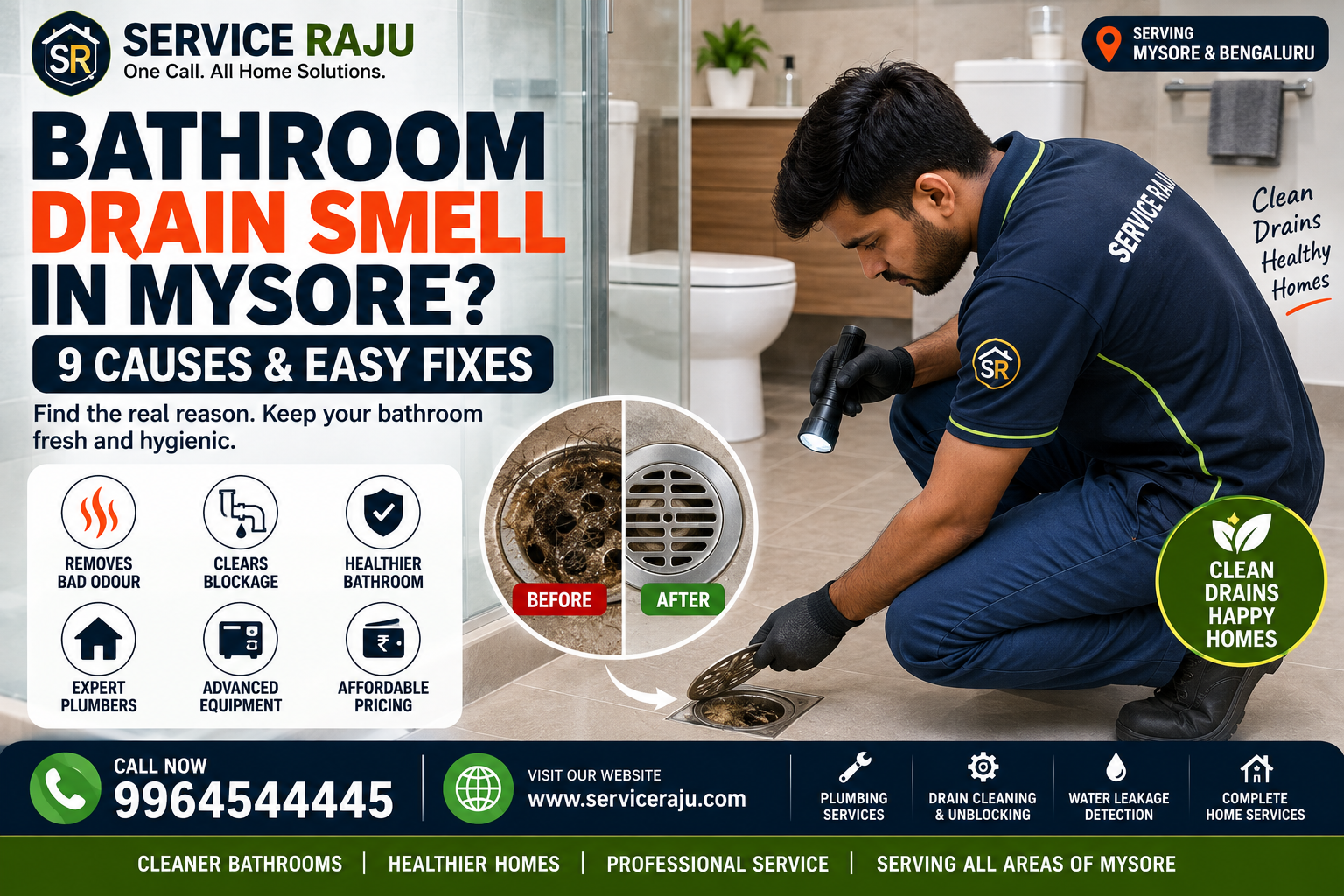
Bathroom Drain Smell Mysore: 9 Causes & Easy Fixes
Bathroom Drain Smell in Mysore: 9 Causes & Fixes
If you are dealing with bathroom drain smell Mysore homeowners commonly notice, don't simply cover the odour with an air freshener. A persistent drain smell can come from a dry floor trap, hair and soap buildup, poor ventilation, a partial blockage or another plumbing problem. The good news is that some causes are simple to correct. For example, a rarely used drain can lose its water seal, allowing unpleasant sewer odours to enter the bathroom. The Bureau of Indian Standards notes that drainage fixtures should have liquid-seal traps and that trap seals should be maintained to prevent sewer gas and other unwanted fumes from entering buildings. If the smell keeps returning, however, cleaning the visible drain may not solve the underlying problem.
1. Why Does Your Bathroom Drain Smell?
A bathroom drain normally has a trap that holds water and creates a barrier between your living space and the drainage system. When that water seal disappears or the drainage system develops a problem, unpleasant odours can move back into the bathroom. A bathroom drain smell may be caused by:
- A dry floor trap
- Hair and soap residue
- Stagnant water
- A dirty trap
- Poor ventilation
- Partial pipe blockage
- A damaged toilet seal
- A leaking or cracked pipe
- A damaged or poorly fitted drain cover The important thing is to identify the source rather than repeatedly cleaning only the drain opening.
2. 9 Causes of Bathroom Drain Smell in Mysore
3. 1. Dry Floor Trap
A dry floor trap is one of the simplest causes of a bad bathroom smell. Floor traps contain water that helps prevent unpleasant gases from moving back through the drainage pipe. If a bathroom, utility area or floor drain is rarely used, the water can gradually evaporate. This is particularly common in:
- Guest bathrooms
- Empty houses
- Rental properties
- Unused utility areas
- Spare bathrooms
- Floor drains that receive very little water If the bathroom is rarely used, pour water into the floor drain periodically to restore the water seal. The principle is simple: the trap needs water to maintain the barrier.
4. 2. Hair and Soap Buildup
Bathroom drains regularly collect hair, soap residue, skin particles and other debris. Over time, this material can form a sticky layer inside the drain. Water may still pass through, but slowly. That buildup can also produce unpleasant odours. Signs include:
- Slow drainage
- Water collecting around the drain
- Visible hair
- Soap residue
- Bad smell that becomes stronger after using the shower Regularly removing visible hair and keeping the drain cover clean can reduce this problem.
5. 3. Dirty or Blocked Trap
The trap underneath a wash basin can collect hair, soap, toothpaste residue and other debris. If the trap becomes dirty, the bathroom may develop both a smell and slow drainage. A properly functioning trap is designed to hold water while allowing wastewater to flow away. Hansgrohe explains that traps create a water seal that helps prevent decomposition gases from entering living areas. It also notes that persistent odour combined with poor drainage can indicate trapped hair or debris requiring cleaning. If the trap needs dismantling, make sure the correct seals are refitted and check carefully for leaks afterward.
6. 4. Poor Drain Ventilation
Sometimes the problem isn't the drain itself. Drainage systems require appropriate ventilation to manage air pressure. Poor ventilation can contribute to trap-seal problems and unpleasant odours. The National Building Code of India describes drainage ventilation as part of proper plumbing design and specifically addresses preventing siphonage and loss of trap seals. Possible warning signs include:
- Gurgling sounds
- Repeatedly dry traps
- Odour appearing after another fixture is used
- Slow drainage
- Smell coming from more than one fixture This type of problem usually requires plumbing inspection rather than another round of surface cleaning.
7. 5. Partially Blocked Drain Pipe
A completely blocked drain is easy to recognise. A partially blocked drain can be more deceptive. Water still disappears, but slowly. Hair, soap, sediment and other material can remain inside the pipe and create an unpleasant smell. Look for:
- Slow drainage
- Water swirling before disappearing
- Occasional backup
- Gurgling
- Repeated need to clean the drain If the blockage keeps returning, professional bathroom drain cleaning Mysore may be more appropriate than repeatedly using household products.
8. 6. Toilet Seal Problem
If the smell is strongest around the base of the toilet rather than the floor drain, the toilet connection may need inspection. A damaged or poorly sealed connection can allow unpleasant drainage odours to escape. You may also notice:
- Moisture around the toilet base
- Persistent sewage-like smell
- Toilet movement
- Water appearing around the base
- Smell returning immediately after cleaning Do not simply apply silicone around the outside to hide the smell. The actual connection should be checked and repaired correctly.
9. 7. Cracked or Leaking Pipe
A damaged pipe can create a more complicated odour problem. If a concealed waste pipe or joint is leaking, the smell may appear around:
- Bathroom skirting
- Wall corners
- Under the wash basin
- Floor edges
- Adjacent rooms A concealed leak may also cause dampness or staining. If the smell is accompanied by moisture, don't keep pouring cleaning products into the drain. The pipe itself may require inspection.
10. 8. Rarely Used Bathroom Drain
An unused bathroom can develop a smell even when everything is working correctly. The most common reason is loss of water from the trap. If you have a guest bathroom that remains unused for weeks, periodically run water through:
- Wash basin
- Shower
- Floor drain
- Other rarely used fixtures This simple habit helps maintain the water seal. If the smell disappears after running water but repeatedly returns after a few days or weeks, the plumbing may need further inspection for siphonage, evaporation or another trap-seal issue.
11. 9. Drain or Grating Problems
The drain cover itself can also contribute to the problem. A damaged, poorly fitted or heavily clogged grating can allow hair, debris and stagnant material to accumulate around the drainage opening. Check whether:
- The grating is damaged
- Hair is trapped underneath
- Soap residue has accumulated
- Water remains around the drain
- The cover does not sit correctly Cleaning the visible area is useful, but if the smell continues, the problem may be deeper inside the drainage system.
12. What to Do When Your Bathroom Drain Smells
Start with simple checks before assuming that the plumbing needs major work.
13. Step 1: Identify where the smell is strongest
Is it coming from:
- Floor drain?
- Wash basin?
- Shower?
- Toilet?
- Utility drain?
- Multiple drains? The location provides an important clue.
14. Step 2: Check whether the drain is used regularly
If it is rarely used, add water to the trap and monitor the smell.
15. Step 3: Remove visible debris
Clean hair, soap residue and dirt around the drain cover.
16. Step 4: Check drainage speed
Run water and see whether it disappears normally.
17. Step 5: Listen for gurgling
Gurgling can indicate an air-pressure or drainage issue that requires further inspection.
18. Step 6: Check for leaks
Look underneath the basin and around the toilet base for visible moisture.
19. Step 7: Monitor the smell
If the odour disappears completely and does not return, the problem may have been simple buildup or a dry trap. If it returns repeatedly, investigate the underlying plumbing.
20. When Should You Call a Plumber?
A plumbing service Mysore professional should inspect the system when:
- The smell persists after basic cleaning.
- The smell returns repeatedly.
- Multiple drains smell at the same time.
- Water drains slowly.
- The bathroom makes gurgling sounds.
- There is visible leakage.
- The toilet smells around its base.
- A drain repeatedly becomes blocked.
- The floor remains wet around the drain.
- You suspect a concealed pipe problem. Multiple fixtures developing odour at the same time deserve particular attention because the issue may be beyond one individual drain. The BIS building and plumbing guidance recognises the importance of traps, water seals and ventilation in preventing unwanted sewer gases from entering buildings.
21. Bathroom Drain Smell vs Drain Blockage
These two problems are related but not identical. A drain smell can occur because a trap has dried out even when the pipe is completely clear. A drain blockage can cause odour because organic material becomes trapped inside the pipe.
| Symptom | Possible cause |
|---|---|
| Smell but normal drainage | Dry trap or ventilation issue |
| Smell + slow drainage | Partial blockage or buildup |
| Smell + gurgling | Ventilation or drainage issue |
| Smell around toilet base | Toilet seal problem |
| Smell + visible dampness | Leak or damaged pipe |
| Several drains smell | Larger drainage/ventilation issue |
| This distinction matters because the correct solution depends on the cause. |
22. How to Prevent Bathroom Drain Smell
You don't need complicated maintenance to reduce recurring drain odours.
23. Clean drain covers regularly
Remove hair and visible debris before it moves deeper into the pipe.
24. Keep rarely used drains wet
Run water through unused bathroom fixtures periodically.
25. Don't pour grease into drains
Grease can accumulate inside pipes and contribute to drainage problems.
26. Use drain strainers
A suitable strainer can catch hair and larger debris before it enters the pipe.
27. Don't ignore slow drainage
A slow drain is often easier to address before it becomes a complete blockage.
28. Watch for recurring smells
If a smell disappears after cleaning but returns repeatedly, investigate why.
29. Don't mix cleaning chemicals
Never mix different drain or cleaning chemicals. Some combinations can create dangerous fumes.
30. Keep bathroom ventilation working
Good bathroom ventilation helps control humidity and keeps the space more comfortable, but it should not be used to mask a drainage problem.
31. How Much Does Bathroom Drain Cleaning Cost in Mysore?
The cost depends on what is actually causing the problem. A basic drain cleaning job may be considerably different from:
- Deep blockage clearance
- Trap cleaning
- Pipe inspection
- Concealed pipe repair
- Toilet seal replacement
- Main drainage-line work Current Mysore cleaning and plumbing markets show that simple cleaning services and more involved drainage work can vary significantly depending on the job. For example, local cleaning listings show separate pricing for bathroom cleaning and other specialised services, while Service Raju offers plumbing and drainage services as part of its Mysuru home-service catalogue. For that reason, an inspection is preferable to assuming that every bad-smelling drain needs the same treatment.
32. How Service Raju Can Help
Service Raju provides plumbing and drainage services in Mysuru, covering common home plumbing problems and related maintenance needs. For a recurring bathroom drain smell, the objective should be to identify the source before recommending a repair. Depending on the symptoms, a technician may inspect:
- Drain opening and grating
- Floor trap
- Wash-basin trap
- Drain hose or pipe connections
- Visible leaks
- Toilet connection
- Drain flow
- Possible blockage
- Ventilation-related symptoms A professional diagnosis can help prevent repeated temporary fixes. For local plumbing assistance, contact Service Raju at 9964544445 or visit www.serviceraju.com.
33. Frequently Asked Questions
34. Why does my bathroom drain smell like sewage?
A sewage-like smell can come from a dry trap, drainage blockage, poor ventilation, damaged pipe or failed toilet seal. The exact cause depends on where the smell originates and whether drainage is also affected.
35. Can a dry floor trap cause bad smell?
Yes. A trap relies on a water seal to prevent unpleasant drainage gases from entering the room. If the water evaporates, the seal can be lost.
36. Why does the smell return after cleaning?
If the smell keeps returning, cleaning the visible drain may not be addressing the underlying cause. A dry trap, recurring blockage, ventilation issue, leaking joint or toilet seal problem may need investigation.
37. Is a bad-smelling drain a plumbing problem?
Sometimes. A simple dry trap may be easy to correct, while persistent odour can indicate a plumbing or drainage problem that requires professional inspection.
38. Should I use chemical drain cleaners?
Don't use drain chemicals randomly or mix different products. If the drain is repeatedly blocked or the smell persists, professional diagnosis is safer than repeatedly applying chemicals.
39. Why do multiple bathroom drains smell at the same time?
When several fixtures develop odour simultaneously, the cause may involve a shared drainage or ventilation system rather than one individual drain. This is a good reason to arrange a plumbing inspection.
40. Final Bathroom Drain Checklist
If your bathroom has a persistent smell:
- Identify the strongest-smelling drain.
- Check whether the drain is rarely used.
- Add water to a dry floor trap.
- Remove visible hair and debris.
- Check whether water drains normally.
- Listen for gurgling.
- Look for visible leaks.
- Check around the toilet base.
- Avoid mixing drain chemicals.
- Call a professional if the smell keeps returning. A bathroom should not need constant air freshener to smell clean. If the odour repeatedly comes back, the best solution is to find the reason rather than simply covering the smell. If you need bathroom drain cleaning Mysore or professional plumbing inspection, contact Service Raju at 9964544445 or visit www.serviceraju.com.
 AC Repair
.webp) Ant Control Service
Ant Control Service
 Basin & Sink Services
.webp) Bath & Shower Services
Bath & Shower Services
.webp) Bath Fittings & Mirrors
Bath Fittings & Mirrors
 Bathroom Cleaning Service
 Bathroom Renovation Services
 Bed Bug Control Services
 Bedroom Painting
 Book a Carpenter Consultation
 Book Electrical Consulting
.webp) Cabinet Painting & Wood Refinishing
Cabinet Painting & Wood Refinishing
 Chimney Cleaning
 Civil Masonry Work
 Clean-Up Services
.webp) Clothes Hanger Installation
Clothes Hanger Installation
 Cockroach Control Services
---mysore-mysore-standard-300x200.webp) Commercial Cleaning
Commercial Cleaning
 Commercial Pest Control AMC Service
 Cupboard & Drawer Services
 Decorative Wall Panels
 Deep Sanitisation Service
 Detan & Bleach
 Door, Grill & Cabinet Painting Service
.webp) Doorbell & security
Doorbell & security
 Drain Blockage Clearing
 Electrical Appliance Services
 Electrical Wiring Services
 Empty Home Deep Cleaning
.webp) Fabrication
Fabrication
 Facials
.webp) Fan Installation & Repair
Fan Installation & Repair
 Full Home Cleaning Service
 Full Home Renovation
 Furniture Repair Service
 Gas Stove & Hob Repair
.webp) General Pest Control Services
General Pest Control Services
 General Plumbing & Consultation
 Geyser Repair
 Glass Cleaning
 Head Massage
.webp) Honeybee & Wasp-Services
Honeybee & Wasp-Services
 Kitchen & Bathroom Painting Service
 Kitchen Cleaning
 Kitchen Fittings
.webp) Kitchen Renovation
Kitchen Renovation
.webp) Laptop/Desktop service
Laptop/Desktop service
 Leak Detection and Repair
 LED TV Repair
 Living and Dining Room Painting
 Makeup, Saree & Styling
 Manicure & Pedicure
 MCB,Meter & Fuse Services
 Microwave Repair
 Mosquito Pest Control Service
 Multi-Room Painting Service
 Painting Consultation
 Quick Mini Cleaning Services
 Refrigerator Repair
 RO Water Purifier
.webp) Rodent Control Services (Rat & Mice Treatment)
Rodent Control Services (Rat & Mice Treatment)
.webp) Rooms Cleaning
Rooms Cleaning
 Shelves & Decor
 Sofa, Carpet & Mattress Cleaning
 Solar Water Heater Service
 Sump & Tank Cleaning
 Switch & Socket Services
 Tap & Mixer Service
.webp) Termite-Control-Services
Termite-Control-Services
 Threading & Face Wax
.webp) Tile & Granite Installation & Polishing
Tile & Granite Installation & Polishing
 Toilet & Commode Services
.webp) UPS and Inverter Repair Services
UPS and Inverter Repair Services
.webp) Wall Painting Service
Wall Painting Service
 Washing Machine Repair
 Water Level Controllers
 Water Tank and Pump Repair
 Waterproofing
 Waterproofing Services
 Waxing
 Window & Curtain Services
 Wooden Door Services