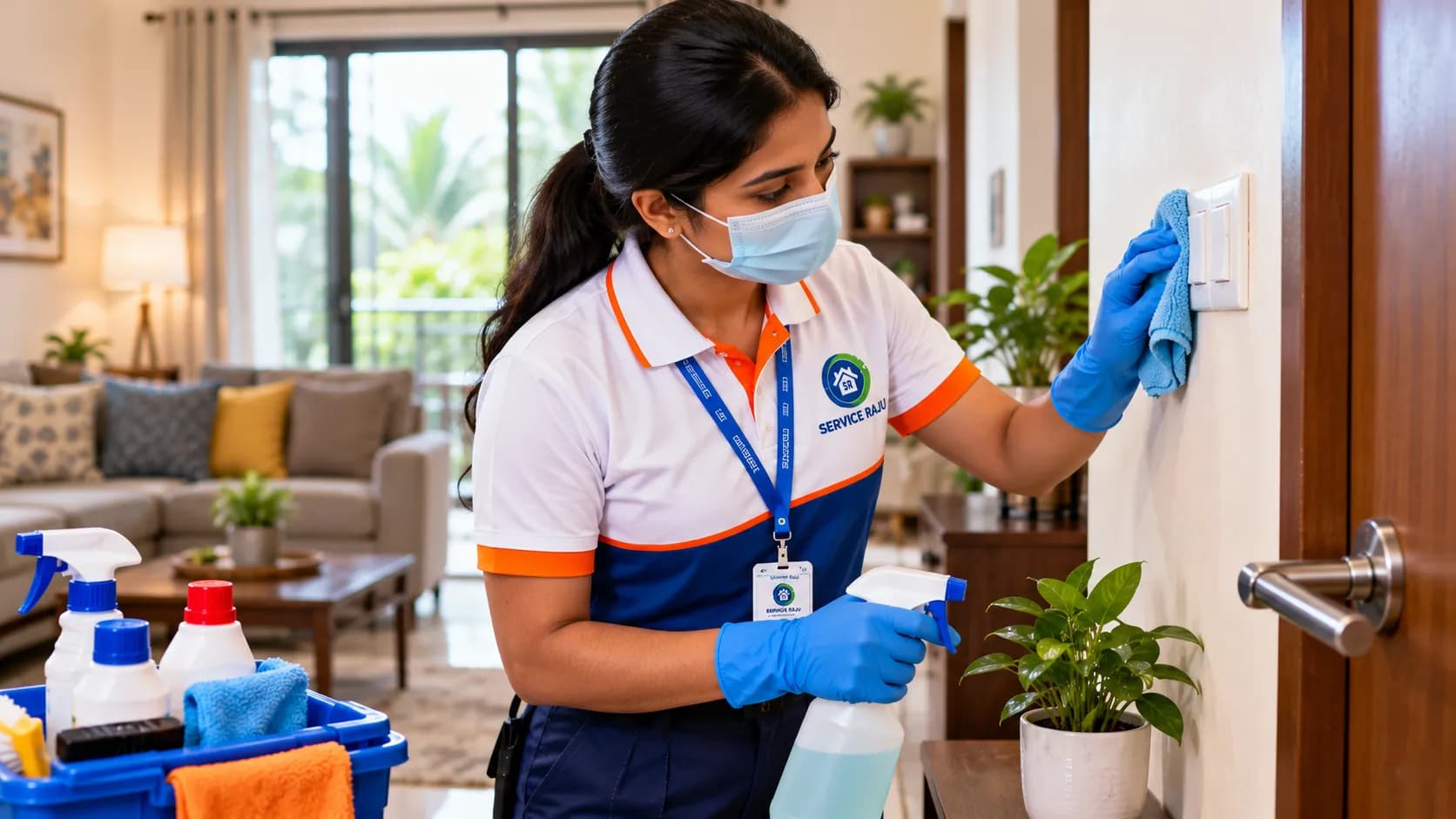
Home Sanitisation After an Illness: What Should You Clean and Disinfect?
When someone at home has been unwell, many families want to give the house a careful hygiene reset. But does every room need disinfecting? Which surfaces deserve extra attention? And how can you clean safely without using unnecessary or unsuitable chemicals?
The answer depends on the illness, the surfaces in your home and the cleaning products you use. In many situations, ordinary cleaning is an important first step. Targeted disinfection may be appropriate for certain high-touch surfaces when someone is sick or has recently been sick.
This guide explains the difference between cleaning, sanitising and disinfecting, provides a practical home checklist, and explains when to consider a professional home sanitisation service in Mysore (Mysuru).
Quick Answer: What Should You Clean After Someone Has Been Ill?
- Wash your hands and gather the cleaning products, cloths and protective equipment appropriate for the task.
- Clean visibly dirty surfaces with a suitable detergent or cleaner first.
- Pay attention to frequently touched surfaces such as door handles, light switches, taps, remote controls and shared countertops.
- If disinfection is appropriate for the illness and surface, use a product labelled for that purpose and follow its instructions, including the required contact time.
- Wash laundry and reusable items according to their care instructions. Handle contaminated items carefully and avoid shaking them unnecessarily.
- Ventilate the room as directed by the product label, store chemicals safely and wash your hands when finished.
Important: A cleaning or sanitisation service is not a medical treatment. It cannot guarantee that nobody will become ill or that every disease-causing organism has been eliminated.
Cleaning vs Sanitising vs Disinfecting: What Is the Difference?
These terms are often used together in home-cleaning advertisements, but they describe different actions. Check the product label to understand what a product is designed and tested to do.
| Term | What it means | When it may be useful |
|---|---|---|
| Cleaning | Removing dirt, dust, grime and many germs from a surface, usually with detergent, water and wiping or scrubbing. | Routine household care and the first step before disinfecting when needed. |
| Sanitising | Reducing germs on a surface to a level defined by the product's intended standard or directions. | When a product is specifically labelled for sanitising a particular surface or use. |
| Disinfecting | Using a product intended to inactivate or kill specified germs on eligible surfaces when used as directed. | When the situation calls for targeted disinfection, such as certain circumstances involving illness. |
Cleaning alone removes much of the dirt and germs on many household surfaces. Disinfection is not automatically necessary for every object or room after every illness. Follow public-health guidance relevant to the illness and the product instructions.
Which Surfaces Should You Prioritise?
Start with objects that people touch frequently, especially in shared areas and in the room used by the person who was unwell. Prioritise surfaces that may have been contaminated and can safely be cleaned with an appropriate product.
| Surface or item | What to do | Safety note |
|---|---|---|
| Door handles and cupboard pulls | Clean carefully; disinfect if appropriate for the illness and surface. | Use a product suitable for the finish. |
| Light switches and frequently touched controls | Wipe with a cloth dampened as directed by the product. | Do not spray liquid directly into electrical switches or devices. |
| Shared countertops and tables | Remove crumbs and visible soil first, then use a suitable product if needed. | Follow food-contact surface instructions; rinse if the label requires it. |
| Taps, flush handles and bathroom touchpoints | Clean and, where appropriate, disinfect frequently touched areas. | Do not combine bathroom chemicals or use incompatible products. |
| Remote controls, phones and keyboards | Follow the device manufacturer's cleaning instructions. | Avoid excess moisture and products that can damage screens or coatings. |
| Bedside tables and nearby surfaces | Clean items that were frequently handled or may have been contaminated. | Use a surface-compatible product and let it dry as instructed. |
| Reusable dishes and utensils | Wash using the normal appropriate dishwashing method. | Do not apply surface disinfectants to food, dishes or utensils unless the product label specifically permits that use. |
There is no need to disinfect every wall, ceiling or decorative object automatically. Focus on the circumstances, likely contact and surfaces that can be treated safely.
Room-by-Room After-Illness Cleaning Checklist
1. Bedroom or room used by the sick person
- Clean frequently touched bedside surfaces, handles and switches.
- Clean the table, chair arms or other shared touchpoints as appropriate.
- Change and launder bedding when needed, following fabric-care instructions.
- Clean visible spills or contamination using a suitable method.
- Ventilate the room when safe and appropriate.
2. Bathroom
- Clean taps, flush handles, door handles and other frequently touched surfaces.
- Clean the basin, toilet and surrounding areas with suitable products.
- Follow the label if disinfection is required for a particular surface.
- Keep bathroom chemicals separate; never mix bleach with acids, ammonia or other cleaners.
3. Kitchen and dining area
- Clean countertops, table surfaces, refrigerator handles and cupboard pulls.
- Wash dishes and utensils using an appropriate dishwashing method.
- For food-contact surfaces, use only products approved for that purpose and follow any rinsing directions.
- Clean spills promptly and wash hands before preparing food.
4. Living room and shared spaces
- Clean door handles, remote controls, table edges and frequently used armrests.
- Vacuum or clean floors as needed, especially if visibly dirty.
- Follow the care instructions for upholstery, rugs and other soft furnishings.
- Avoid applying hard-surface disinfectants to fabrics unless the product label specifically allows it.
5. Laundry and waste
- Handle used tissues and waste carefully; dispose of them according to local household practices.
- Wash clothing, towels and bedding using the fabric's appropriate care instructions.
- Do not shake laundry unnecessarily if it may be contaminated.
- Clean the hamper or other frequently touched laundry surfaces if needed.
- Wash hands after handling waste or soiled laundry.
How to Use Cleaning and Disinfecting Products Safely
Product safety matters as much as the cleaning result. The correct product and method depend on the surface, the target germ and the instructions on the label.
Follow these precautions
- Read the label: Check the intended use, dilution, surface compatibility, protective equipment and any rinsing or re-entry instructions.
- Clean first: Dirt and residue can interfere with a disinfectant's effectiveness. Clean the surface first when the label or guidance calls for it.
- Observe contact time: Keep the surface wet for the time specified on the product label. Wiping it dry too early may prevent the product from working as intended.
- Ventilate: Open windows or increase airflow as directed, especially when using products with strong fumes.
- Never mix chemicals: Combining cleaning products can release dangerous gases or create harmful reactions.
- Protect skin and eyes: Use the gloves, eye protection or other protective equipment required by the label.
- Keep products away from children and pets: Store them securely and do not apply surface disinfectants to skin or animals.
- Use products only for their labelled purpose: Do not assume a product suitable for floors is safe for food surfaces, fabrics, electronics or every bathroom fitting.
Do not fog, spray or apply disinfectants to people, and do not use a household surface product as a treatment for illness. If a product causes breathing difficulty, eye exposure or other concerning symptoms, leave the area and seek appropriate medical or poison-safety advice.
When Should You Consider Professional Home Sanitisation?
A professional service may be useful when you need help cleaning a larger home, have many surfaces to address, or want support with a planned hygiene reset. It is still important to match the service to the actual need.
Consider asking for professional help when:
- You need a detailed cleaning of several rooms after a period of illness.
- There are many high-touch surfaces or areas that are difficult to clean yourself.
- You need help with routine deep cleaning in addition to targeted surface hygiene.
- You want to understand which areas the provider can clean, sanitise or disinfect.
- You need a clear plan for preparation, ventilation, product use and safe access after the service.
For a specific infectious illness, follow relevant medical or public-health advice. A general cleaning service may not be equipped or qualified to provide specialised remediation, biohazard cleanup or medical infection-control services.
Home Sanitisation in Mysore: What to Confirm with Service Raju
Service Raju's Mysuru service directory lists a Deep Sanitisation Service along with home-cleaning options. The exact scope of an after-illness home sanitisation appointment should be confirmed directly before booking.
When contacting Service Raju, explain what you need and ask:
- Is the requested home sanitisation service currently available in Mysuru?
- Which rooms and high-touch surfaces are included?
- Does the service provide routine cleaning, sanitising, disinfection, or a combination?
- Which products and application methods will be used, and are they suitable for your surfaces?
- What preparation, ventilation, protective equipment and waiting or re-entry instructions apply?
- Are there any exclusions, additional charges or special requirements for the type of illness involved?
Service-fit note: A directory listing does not confirm that every illness-related disinfection request is covered. Confirm the service scope and suitability with the team before scheduling.
Explore Service Raju's cleaning and home-service directory in Mysuru to check available options. If the required service is not listed or the situation needs specialised infection-control work, ask for clarification before booking.
Frequently Asked Questions About Home Sanitisation After Illness
1. Should I disinfect the entire house after someone has been sick?
Not automatically. The appropriate steps depend on the illness and the circumstances. Start with cleaning and focus on frequently touched or potentially contaminated surfaces. Follow relevant public-health guidance for the specific illness.
2. Is sanitising the same as disinfecting?
No. The terms describe different levels or intended outcomes. Check the product label to see whether it is a cleaner, sanitiser or disinfectant and which surfaces and germs it is designed for.
3. Do I need to clean a surface before disinfecting it?
Often, yes. Dirt and residue can interfere with disinfection. Follow the product instructions and clean the surface first when directed or when it is visibly dirty.
4. How long should disinfectant remain on a surface?
Use the contact or wet time specified on the product label. The required time varies by product and intended use; do not guess or assume all products work instantly.
5. Can I mix bleach with another cleaner to make it stronger?
No. Never mix bleach with other cleaning products, including acidic cleaners or ammonia-based products. Mixing chemicals can cause dangerous reactions and harmful fumes.
6. Should I disinfect curtains, sofas and mattresses?
Not with an ordinary hard-surface disinfectant unless its label specifically permits that use. Follow the fabric or item's care instructions and use products intended for the material.
7. Does professional sanitisation guarantee that germs are gone?
No. Results depend on the product, surface, application and organism. A cleaning service cannot guarantee that every germ is eliminated or that nobody will become ill.
8. Can home sanitisation prevent another illness?
Cleaning and appropriate disinfection can be part of hygiene practices, but they do not guarantee prevention. Follow medical and public-health advice, and use other recommended precautions relevant to the illness.
9. Is a regular deep-cleaning service the same as illness-related disinfection?
Not necessarily. Deep cleaning may focus on dirt and accumulated grime, while illness-related disinfection may require specific products, surfaces and procedures. Confirm the scope before booking.
10. How do I book home sanitisation in Mysore?
Visit Service Raju's Mysuru service directory, check the listed cleaning options and contact the team to confirm whether the required home sanitisation service is available and suitable.
A Careful Hygiene Reset Starts with the Right Cleaning Plan
After an illness, focus on practical household hygiene rather than indiscriminate chemical use. Clean visibly dirty surfaces, pay attention to frequently touched items, and disinfect only when appropriate for the situation and the surface. Follow product labels, allow the required contact time, ventilate and never mix cleaning chemicals.
If you would like help with household cleaning in Mysore, explore the Service Raju cleaning-services directory. Before booking an illness-related sanitisation service, confirm exactly what is covered and whether the provider can safely handle your particular request.