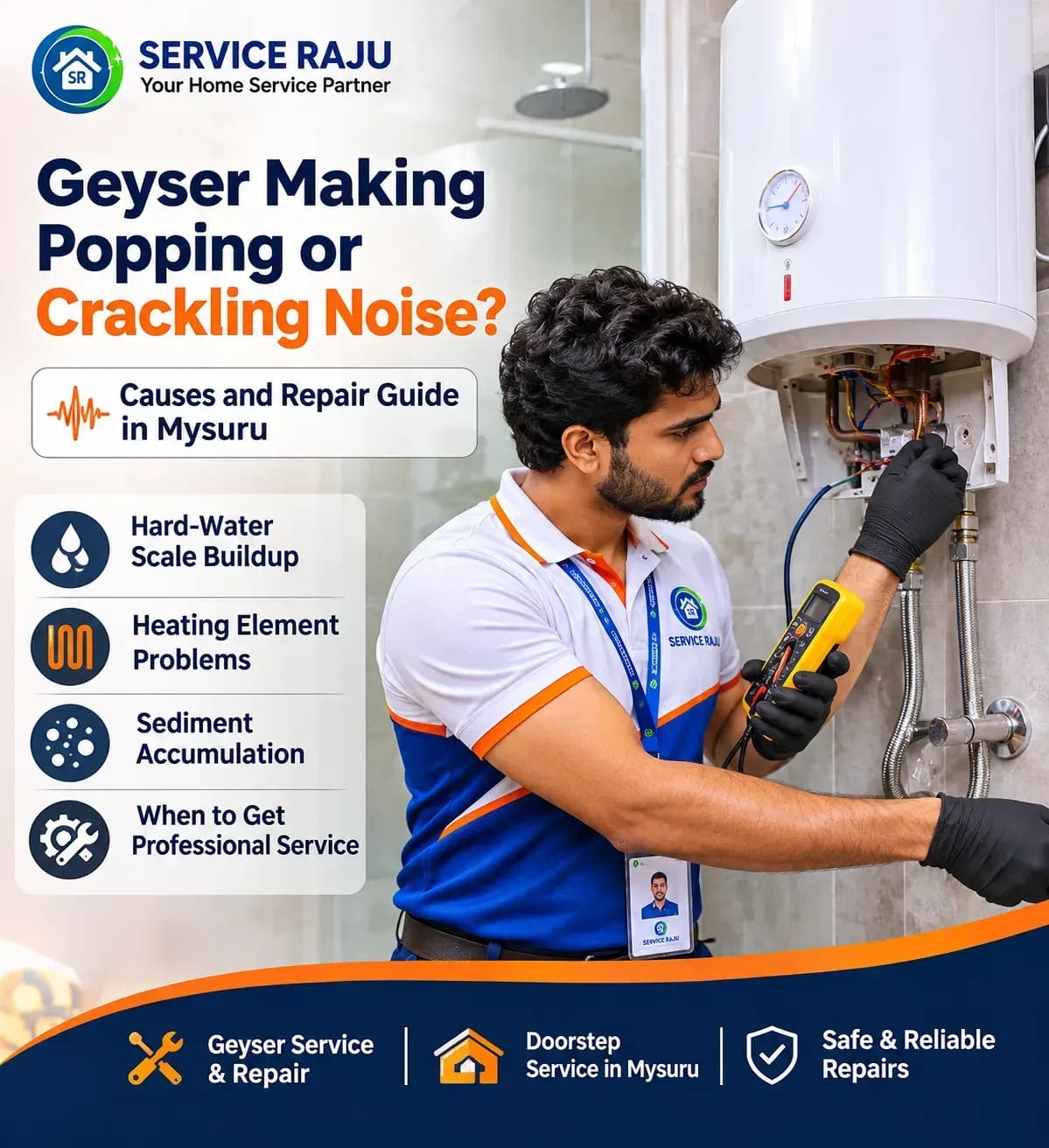
Geyser Making Popping or Crackling Noise? Causes and Repair Guide in Mysuru
Is your geyser making a popping, crackling, rumbling or unusual noise when you switch it on? A water heater should generally operate without loud or repeated noises. If you hear unusual sounds while water is heating, it may be a sign of mineral scale buildup, sediment accumulation, a heating element issue or another internal problem that needs inspection.
In areas where water contains dissolved minerals, deposits can gradually accumulate inside a geyser tank. When the water heats, these deposits may contribute to popping or rumbling sounds. However, noise alone cannot confirm the exact fault. The appliance should be checked before assuming that the heating element or tank needs replacement.
If you are searching for geyser making noise, water heater making noise or professional geyser repair in Mysuru, this guide explains the possible causes, warning signs, safety precautions and when to arrange a qualified technician.
Need a geyser inspection or repair? Contact Service Raju to discuss your water heater problem and confirm service availability in your area.
Call: +91 9964544445
Explore Service Raju Home Services in Mysuru
Table of Contents
- Why does a geyser make popping or crackling sounds?
- Hard-water scale buildup inside the tank
- Heating element problems
- Sediment accumulation inside the water heater
- Other possible reasons for geyser noise
- When should you switch off the geyser?
- When is professional geyser servicing necessary?
- How to maintain your geyser
- How to book geyser repair in Mysuru
- Frequently asked questions
1. Why Does a Geyser Make Popping or Crackling Sounds?
A geyser heats water inside a storage tank or through a heating system. During normal operation, some minor operating sounds may occur. However, repeated popping, loud crackling, rumbling or banging should not be ignored, particularly if the noise is new or becoming louder.
Possible causes include:
- Mineral scale deposits on the tank's internal surfaces or heating element.
- Sediment accumulated at the bottom of a storage water heater.
- A heating element affected by scale or wear.
- Water movement or pressure-related issues.
- Loose external fittings, pipes or mounting components.
- Another internal electrical or mechanical fault.
The sound can provide a clue, but it is not a reliable diagnosis by itself. A technician may need to inspect the appliance, its connections and the water supply conditions to identify the actual cause.
2. Hard-Water Scale Buildup Inside the Geyser Tank
One possible reason for a geyser making a popping or crackling noise is mineral scale buildup. Water can contain dissolved minerals such as calcium and magnesium. When water is heated repeatedly, some of these minerals can form deposits on internal surfaces and components.
How can scale affect a geyser?
- Mineral deposits may accumulate around the heating element.
- Scale can build up on the inner surfaces of a storage tank.
- Deposits may affect heat transfer from the heating element to the water.
- Heating performance may become less efficient.
- In some conditions, heating around deposits may contribute to popping or crackling sounds.
Possible signs of scale buildup
- Repeated popping or crackling during heating.
- Water taking longer than usual to heat.
- Changes in heating performance.
- Unusual operating sounds that were not present earlier.
These symptoms are not proof of scale buildup. A qualified technician should inspect the appliance before recommending descaling, cleaning or component replacement.
3. Heating Element Problems
The heating element is responsible for heating water in many electric storage geysers. If it becomes scaled, damaged or worn, the appliance may not heat water normally.
Common heating element-related symptoms
- Water not heating properly.
- Heating taking longer than expected.
- Geyser switching off unexpectedly.
- Repeated unusual noises while heating.
- Electrical protection devices tripping during operation.
A noisy geyser does not automatically mean that the heating element is faulty. Other components and conditions can produce similar symptoms.
What does a technician check?
Depending on the appliance design and complaint, a qualified technician may inspect the heating element, thermostat, electrical connections, insulation condition and other relevant components. Any electrical testing or internal work should be carried out by a competent person after the appliance has been safely isolated from power.
If a heating element is damaged, the technician should explain whether cleaning, repair or replacement is appropriate for that particular model.
4. Sediment Accumulation Inside the Water Heater
Storage geysers can collect sediment and mineral deposits over time. These materials may settle at the bottom of the tank or collect around internal components, depending on the water quality and appliance design.
When the heating element operates, water movement around accumulated deposits may contribute to popping, crackling or rumbling sounds.
What problems can sediment cause?
- Unusual sounds during the heating cycle.
- Reduced heating efficiency.
- Longer heating times in some cases.
- Deposits collecting inside the tank.
- Increased maintenance requirements.
Cleaning or flushing may be appropriate for some models, but the procedure depends on the manufacturer's instructions, tank design and condition. Do not open the geyser or attempt to drain a hot or pressurised appliance yourself.
5. Other Possible Reasons for Geyser Noise
Not every unusual sound comes from scale or sediment. The source may be outside the tank or related to water movement and installation conditions.
| Possible cause | What you may notice | Recommended next step |
|---|---|---|
| Loose pipe or fitting | Vibration, rattling or tapping sounds | Have the pipework and fittings inspected. |
| Water pressure variation | Knocking or changes in sound when water flows | Ask a technician to assess the water supply and plumbing. |
| Heating element deposits | Popping or crackling during heating | Arrange an appliance inspection. |
| Thermostat or electrical fault | Abnormal heating behaviour or repeated cut-outs | Stop using the appliance if unsafe symptoms occur and arrange qualified electrical inspection. |
| Mounting or support issue | Vibration or rattling from the installed unit | Have the mounting and surrounding fittings checked. |
It is important to identify whether the noise is coming from inside the geyser, the connecting pipes, the wall or the mounting arrangement. This helps avoid replacing parts unnecessarily.
6. When Should You Switch Off the Geyser?
Some unusual sounds may indicate a maintenance issue, but certain symptoms can point to an immediate safety concern. Do not continue operating a geyser that shows signs of electrical damage, overheating or water leakage near electrical components.
Switch off and arrange professional inspection if you notice:
- Burning smell from the geyser or electrical switch.
- Sparks, smoke or visible electrical damage.
- Repeated tripping of the circuit breaker or safety device.
- Water leaking onto electrical connections or nearby wiring.
- Severe overheating or abnormal heat around the switch or wiring.
- Loud, sudden banging accompanied by leakage or other abnormal behaviour.
Safety precautions:
- Do not touch a wet geyser switch, plug or electrical connection.
- If it is safe to do so, isolate the power supply at the appropriate breaker or isolator. If the area is wet or unsafe, stay away and seek qualified help.
- Do not open the geyser casing or attempt electrical repairs yourself.
- Do not remove pressure-relief or safety-valve components.
- Do not block the safety valve or modify the pressure-relief arrangement.
- Keep children away from the appliance until it has been inspected.
If there is smoke, fire or an immediate electrical hazard, keep away and contact the appropriate emergency service.
7. When Is Professional Geyser Servicing Necessary?
If your water heater repeatedly makes popping or crackling noises, a professional inspection can help identify whether the issue is related to deposits, the heating element, electrical components, water pressure or external fittings.
What may be checked during a geyser inspection?
- Appliance make, model and capacity.
- Visible signs of leakage, corrosion or damage.
- Heating performance and operating symptoms.
- Heating element condition, where accessible and appropriate.
- Thermostat and relevant electrical connections.
- Water inlet, outlet and connecting pipework.
- Safety valve and related fittings.
- Evidence of scale or sediment, where inspection is possible.
Possible service recommendations
After inspection, the technician may recommend one or more of the following, depending on the findings and manufacturer guidance:
- Cleaning or descaling of suitable components.
- Inspection or replacement of a faulty heating element.
- Thermostat inspection or replacement.
- Correction of suitable external pipe or fitting issues.
- Assessment of electrical connections and protection devices.
- Tank or safety-component assessment where necessary.
Not every geyser needs the same service. The technician should explain the identified fault, recommended work, spare parts and quotation before proceeding.
8. Why Geyser Maintenance Matters Before the Colder Months
Geysers are often used more frequently when the weather becomes cooler. A water heater that has not been checked for a long time may begin showing symptoms such as unusual sounds, slow heating or inconsistent performance when usage increases.
Planning an inspection before the appliance is needed every day can help identify visible wear, leakage or performance concerns earlier.
Useful seasonal maintenance reminders
- Pay attention to new or unusual operating sounds.
- Check for visible leakage around the appliance and its connections.
- Notice whether heating performance has changed.
- Keep the area around the geyser accessible for inspection.
- Arrange professional checks when symptoms appear.
- Follow the manufacturer's maintenance recommendations.
Do not wait for a complete breakdown if the geyser is already showing repeated abnormal symptoms.
9. How to Maintain Your Geyser
Regular attention to the appliance can help identify problems before they become more disruptive. Maintenance frequency should follow the manufacturer's instructions and may vary according to water quality, appliance type and usage.
Geyser maintenance checklist
- Look for visible leakage around the tank, inlet and outlet connections.
- Pay attention to unusual noises during heating.
- Watch for changes in heating time or water temperature.
- Keep switches and electrical connections dry and accessible.
- Do not cover ventilation or obstruct access to safety components.
- Have unusual electrical symptoms checked by a qualified technician.
- Ask whether the model requires periodic inspection or descaling.
Never attempt to remove the heating element, drain a hot tank or work on internal electrical parts without the necessary training and safe isolation procedures.
10. Geyser Repair in Mysuru – What to Tell the Technician
When requesting a geyser repair in Mysore, providing a few details can help the service team understand the complaint and arrange a suitable inspection.
Keep the following information ready:
- Geyser brand and model, if available.
- Storage or instant water heater type.
- Approximate capacity, such as 10, 15 or 25 litres, if known.
- Whether the noise is popping, crackling, rumbling, banging or vibration.
- Whether the sound occurs only while heating or also when water flows.
- Whether the geyser heats water normally.
- Any leakage, electrical tripping or burning smell.
- Your Mysuru locality and preferred appointment time.
A short video of the sound may help explain the symptom, but do not operate an appliance that shows unsafe symptoms just to record it.
11. Book Geyser Repair with Service Raju in Mysuru
If your geyser is making unusual noises, heating slowly or showing signs of a possible fault, Service Raju can help you enquire about geyser inspection and repair availability in Mysuru.
Why contact Service Raju?
- Home service enquiry support in Mysuru.
- Help explaining your geyser problem before arranging an appointment.
- Opportunity to share the appliance brand, model and symptoms.
- Quotation clarification before approving repair work.
- Support for related home appliance and maintenance requirements.
Actual service availability, inspection charges, spare parts, repair scope and warranty terms should be confirmed when booking.
Book a geyser inspection
Do not ignore repeated popping or crackling sounds from your water heater. Arrange a professional inspection to understand the cause and discuss the suitable repair.
Call Service Raju: +91 9964544445
Explore Services: https://www.serviceraju.com/services/mysuru
Trusted Home Services in Mysuru, Udupi, Mangaluru & Indore.
12. Frequently Asked Questions About Geyser Noise and Repair
1. Why is my geyser making a popping noise?
Possible causes include mineral scale, sediment accumulation or heating-related conditions inside the tank. The sound alone cannot confirm the fault. Arrange an inspection if the noise is repeated or unusual.
2. Why does my water heater make a crackling sound while heating?
Deposits around the heating element or inside the tank may contribute to crackling sounds. Other appliance or plumbing issues can produce similar symptoms, so a technician should check the unit.
3. Can hard water cause geyser noise?
Minerals in water can form scale deposits on suitable internal surfaces and components over time. Depending on the appliance and conditions, these deposits may affect heating and contribute to unusual sounds.
4. Does a noisy geyser always need a new heating element?
No. A noisy geyser does not automatically mean the heating element is faulty. Scale, sediment, pipe vibration, water pressure and other issues may also cause noise. The appliance should be inspected before replacing parts.
5. Is it safe to use a geyser that makes popping sounds?
A repeated unusual sound should be checked rather than ignored. If there is a burning smell, smoke, sparking, water near electrical parts, severe overheating or repeated electrical tripping, stop using the appliance and arrange qualified inspection.
6. Can I clean the geyser heating element myself?
Internal geyser cleaning involves electrical isolation, water handling and appliance-specific procedures. Do not open the unit or remove the heating element yourself unless you are qualified and following the manufacturer's safe service procedure.
7. How often should a geyser be serviced?
Service frequency depends on the model, manufacturer's instructions, water quality and usage. Ask a qualified technician whether your appliance requires periodic inspection or descaling.
8. Why does my geyser make noise only when heating water?
Heating-related expansion, mineral deposits or sediment may contribute to noise during the heating cycle. The exact reason depends on the appliance and should be checked if the sound is unusual or persistent.
9. Can a noisy geyser increase electricity consumption?
Scale deposits or a faulty component may affect heating performance in some circumstances, potentially increasing the time or energy needed to heat water. Noise alone does not establish that electricity consumption has increased.
10. How can I book geyser repair in Mysuru?
Contact Service Raju at +91 9964544445 or visit the Mysuru services page. Share the geyser model, symptoms and locality to confirm service availability and booking details.
Conclusion – Do Not Ignore Unusual Geyser Sounds
A geyser making popping, crackling or rumbling sounds may have scale deposits, sediment accumulation, a heating element issue or another problem that needs inspection. Identifying the actual cause is important before deciding whether cleaning, repair or component replacement is necessary.
Do not open the appliance or attempt internal electrical repairs yourself. If you notice burning smells, sparks, leakage near electrical components or repeated tripping, stop using the geyser and arrange qualified assistance.
If you are looking for geyser repair in Mysuru, contact Service Raju to discuss your water heater problem and confirm available service options.
Service Raju – Your Home Service Partner.
Call Now: +91 9964544445