
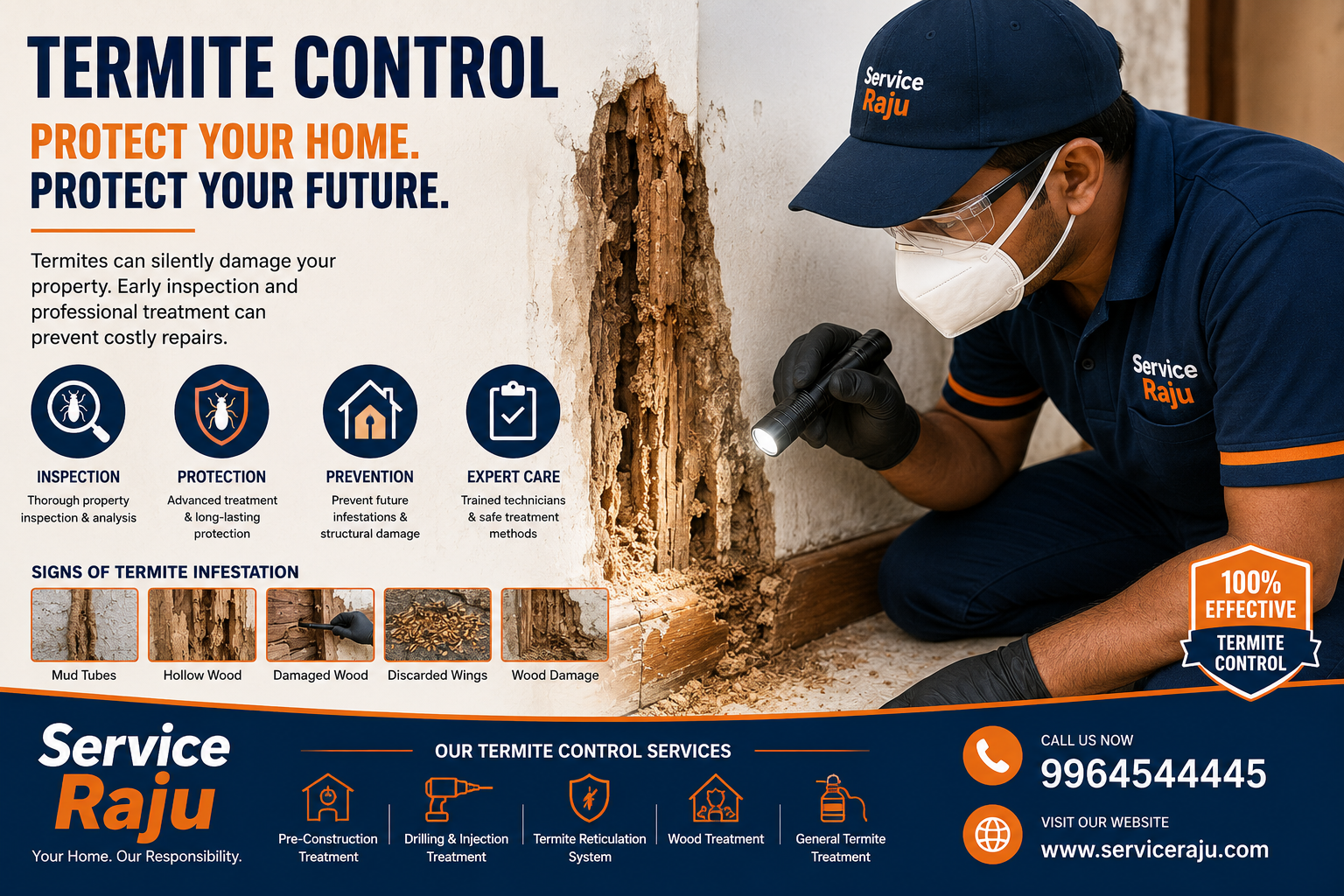
Termites are one of the most damaging pests that can affect a home or commercial property. Unlike many household pests, termites can remain hidden inside walls, wooden structures, floors, and soil while continuously causing damage.
By the time visible signs appear, the infestation may already be established.
Professional termite control helps identify termite activity, locate affected areas, and select the right treatment method to protect your property.
In this guide, we explain the common signs of termites, why they enter properties, available treatment options, and how you can prevent future infestations.
What Are Termites?
Termites are small social insects that feed mainly on cellulose-containing materials such as wood and other plant-based materials.
They commonly attack:
- Wooden doors and frames
- Furniture
- Cupboards
- Wooden flooring
- False ceilings and other susceptible materials
- Building structures and concealed areas
Some termite species live primarily in soil and can enter buildings through cracks, foundations, service openings, or other concealed routes.
7 Common Signs of Termite Infestation
Early identification can help reduce the risk of extensive damage.
1. Mud Tubes
Mud tubes on walls, foundations, floors, or other surfaces can indicate termite activity. These protected pathways allow termites to travel between their colony and food source.
2. Hollow-Sounding Wood
Damaged wooden surfaces may sound hollow when tapped because termites can consume material from inside while leaving the outer surface relatively intact.
3. Damaged Door or Window Frames
Termite activity around wooden frames can cause swelling, weakening, or difficulty opening and closing doors and windows.
4. Small Holes or Damaged Wood
Small openings, cracks, or visibly deteriorated wooden surfaces may be associated with termite activity.
5. Discarded Wings
Winged termites, often called swarmers, may emerge when colonies reproduce. Finding discarded wings near windows, lights, or other areas can be a warning sign.
6. Bubbling or Damaged Surfaces
In some cases, termite activity beneath flooring, paint, or other surfaces can cause visible changes or damage.
7. Repeated Termite Activity
If termites continue appearing after basic cleaning or DIY treatment, there may be an active colony or concealed entry point that needs professional inspection.
Why Do Termites Enter Homes?
Termites are attracted to properties where they can find suitable food, moisture, shelter, and access.
Common contributing factors include:
- Moisture around the property
- Water leakage
- Damp soil near foundations
- Wood in direct contact with soil
- Cracks and openings in structures
- Poor drainage
- Unprotected wooden materials
- Construction debris or untreated wood
Reducing these conditions can help lower the risk of termite infestation.
Types of Termite Control Treatment
There is no single treatment that is ideal for every property. The correct method depends on the termite species, infestation level, construction type, and location of the activity.
1. Soil Treatment
Soil treatment can be used where termites are entering a property through the ground.
The treatment creates a chemical barrier in appropriate areas to help prevent termites from accessing the structure.
2. Wood Treatment
Wooden components affected or at risk of termite attack may require targeted treatment.
This can be particularly useful for doors, frames, furniture, cupboards, and other wooden structures.
3. Drilling & Injection Treatment
For certain existing structures, technicians may drill selected areas and inject an appropriate termite-control solution.
This method can help target concealed termite pathways and affected areas while minimizing unnecessary treatment.
4. Termite Reticulation System
A termite reticulation system can provide a planned method of delivering termite treatment around suitable buildings.
It can be especially useful for properties where long-term termite management is required and where the system is installed appropriately.
5. Pre-Construction Termite Treatment
For new buildings, termite protection can be incorporated during construction.
Pre-construction treatment aims to establish protection at critical soil and structural interfaces before the building is completed.
Why DIY Termite Treatment May Not Be Enough
Spraying a visible termite or treating only the damaged wooden surface may not eliminate the underlying problem.
Termites can remain hidden in:
- Soil
- Walls
- Foundations
- Wooden structures
- Floor areas
- Concealed cracks and openings
The visible termites may only represent a small part of the infestation.
A professional inspection helps identify where termite activity is occurring and how termites may be entering the property.
How to Prevent Termites
Regular property maintenance can reduce termite risk.
Keep the Property Dry
Repair plumbing leaks, drainage problems, and other sources of unnecessary moisture.
Avoid Wood-to-Soil Contact
Where possible, prevent untreated wooden materials from directly contacting soil.
Inspect Wooden Structures
Regularly check doors, frames, cupboards, furniture, and other wooden components for early signs of damage.
Maintain Proper Drainage
Water should drain away from foundations and building structures rather than accumulating around them.
Reduce Clutter
Remove unnecessary wooden debris, cardboard, and other cellulose-rich materials from areas around the property.
Schedule Professional Inspection
Properties with a history of termite infestation can benefit from periodic professional inspection and monitoring.
When Should You Call a Termite Control Professional?
You should consider professional termite inspection if you notice:
- Mud tubes
- Winged termites
- Discarded wings
- Hollow or damaged wood
- Termite activity around doors or windows
- Repeated termite sightings
- Unexplained damage to wooden structures
- Signs of termites near the foundation
Early action can help prevent a small infestation from developing into a major property-damage problem.
Termite Control for Homes & Commercial Properties
Termites can affect many types of properties, including:
- Independent houses
- Apartments
- Villas
- Offices
- Shops
- Restaurants
- Hotels
- Warehouses
- Commercial buildings
- New construction projects
The appropriate treatment depends on the building structure and the extent of termite activity.
Why Choose Professional Termite Control?
Professional termite control provides a structured approach:
Inspection → Pest Identification → Infestation Assessment → Treatment Recommendation → Targeted Treatment → Follow-Up/Monitoring
Instead of simply treating visible termites, professional pest control focuses on identifying the source and potential routes of infestation.
Conclusion
Termites can cause significant damage while remaining hidden for long periods. Identifying early warning signs such as mud tubes, damaged wood, discarded wings, and repeated termite activity can help you take action sooner.
If you suspect termites, avoid relying only on surface spraying. A professional termite inspection and treatment plan can help determine the most suitable solution for your property.
Service Raju – Professional Termite Control
Service Raju provides professional termite control services for residential and commercial properties in Mysore and Bangalore.
Our termite services can include inspection, localized treatment, wood treatment, drilling and injection, soil treatment, and termite management solutions depending on the property and infestation.
Need termite control? Start with a professional inspection.
Service Raju – Your Home. Our Responsibility.
📞 9964544445
🌐 www.serviceraju.com
Termite Control | Termite Treatment | Termite Inspection | Residential Pest Control | Commercial Pest Control
Leave a Reply